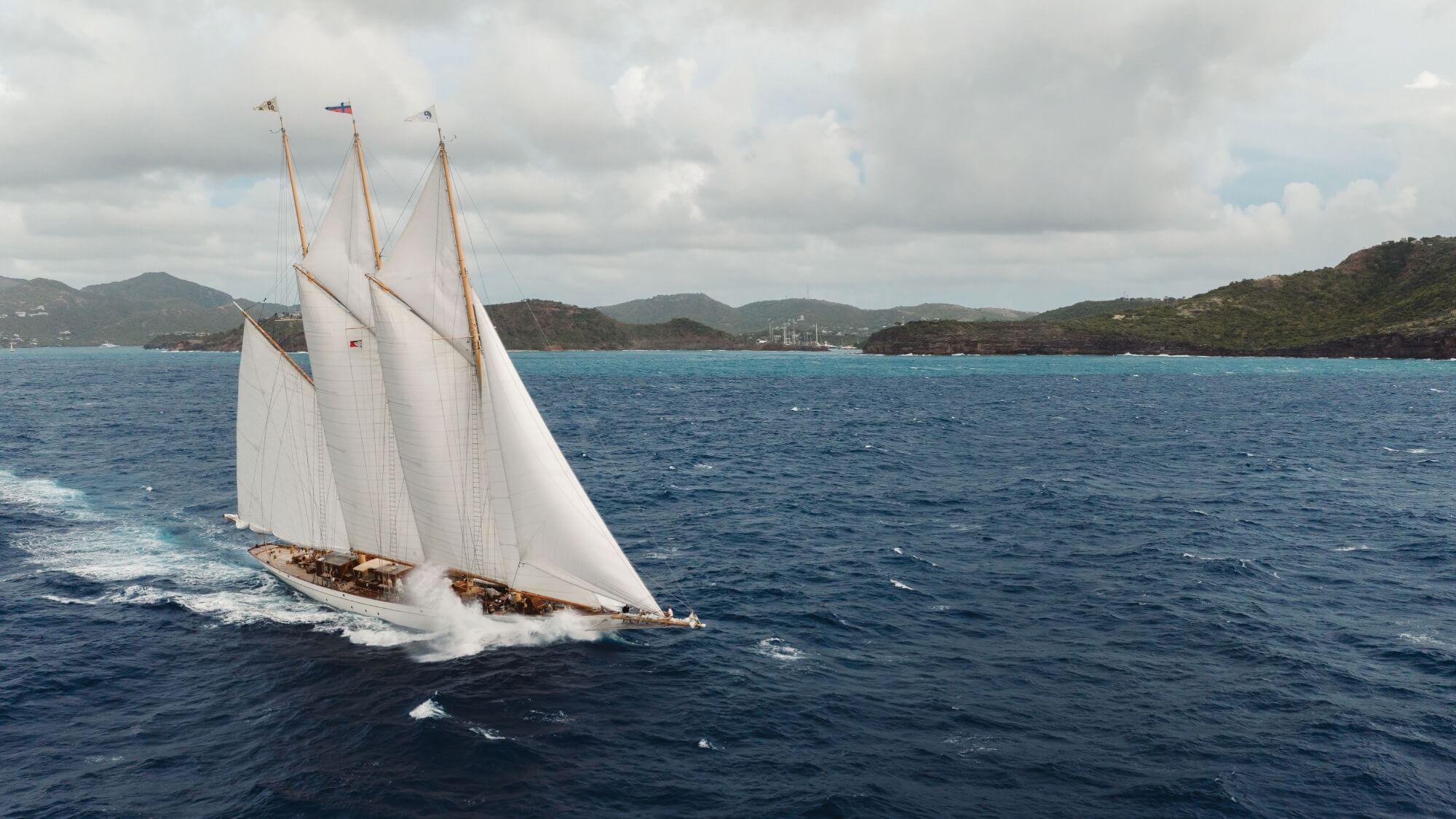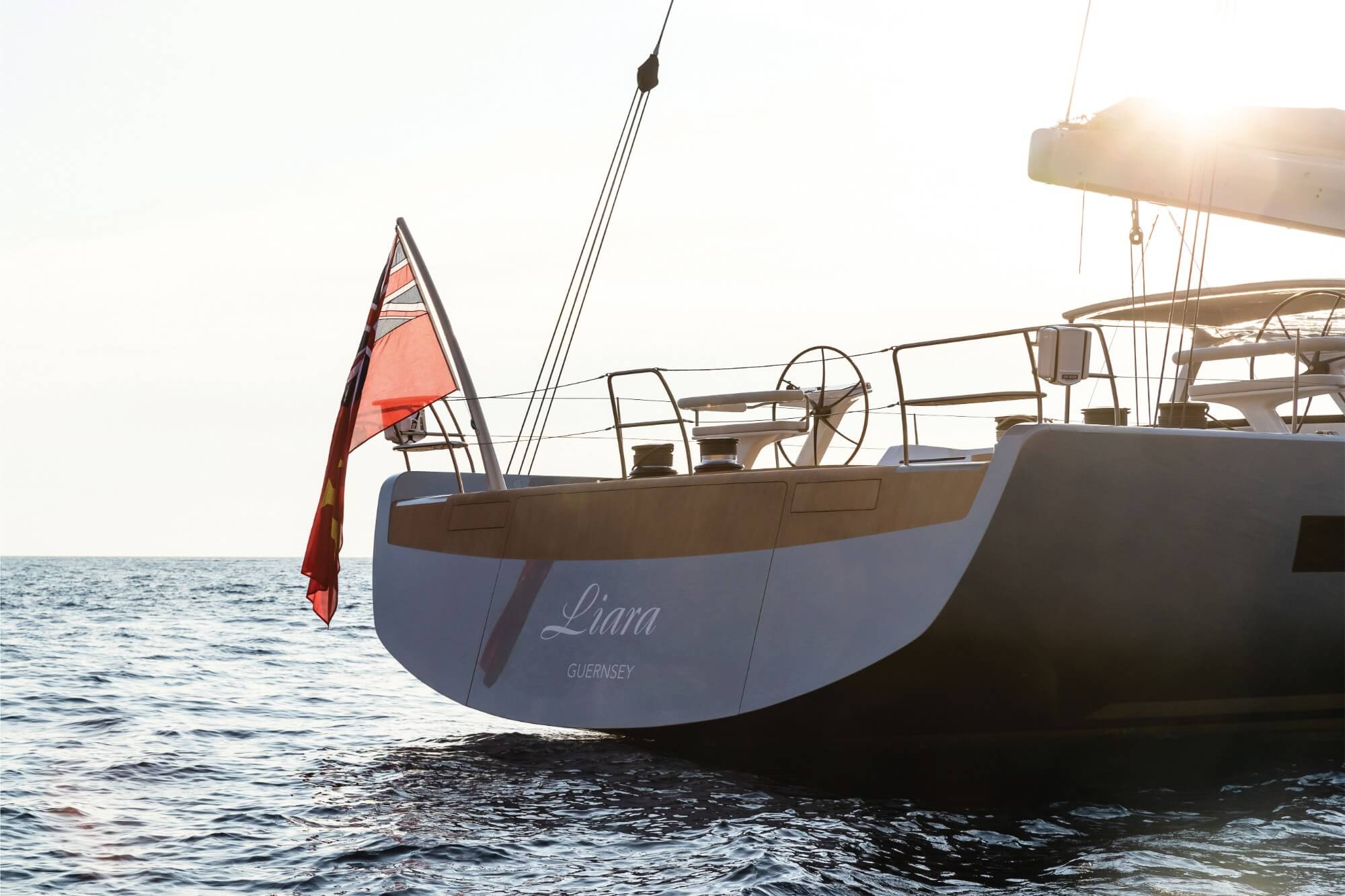

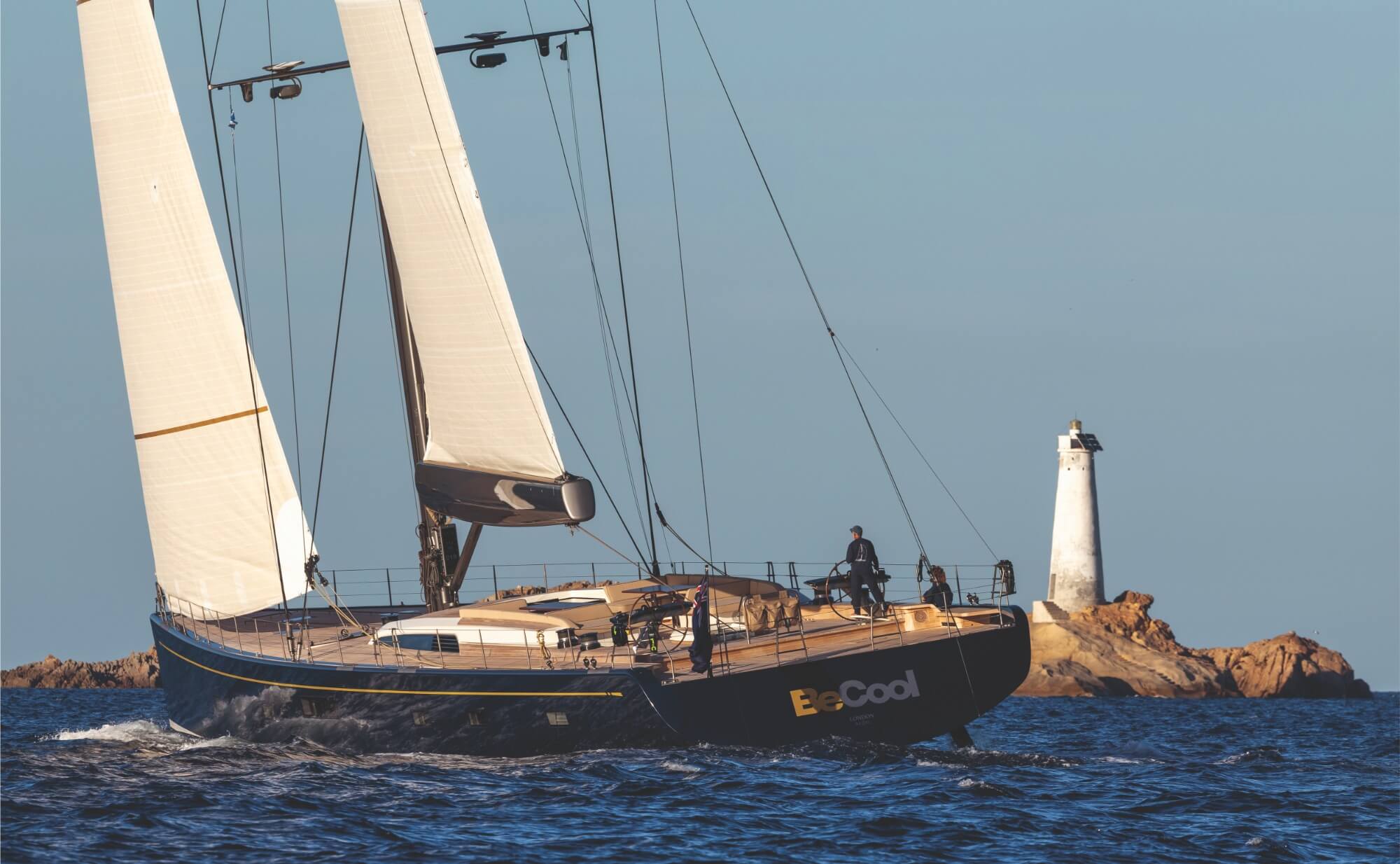
Like many a series-starting big yacht, the new Swan 128 developed out of the owner’s desire for more space. He had bought the first of the Swan 98 line back in 2020, but quickly outgrew it. Loving the boat, however, he returned to Swan and its long-standing designer German Frers to build a bigger one. The result is the largest by volume that Swan has ever built.
“We decided to go for a larger size, because the family was not so happy with the interior on the Swan 98, coming from a motor yacht background,” explains the owner’s representative, Odo Giordo. The bigger boat was designed for family needs. “We started from the Swan 120, but with the idea to do a completely new design – a very flush deckhouse, a very sleek design – more performance oriented.”
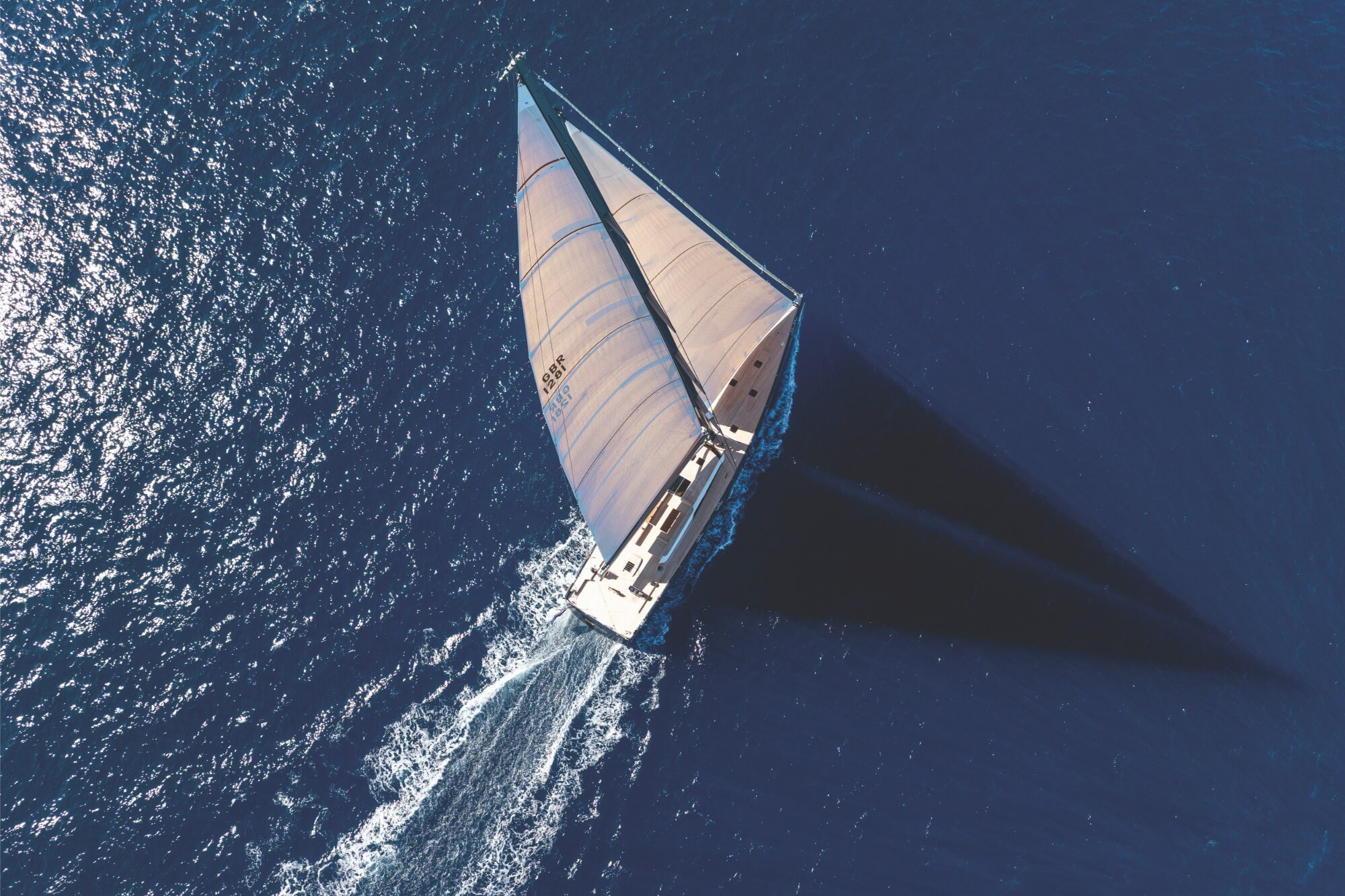
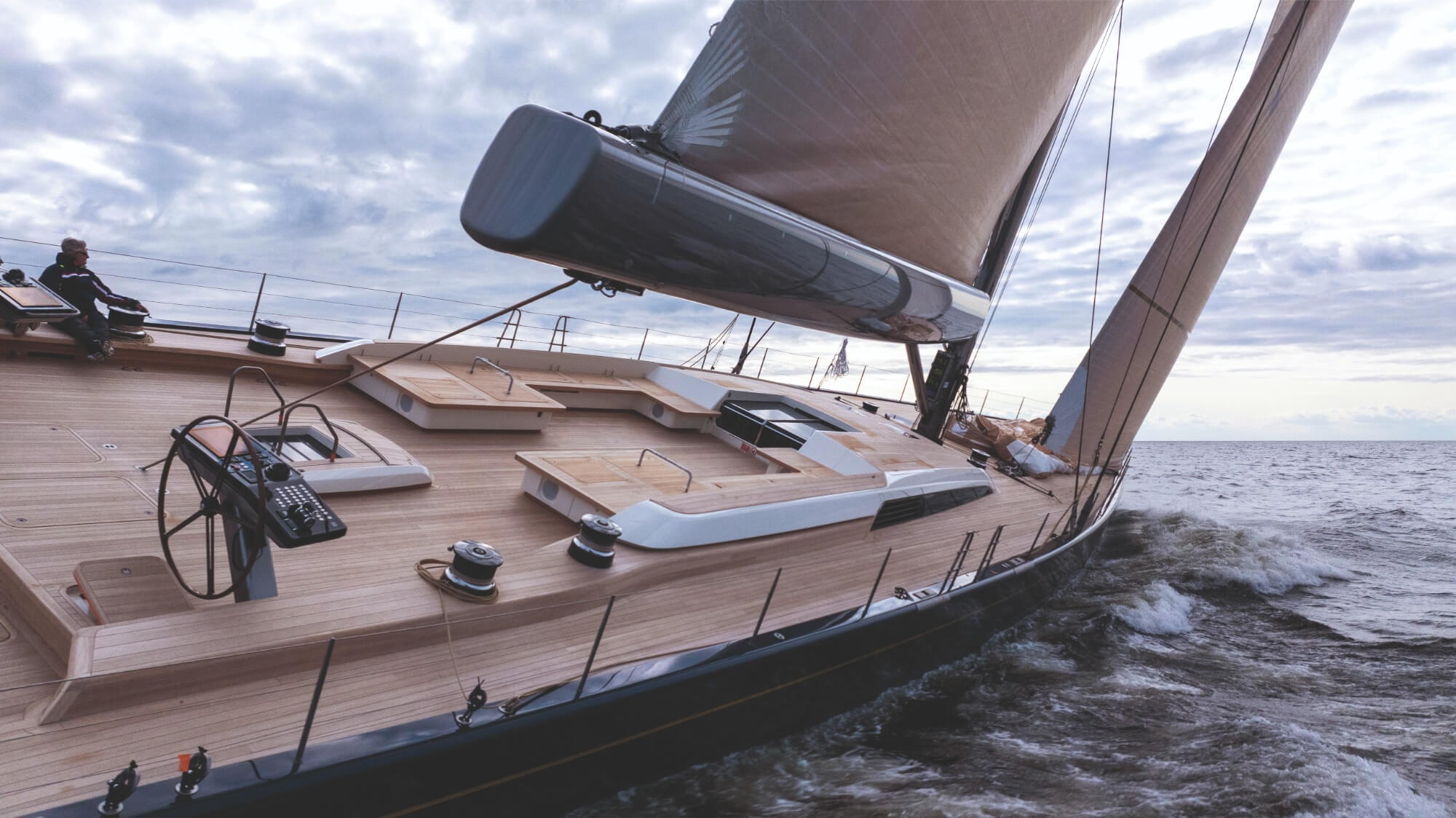
Now a key contributor on Swan’s maxi yachts, Lucio Micheletti sketched the taut exterior lines of the yacht, a thoroughbred that stretches across 39 elegant metres. The coachroof is low slung, and there’s a generous, well-protected guest cockpit with tables and sun beds. It forms an oasis for the family to enjoy the sailing without getting mixed up with lines and winches. A dedicated crew companionway aft leads directly to the helm stations, and there are more winches at the foot of the mast for halyards.
Ease of sailing was the other key element of the brief. So, though the new 128 was to be swifter than the 120 she grew out of, she shed many of the performance attributes of the previous 98. “The idea this time was to have no running backstays or square top main, but a slightly taller mast to create a boat that reacted in light winds,” says Giordo.
“We worked a lot on displacement, and on the draught – it goes down to 6.7m with a telescopic keel. We were keen to go with easy push-button sailing, so there’s a self-tacking jib and a captive winch for both the jib sheet and main sheet.”
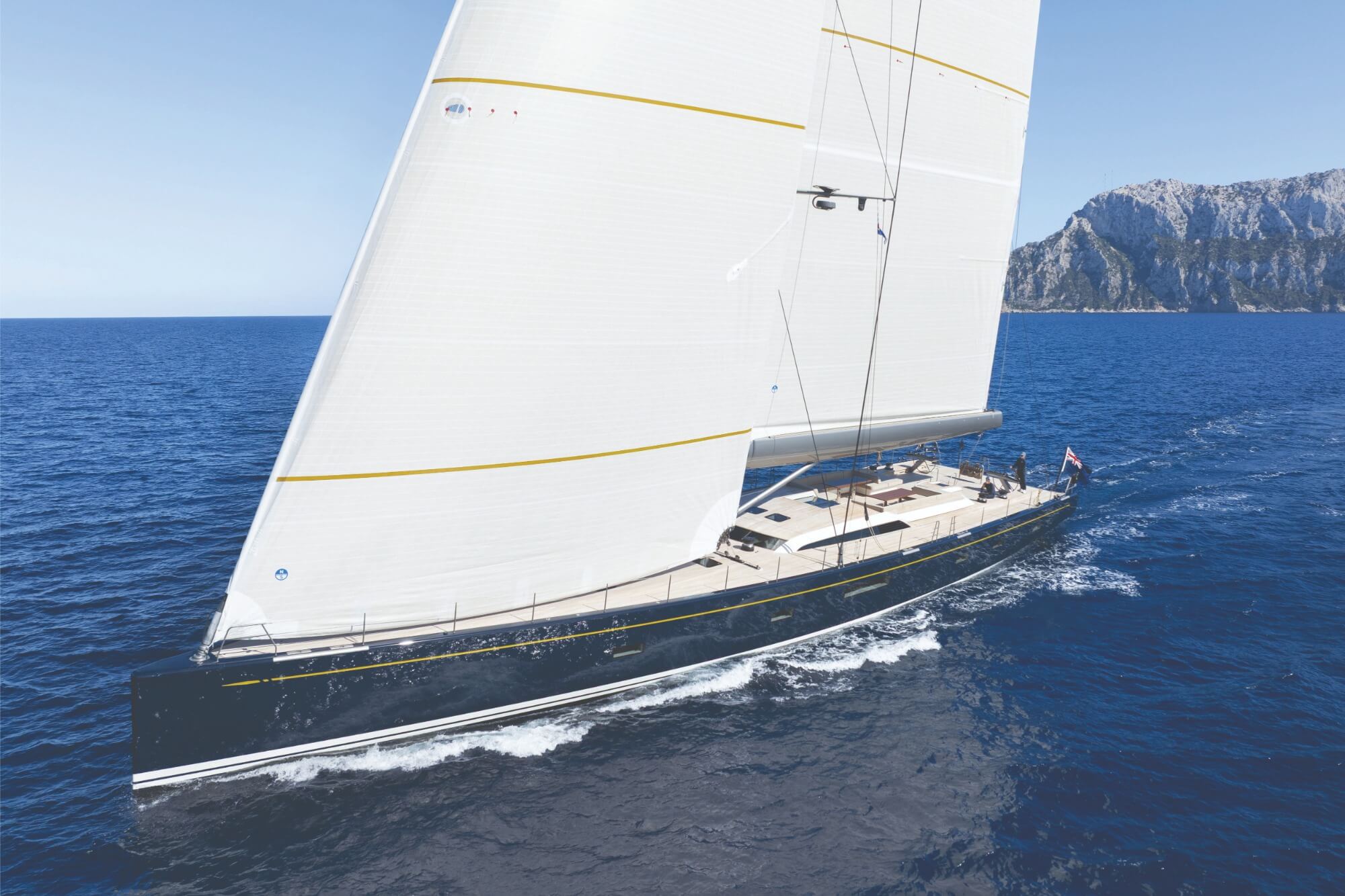
The result is a beguilingly simple boat to sail, routinely achieving speeds of 14-15 knots. “The owner wanted to be able to handle the boat alone while sailing, so you can do it by yourself, without asking for help,” says Giordo. “He’s always driving all of his toys – from the windsurfer to the boats and the cars.”
Southern Spars was brought in to design a rig that could deliver both speed and simplicity, applying all their know-how and utilising a suite of integrated design tools that it shares with North Sails and Future Fibres. “The new Be Cool was one of the first to benefit from our load monitoring product Synapse,” says Southern Spars Group Sales Director Vincent Guiot. “The calibration and reliability of load pins is always a struggle, so we’ve now integrated in-line load sensors into our end fittings for all the key stays. With the tools we use for sail and rig design, we can make a digital twin of the yacht, so you’ve basically already sea-trialled it before the boat is launched,” he continues. “Then we compare the actual data taken from Synapse in the real world. We’re talking about loads that are pretty scary – up to 40 tonnes in the headstay – so we want to make it as simple for the users as possible.”
You don’t just knock up a 57m-tall rig overnight, however, and there is much in this design that is innovative. First up, there is the mast itself, designed and laid up over 25,000 man hours, then sprayed with metallic paint. The tube has a surface area of 106 square metres with more than 50 layers of high-modulus carbon fibre in places. It must be debulked regularly and the whole structure carefully cured in an autoclave to achieve optimum stiffness.
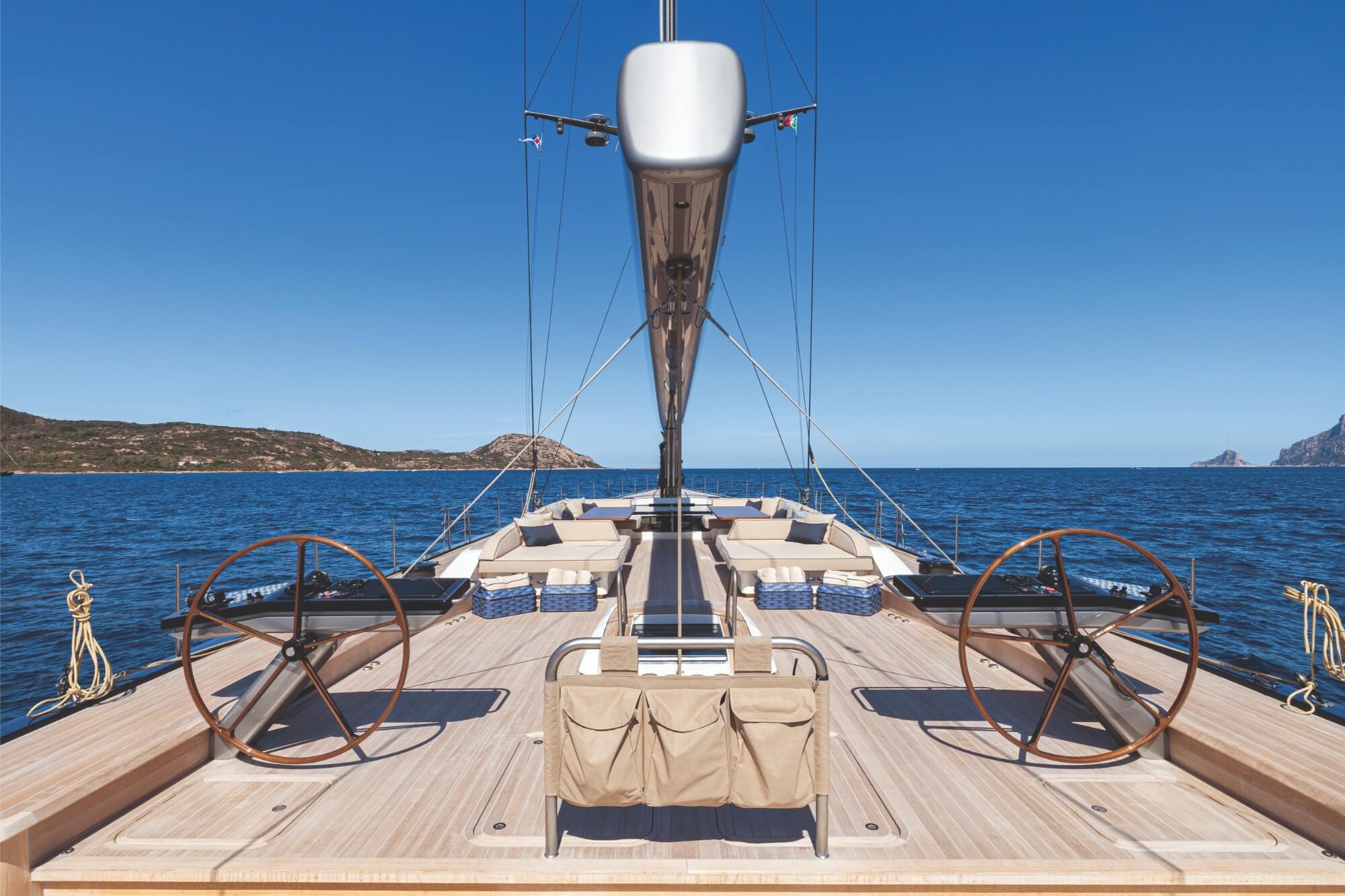
Then, a custom furler for the Code Zero was designed with Reckmann, because there was nothing suitable yet on the market. The upshot is a tidy under-deck unit on a clever hydraulic rod that can be eased and tensioned according to the desired luff shape. This way, the Code halyard can be simply put on lock once the sail is up.
There’s another innovation built into the boom furling main. The sail has three reefing points that engage with a hydraulic reefing car device that slides along a track on the boom. “So that at every reefing position you can really get the right shape in the main,” says Captain Luca Serra.
With her North Sails and elliptical AEROsix shrouds in intermediate-modulus carbon, Be Cool is a fine blend of convenience and performance, as her delivery passage from Finland to Italy demonstrated. “We managed around 14-15 knots with just main and jib in a little less than 15 knots of wind, so the boat is fast,” says Serra. “But our average speed is also fast. She’s big but very easy to move – she might weigh 119 tonnes, but she’s very soft – you don’t feel like a truck. And she’s well balanced on the helm.”
In hull number one, the layout differs significantly from the generic GA seen online. Besides the owner’s cabin with its king-size bed and large shower room in the forepeak, there is just one other cabin amidships. An eight-person dining area replaces the second cabin. “It’s not what we normally do,” says Swan Project Manager Kim Sundqvist. “But that’s the place the owner really likes to spend time.”
Two further guest cabins have been carved out aft. Somehow, the architects found an extra metre or two in the stern of the boat for the six crew berths, alongside a capable galley and mess. Another highly personal touch in the large, open saloon are the day beds hidden between the backrest of the sofas and the deep hull lights. “Those two beds just behind the couches are a key point that allows us to get a decision from the owner fast,” says Captain Serra. “It’s a niche where [he] can go and lie down while sailing and feel totally protected, but remaining very present and easy to communicate with.
“Everything about the style of the interiors is the owner’s thinking,” he adds. “The shape and the positions of things like bulkheads and doors is the architect, but the fabrics, leathers and wood is the owner’s style. It’s very personalised.” Swan’s go-to interior designer Misa Poggi has pulled it all together into a coherent, flowing whole which oozes comfy class. There’s a lot of tartan upholstery – different colours and patterns – betraying the owner’s fondness for Scotland. Overstuffed leather armrests and stools give the saloon a slightly clubby feel – something accentuated by the pair of bright Goyard trunks that do service as coffee tables.
Woven rattan headlinings appear throughout the boat, along with warm teak wood in various guises – brushed and matt varnished so that the grain still comes through. In other areas, the wood carries deep grooves, and underfoot it is barely wood at all. “On request, we can build all the structures carrying the floors in carbon fibre, then on top of that the sole boards are Kevlar honeycomb with teak veneer on top,” says Sundqvist. “We have this capability of going full-on weight saving mode and we did that on
this boat.”
It might seem like a big effort to make for a yacht that will see far more Med sunshine than racing, but the intention was always to deliver good passage times. There’s also some low-pressure group sailing planned, such as the 2026 Bucket. “A Champagne regatta for gentlemen,” chuckles Giordo. “Very sociable and no crossing situations.” More ambitiously, the first event is going to be the RORC Transatlantic Race, from Lanzarote to Grenada. “We’ll have the same crew as for the delivery, with 14 in total,” says Giordo. “Easy crew, easy racing. We expect the crossing to take 10-15 days.”
It’s something of a rarity for owners to get involved in long oceanic crossings, but Be Cool’s will be aboard for the RORC Transat. Though he already spends a lot of his time on the water racing on other boats, it seems that he has succumbed to her special charms. “When he sailed [Be Cool] that first time in the Baltic, he decided to spend the night on her,” says Giordo. “He fell in love with her straight away.”