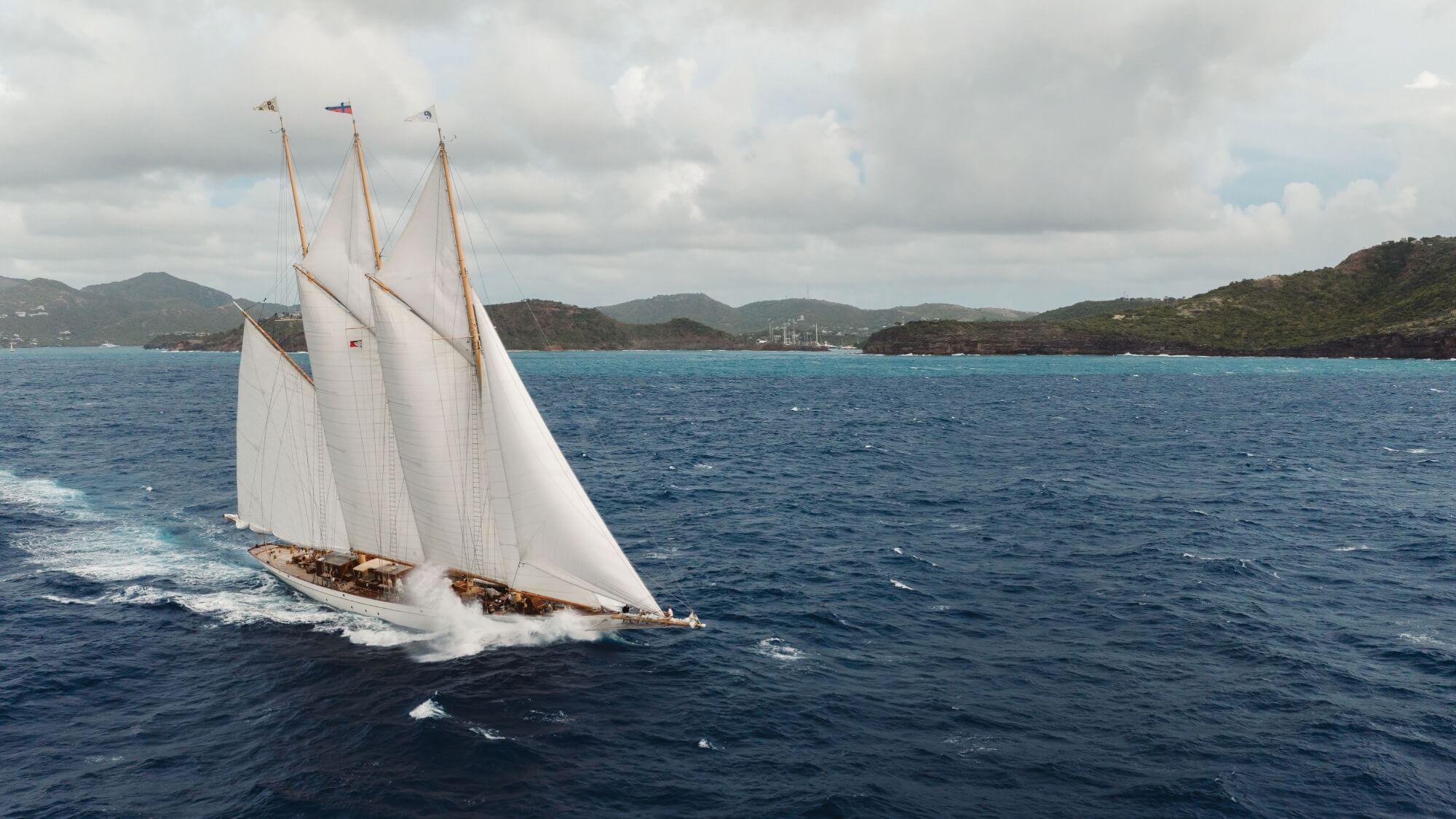

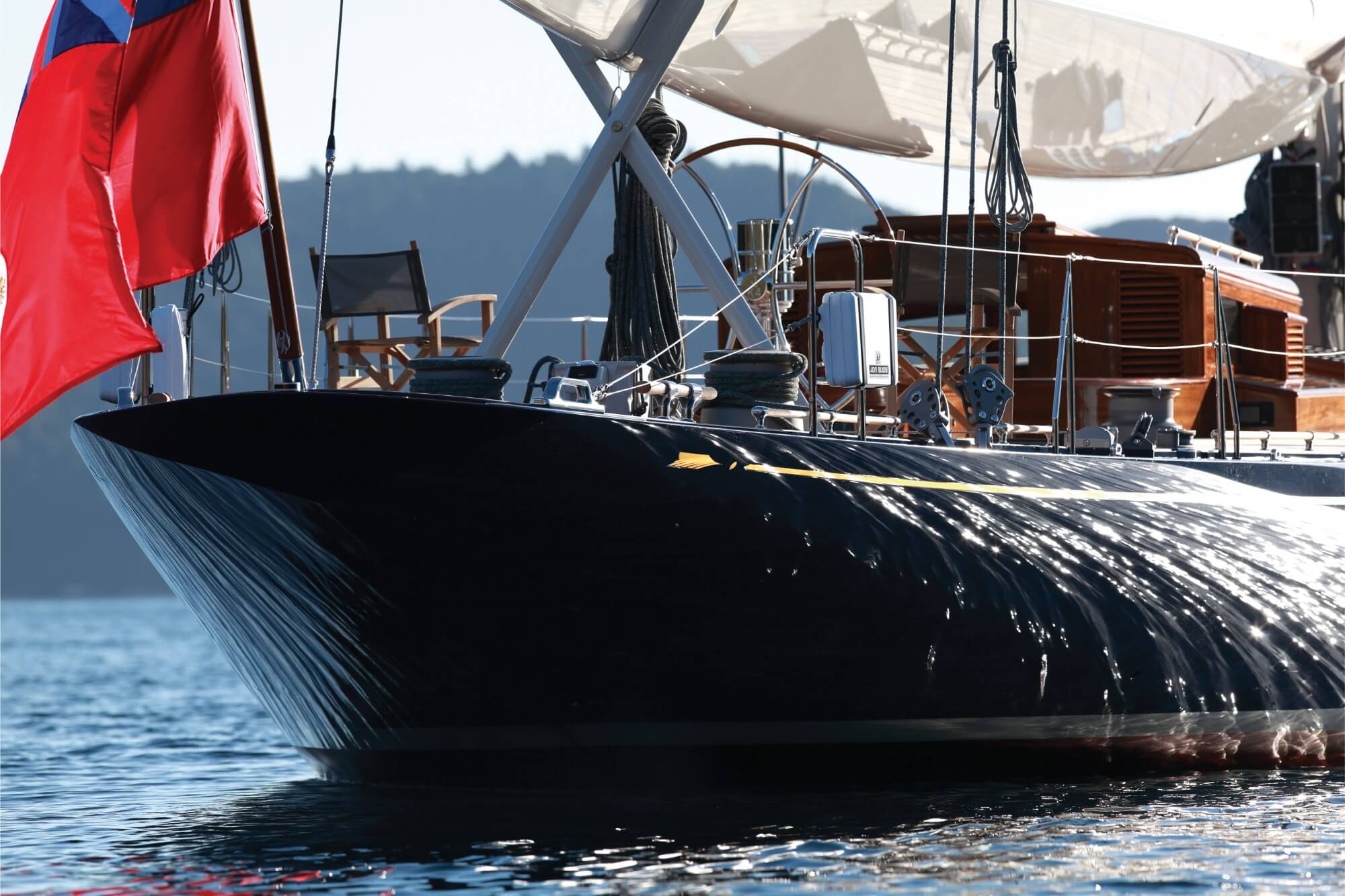
When she was first slipped at Camper & Nicholson’s Gosport yard in the spring of 1934, Endeavour was on the risky side of innovative. Designed and built by Charles E Nicholson for aviation tycoon Thomas Sopwith with one job in mind and one only – to scoop the America’s Cup – she was crafted entirely in steel, from forefoot to masthead. The Superyacht also featured an early type of electric wind instrument and was given a radical double-clewed genoa and rig inspired in part by the aviation industry, including rod rigging and a flexible boom. Early auguries were good. In the British regatta season, Endeavour won eight out of ten races, beating stiff competition from Big Class yachts such as Candida and Britannia. She also dispatched fellow J Class yachts Velsheda and Shamrock V, clearly winning her right to challenge in Newport, Rhode Island, by the autumn.
As she was towed across the Atlantic that August, hopes were high. The British press resounded with bluff and optimism, even as Starling Burgess was making final tweaks to Harold Vanderbilt’s defender, Rainbow. And when racing began in September, Endeavour quickly notched up two victories, setting a new course record with Sopwith at the helm. The third race was abandoned due to low wind, so when Endeavour pulled six minutes ahead in the fourth, the series appeared to be decided. A despairing Vanderbilt handed the helm to Sherman Hoyt in his afterguard.
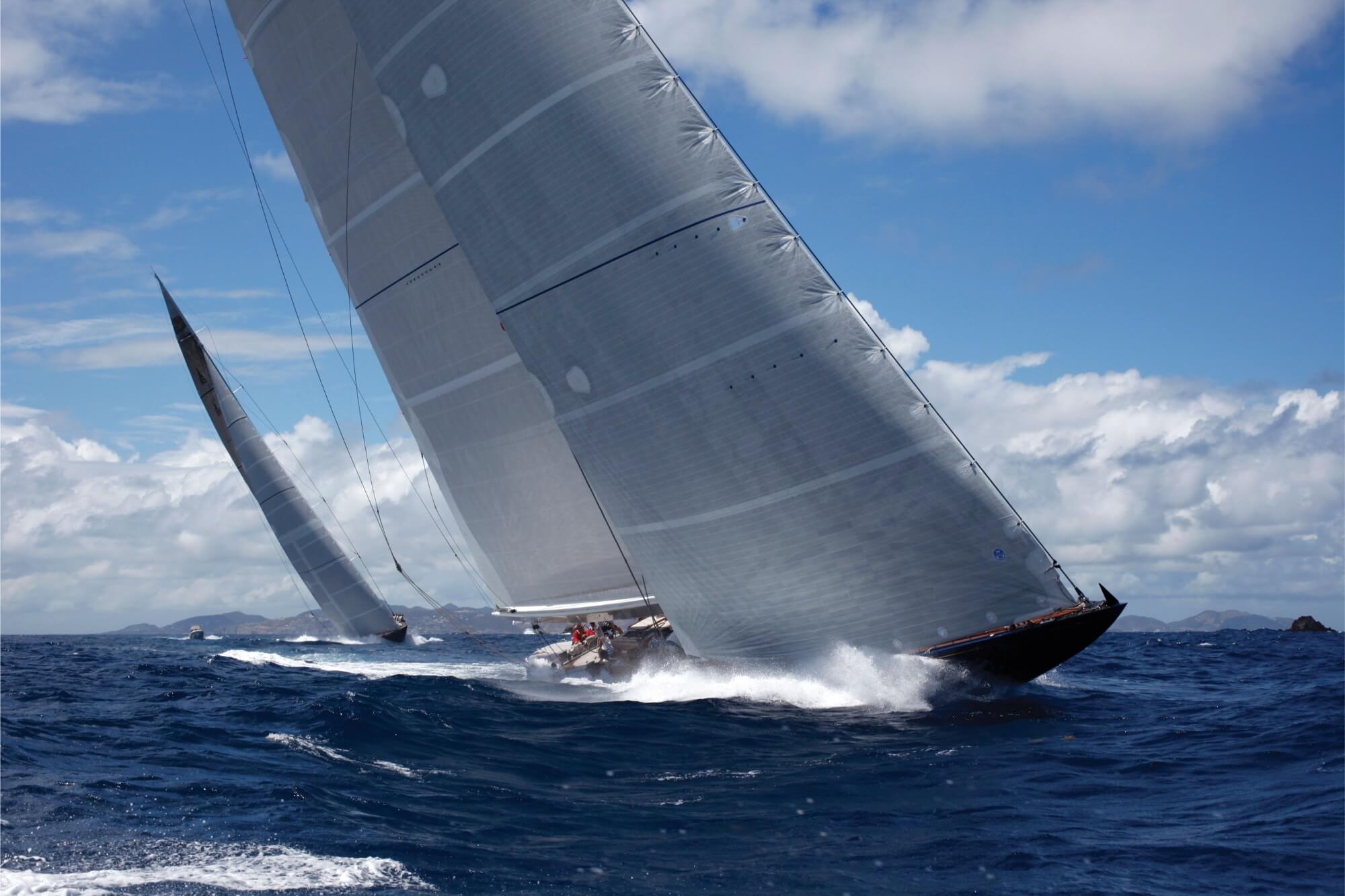
But Hoyt’s masterful reading of the wind allowed him to claw back victory, and things came to a head in the fifth race. This saw close quarters manoeuvring at the start and a near collision mid-course, when Endeavour tried to force Rainbow to give way. As per British practice, Sopwith lodged a protest at the end of the race, but it was disallowed under American rules. This sparked indignant commentary in the world’s yachting pages, including the famous headline: ‘Britannia Rules the Waves, But America Waives the Rules’. The final two races went Rainbow’s way.
Endeavour returned to Britain, where she leavened the bitterness of defeat by beating the six other J Class yachts racing in the 1936 season. So successful was she that Sopwith shipped her back to the US to play stalking horse to Endeavour II in the 1937 Cup. It was to be her swansong.
Returning that autumn, her tow rope parted mid-Atlantic. Feared lost, she was eventually spotted south-west of the Fastnet Rock in a battered state, and limped home under sail to a hero’s welcome. She narrowly survived the war at Camper & Nicholsons, only to be sold for scrap in 1947. A last-minute purchase prevented her being broken up, but started a cycle of different owners that saw her fall into ever greater dereliction, spending years on the same River Hamble mudbank as Velsheda.
Then, in 1978, the boat was sold for a token £10 and towed to the abandoned seaplane base at Calshot Spit where John Amos and Graham Jack set about repairing the steel hull on a shoe-string budget. There, Endeavour caught the eye of one of those figures who has loomed large in the classic yacht revival: American yachtswoman Elizabeth Meyer.
She spotted the boat in 1984, while sailing Velsheda, and bought the hulk that same year. But it took two more years to complete repairs to the hull, keel and rudder for towing to Royal Huisman’s Vollenhove shipyard. Steel was not the Dutch shipyard’s material of choice, and yard owner Wolter Huisman initially joked that he would not let the boat inside his build hall at all. “Huisman began with a bare hull,” remembers rebuild Skipper Jon Barrett, who now manages the boat from Newport. “On my first trip to see her, she was sitting out in a parking lot by his house.”
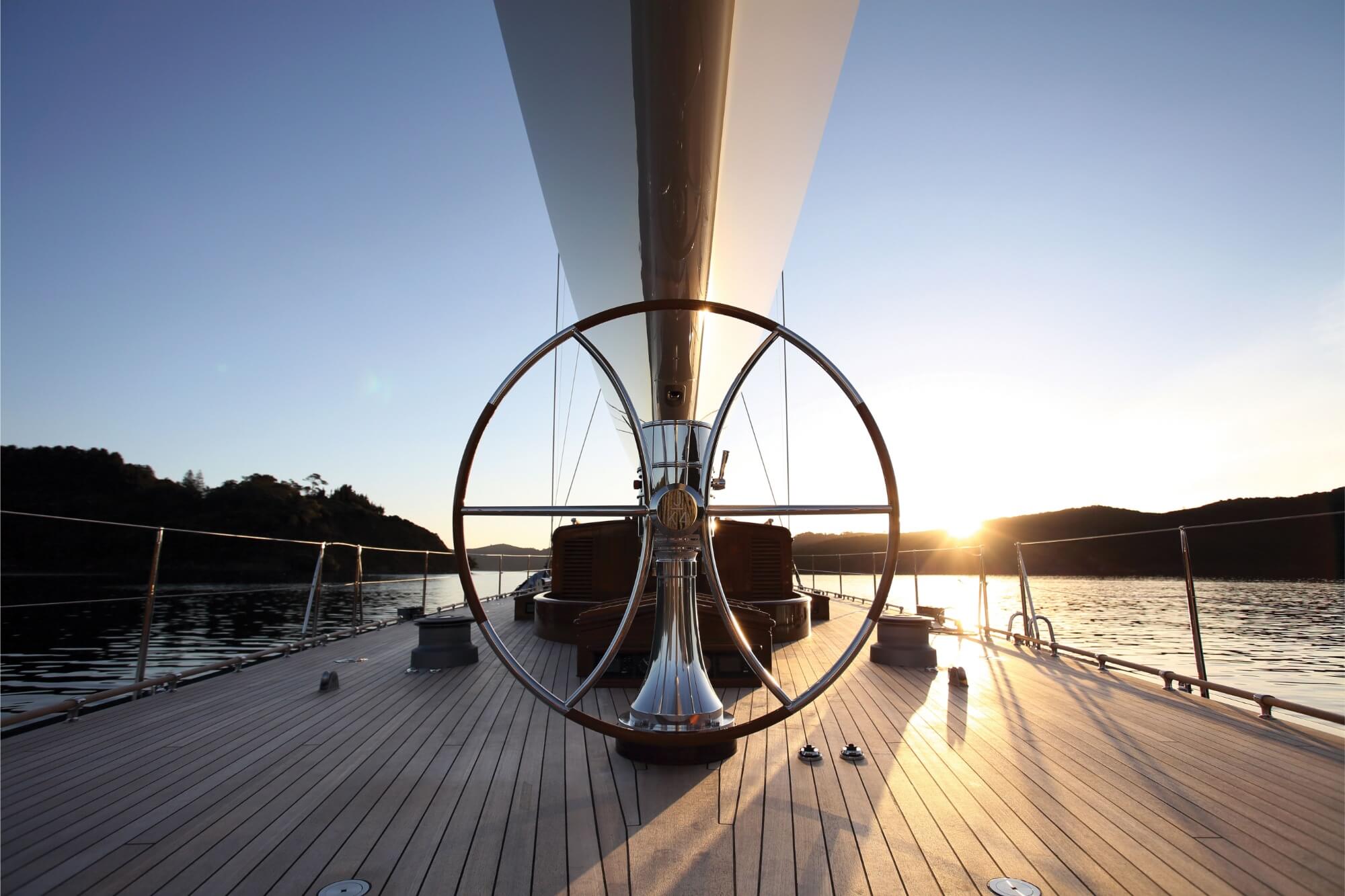
Tens of thousands of hours were spent on engineering, from the milestone 53m Rondal mast built in curved aluminium panels to the winches, blocks and running gear. “It was the starting project for classical rebuilds,” says Huisfit’s General Manager, Stefan Coronel. “We developed decking and rigging innovations that in principal are still used today. As our first big refit project, it was very complex to us, but our shipyard was said to be perhaps the only one in the world capable of taking it on.”
Naval Architect Gerard Dykstra, now synonymous with the rebirth of the J Class, also got involved, and by the time Barrett joined as Captain in 1989, a new engine had just been installed to a gleaming, pristine hull. “You could still see from one end to the other inside, with coils of cable hanging down from the deck beams,” Barrett says. “It’s hard to put in perspective.” John Munford reproduced the boat’s original interior in fine cherrywood cabinetry and Endeavour was finally reborn as a five-cabin sailing Superyacht, complete with bathtub.
Barrett’s first task after relaunch in 1989 was to sail her safely back across the Atlantic for a grand event put on by Meyer, entitled the Return of the Legends. It was to showcase the project which had cost her some $10m, alongside her other refit Shamrock V, as they raced side by side in Newport. “Turnout was incredible,” remembers Barrett. “The coastguard didn’t expect so many people on the water.”
Despite the billing, this was not actually Endeavour’s first race since 1937. As Barrett prepared for the crossing in Southampton, Velsheda Skipper Phil Wade threw down the gauntlet for a race to Cowes. “We bore away down Southampton Water with Velsheda ahead, but we weren’t catching her,” Barrett says. “Then I realised the bow-thruster was down and the prop pitched. When we’d sorted that out, we sailed by within a mile and got over to Cowes where we waited for them. They gave us a cheer and a basket in which they’d donated the fingertips of their gloves, because they didn’t want us to get blisters from pushing buttons!”
For a 130ft racing yacht with giddy overhangs and naval architecture penned in the 1930s, she is remarkably easy to handle, according to Barrett. Sure, you need a large crew to race her, but she looks after you. “Endeavour is incredibly light on the helm – really well balanced. You would love it!” he exclaims. “You can sit there for hours with a quarter turn each way just making your way upwind. She can be a handful on a heavy reach with that big mainsail but she’s very easy to
steer downwind.”
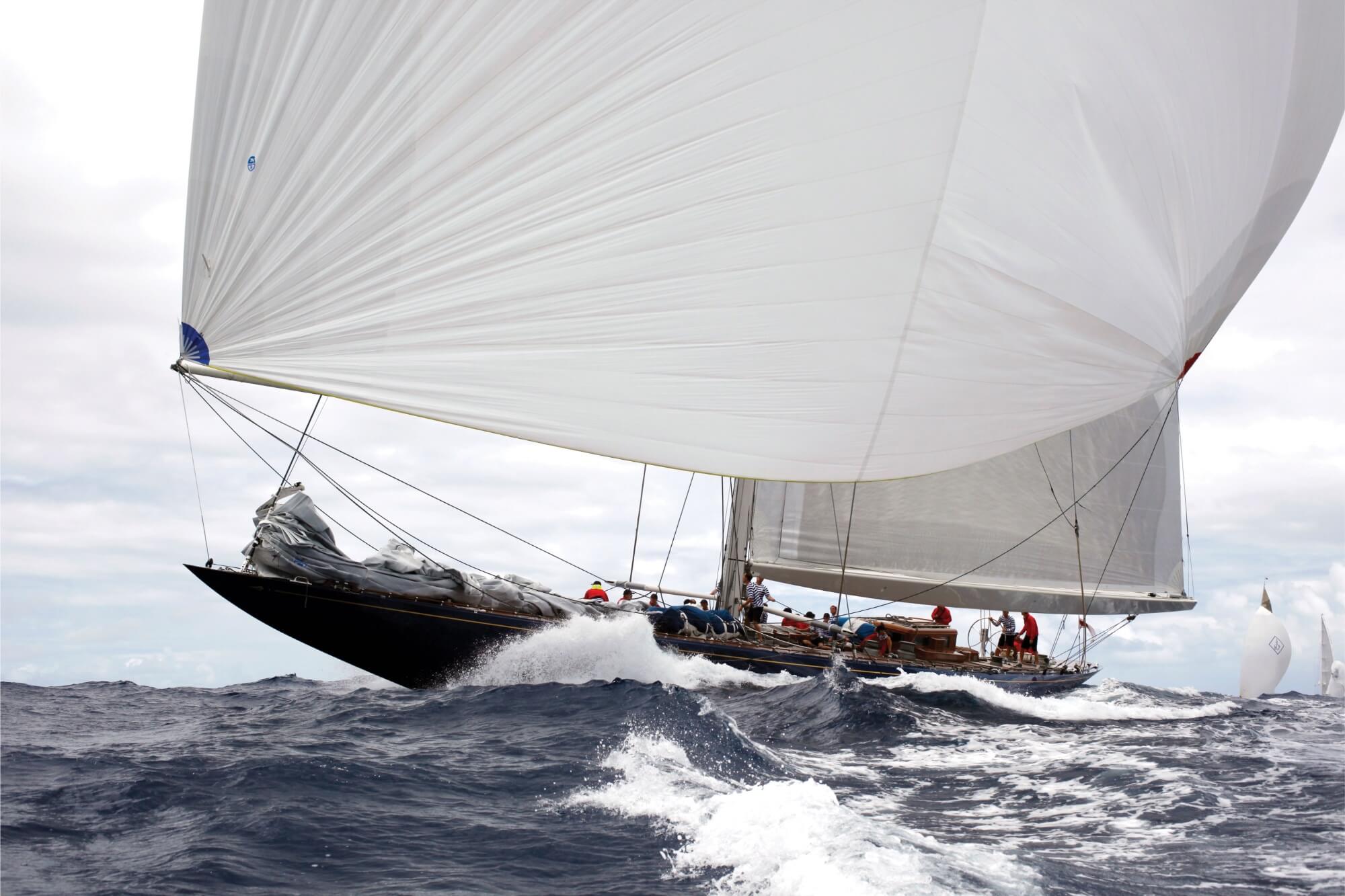
Meyer cruised and chartered Endeavour for a decade, but the boat really spread her wings under her next two owners. Dennis Kozlowski saw her to a notable win over Velsheda and Shamrock V at the 150th jubilee of the America’s Cup in 2001. Then Cassio Antunes won the 2012 St Barths Bucket at his first and only regatta appearance.
“He’s known about Endeavour since he was 14, and always loved her,” says Barrett. “He never imagined he would actually own the boat. He sees her as a piece of history. You can imagine what close racing is like on a J Class: pretty competitive. He said, ‘I love to go sailing to eliminate stress, but when I go racing it’s hard to imagine more’.”
Endeavour had another far-reaching refit ahead of her 2012 victory, this time at Yachting Developments in New Zealand. She got a full carbon rig and modern deck gear to match the performance of Js such as Hanuman and Rainbow. At the same time, they replaced all the on-board systems and remodelled the crew spaces. “We didn’t touch the owner’s area, but the goal was to make the crew accommodation more liveable,” says Barrett.
Since then, Antunes has taken her all over the world. Endeavour may not have recaptured the America’s Cup in 1934, but she has secured a lasting place in the annals of yachting history and still bewitches onlookers wherever she appears. And for Barrett, there is simply no finer yacht anywhere. “Maybe I’m a little biased, but you’ve got to put her at the top of the list,” he says. “Just the heritage, the history, the competition – she’s such an iconic yacht.”