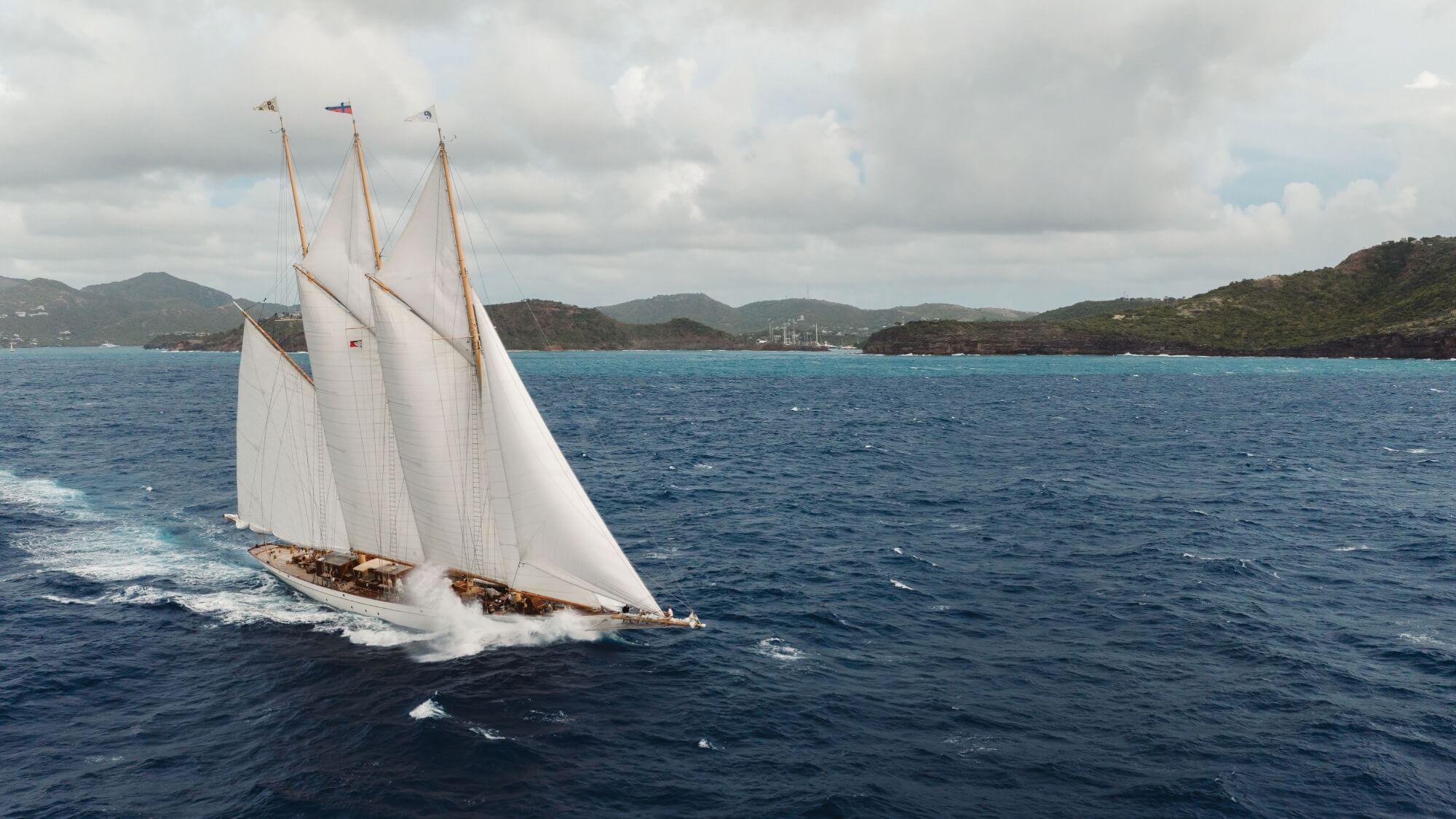

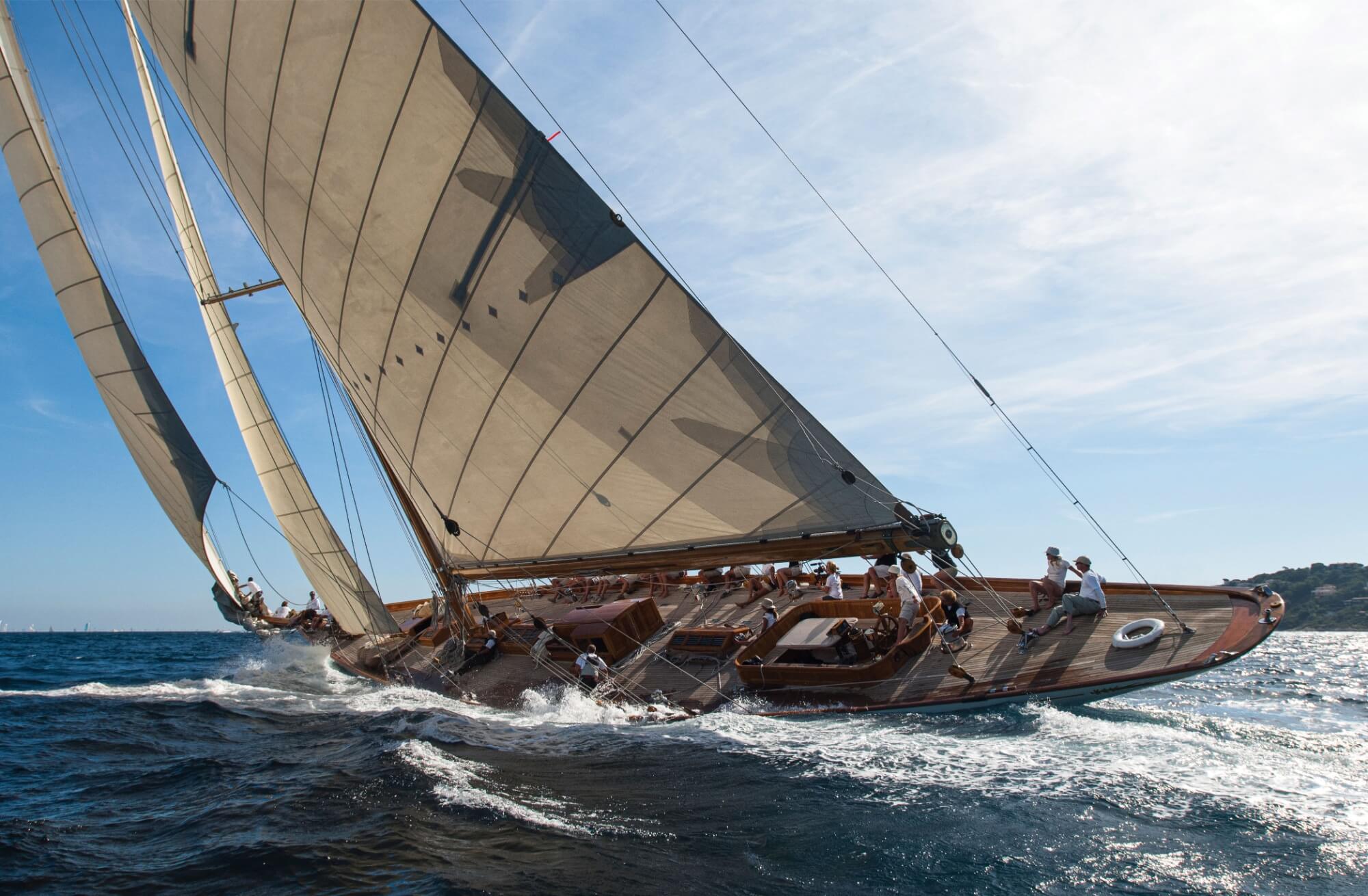
Anyone who has been in a 20-year-plus relationship knows that there are times when a little bit of symbiosis comes into the partnership. You just know instinctively how to read moods or feelings. Most long partnerships like this are with another human being – but what if it was with a yacht? One man who can give us an insight into what that’s like is Chris Barkham, Captain of Cambria since 2004.
This is no ordinary skipper/yacht connection because Cambria is a truly extraordinary boat: designed by the great William Fife III and built in 1928 to compete in the Big Class, precursor to the mighty J Class, this is an 111’ mean machine boasting an absurdly long mast and simply oozing elegance and history. It’s a yacht that raced alongside Britannia back in the golden age of big boat racing – a yacht with a lot of history in her wake.
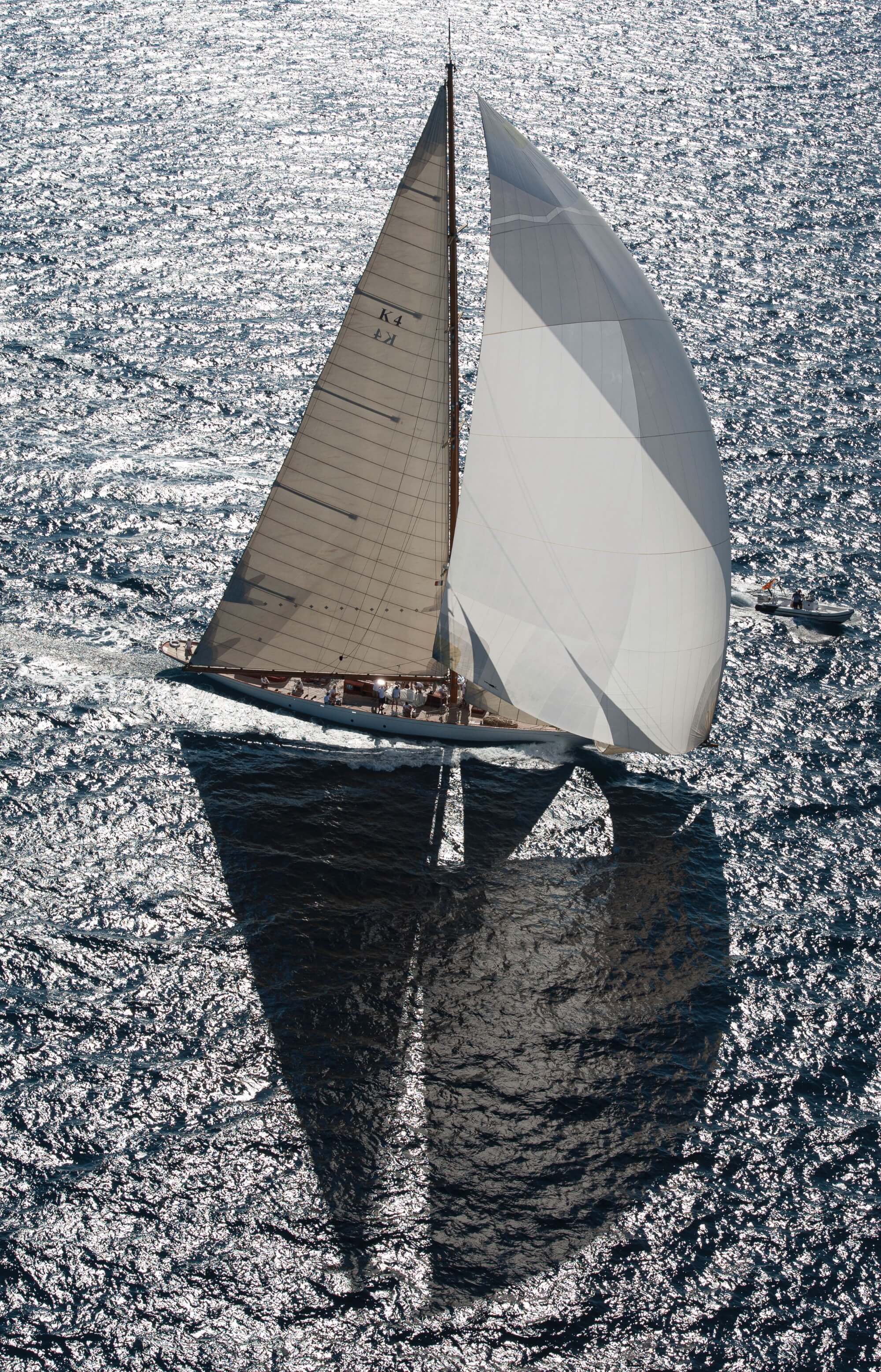
It’s clear that over the years, Barkham has developed a sixth sense when it comes to handling Cambria. “Everyone asks how do you do it? And the simple answer is you feel it,” Barkham says. “A good comparison is surfing; you can try and explain to people how to do things on the water but the only way to do it is to keep doing it and eventually you feel it and then you feel part of it – reacting with the boat, the waves and the wind – you get to feel the whole thing.”
The fact is that Cambria is no ordinary yacht – she’s not even an ordinary classic. She sits in an elite band that were conceived for a more opulent era. The Big Class of the late 1920s shone brightly and all too briefly, but during that time they cast a lovely light. The Roaring Twenties were famed for their opulence and, in that golden era between the wars, the Big Class was the epitome of this lavish period; the class was conceived to allow the titans of the yacht racing scene to clash on their own terms. These were the Superyachts of their day, even if it was to prove a very short one. Cambria raced under her first owner, media mogul Sir William Berry, until 1930, after which she changed hands many times, was re-rigged as a ketch and was eventually left laid up for some years in Townsville, Queensland. It was from this out-of-the-way spot that her resuscitation began. She underwent a comprehensive refit in 1995, her giant 48m cutter rig was restored, and a legend was reborn.
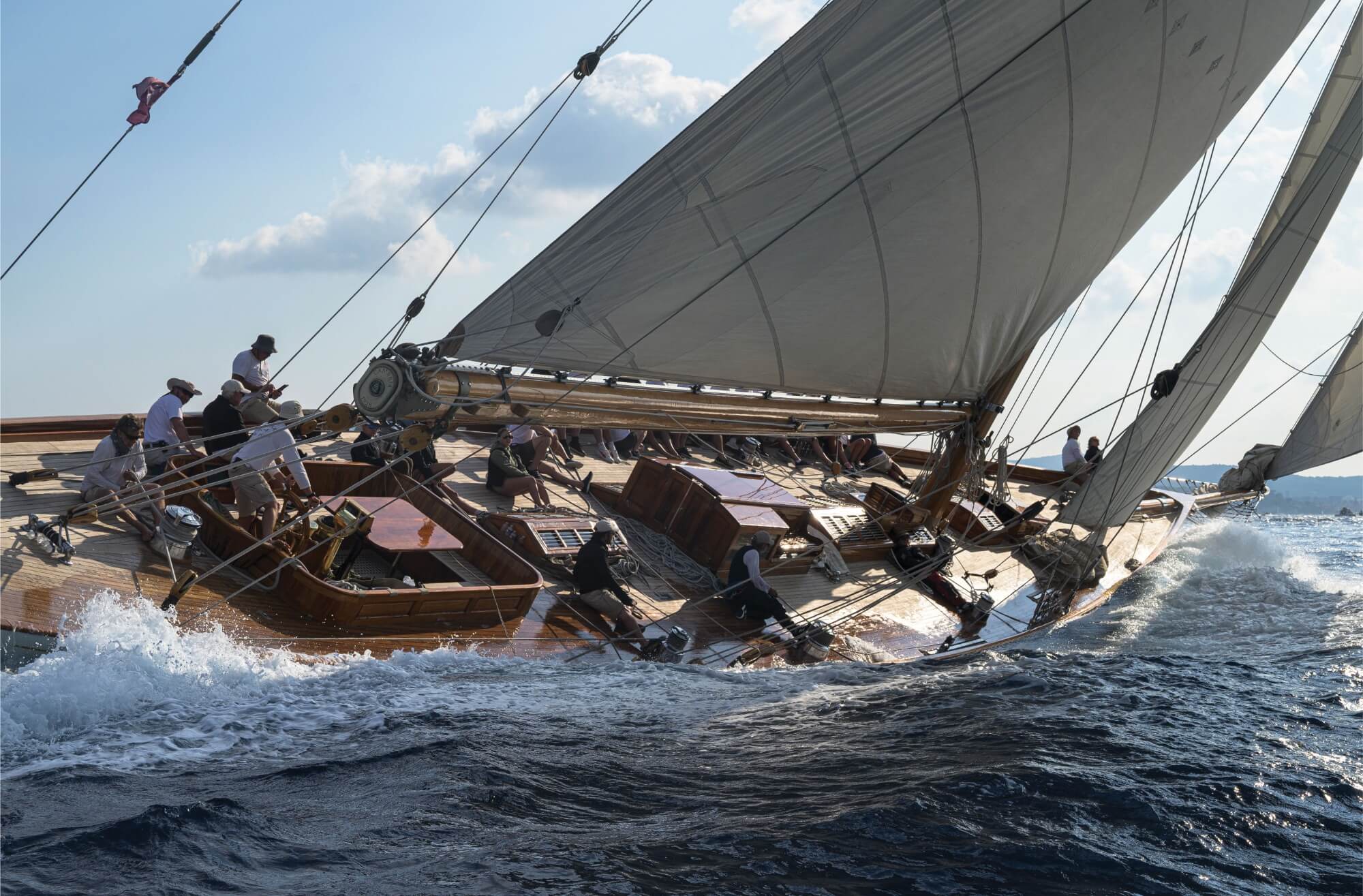
When Cambria was sold to the current owners in 2004, Barkham became intimately involved with her. He is well aware of how fortunate he is to skipper such a beauty. “It’s a rare privilege to be able to helm a yacht like Cambria,” he says. “In 1928 she was at the forefront of the racing yachts of that era. So not only do you get to drive one of these wonderful beasts but, if you’re doing it now, you’re also carrying nearly 100 years of history along with you.”
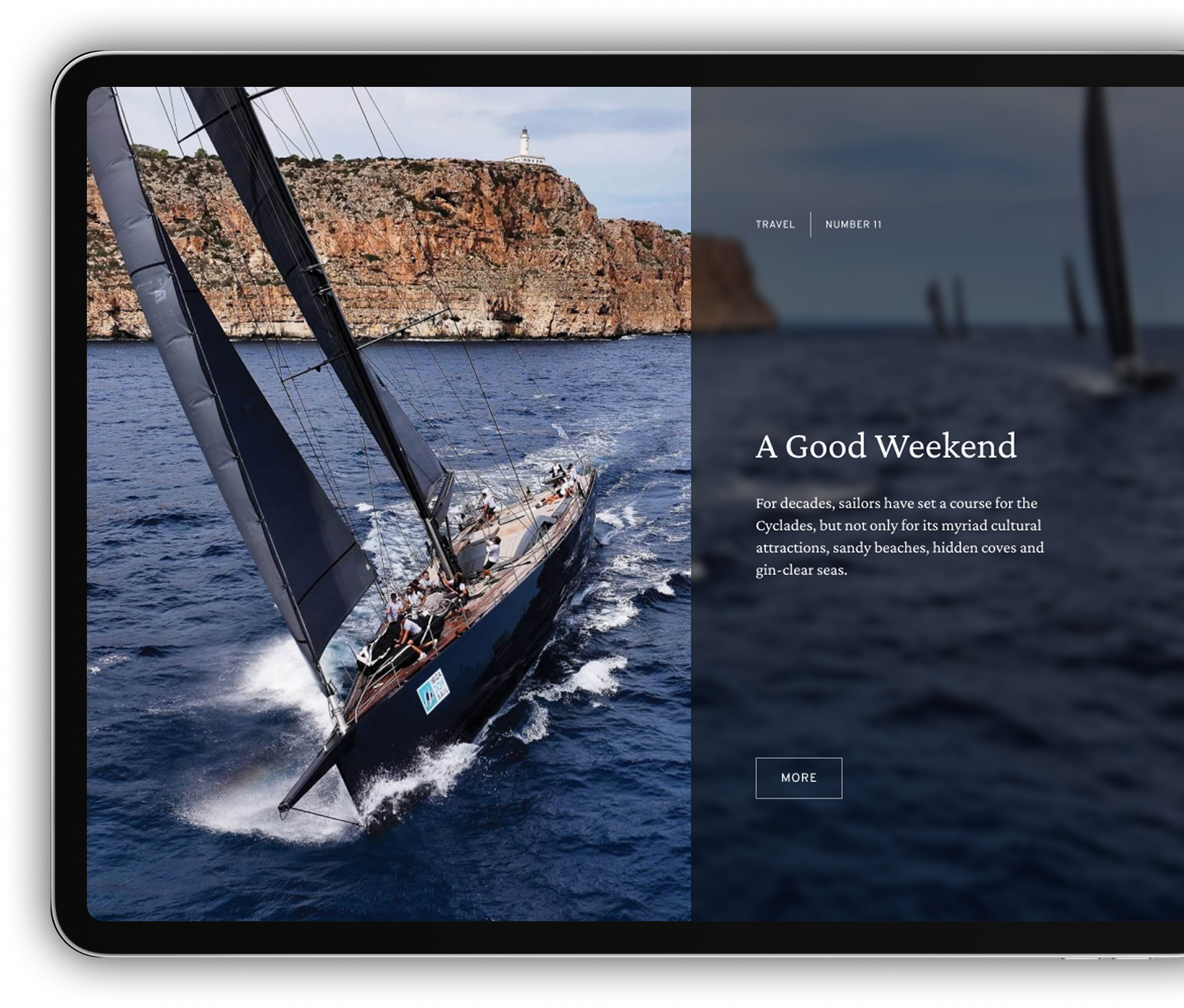
Cambria has been a stalwart of the classic racing scene since her return to Europe in 2001 and she has proven herself to be a fearsome adversary on the course. The boat is at her best in flat water and about 12kn of breeze. In these conditions, she’s hard to beat and her blend of grace and pure speed is bewitching. “The amazing thing is that she sails as good as she looks,” he enthuses. “She sails to the apparent wind, faster than the true wind. That’s quite something for a boat that’s 120 tonnes; she’s not got a planing hull so it’s phenomenal. We can be doing upwards of 10, 12 knots in 9 knots of breeze.”
The feeling of might is amazing, though it is possible to get a little blasé about it, Barkham shares. “She’s a flat water racing yacht so in those conditions you cruise along pretty quickly and accelerate super fast,” he says. “But it’s only once you get a little bit of impact and shock loading that you feel the power that’s coming down through 48 metres of mast and 450 square metres of mainsail.” Barkham therefore can’t steer the boat himself, particularly if there’s more than 13 knots of breeze. “Then I am talking nonstop with the person who’s on the mainsheet, sat right behind me,” he explains. “Because if I’m trying to steer upwind or I’m trying to bear away around a mark, there’s no way I can do that without the help of that person either letting vast quantities of mainsheet out or, if I want to come up onto the wind, I need them to drive us up into it with the mainsail.”
With 22 people in positions during races, there’s a lot of talk and a lot of team play. “Communication is a very key thing,” says Barkham. “The one thing to make a boat work is to have everyone working in unison. It’s like a ballet. Everyone’s doing their little thing at the right time and then everything works. You don’t know that until you start doing it – you think, oh, yeah, we’ll just take this thing out for a bit of a sail – but Cambria is very different, and you understand that once you start throwing her around the racecourse.”
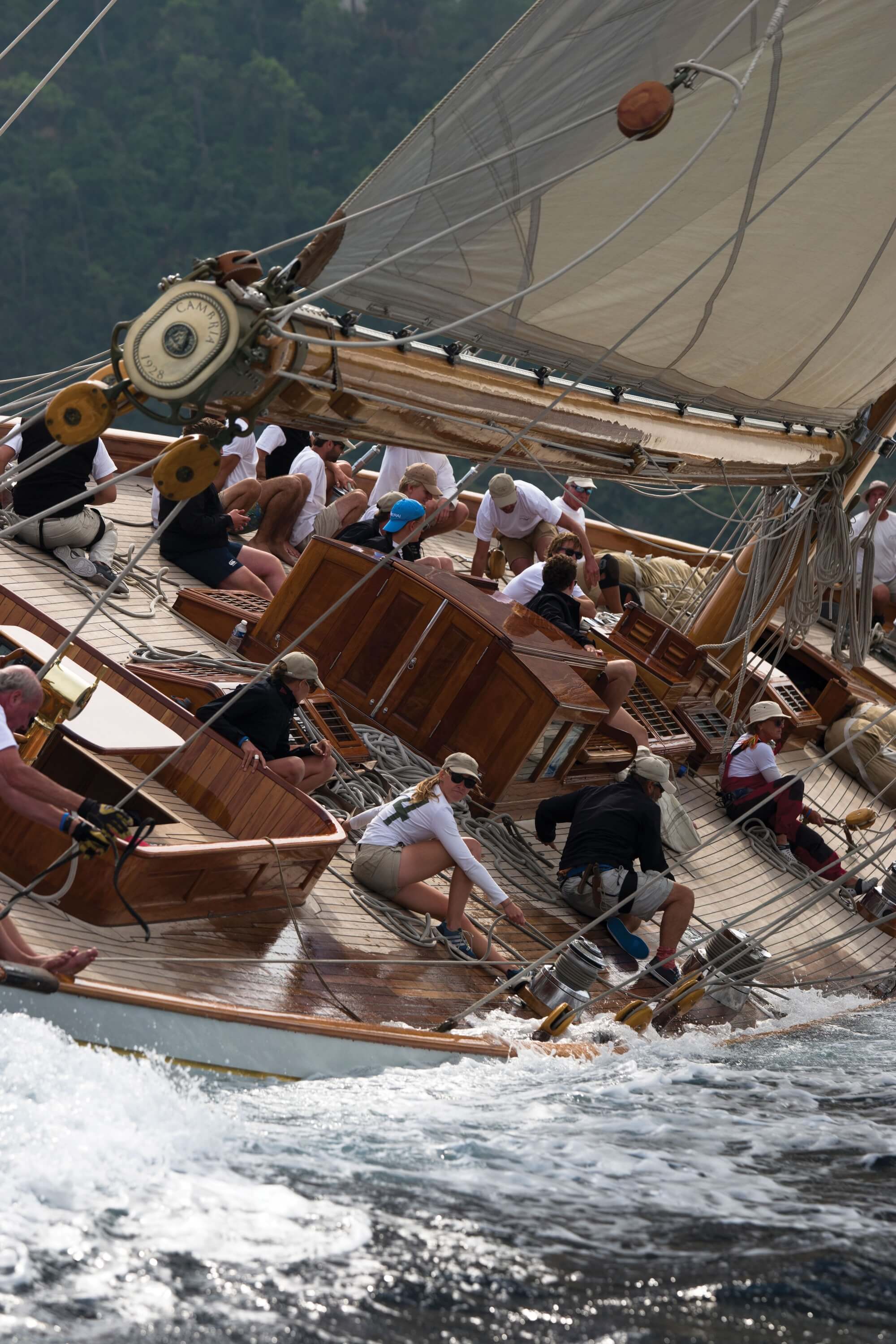
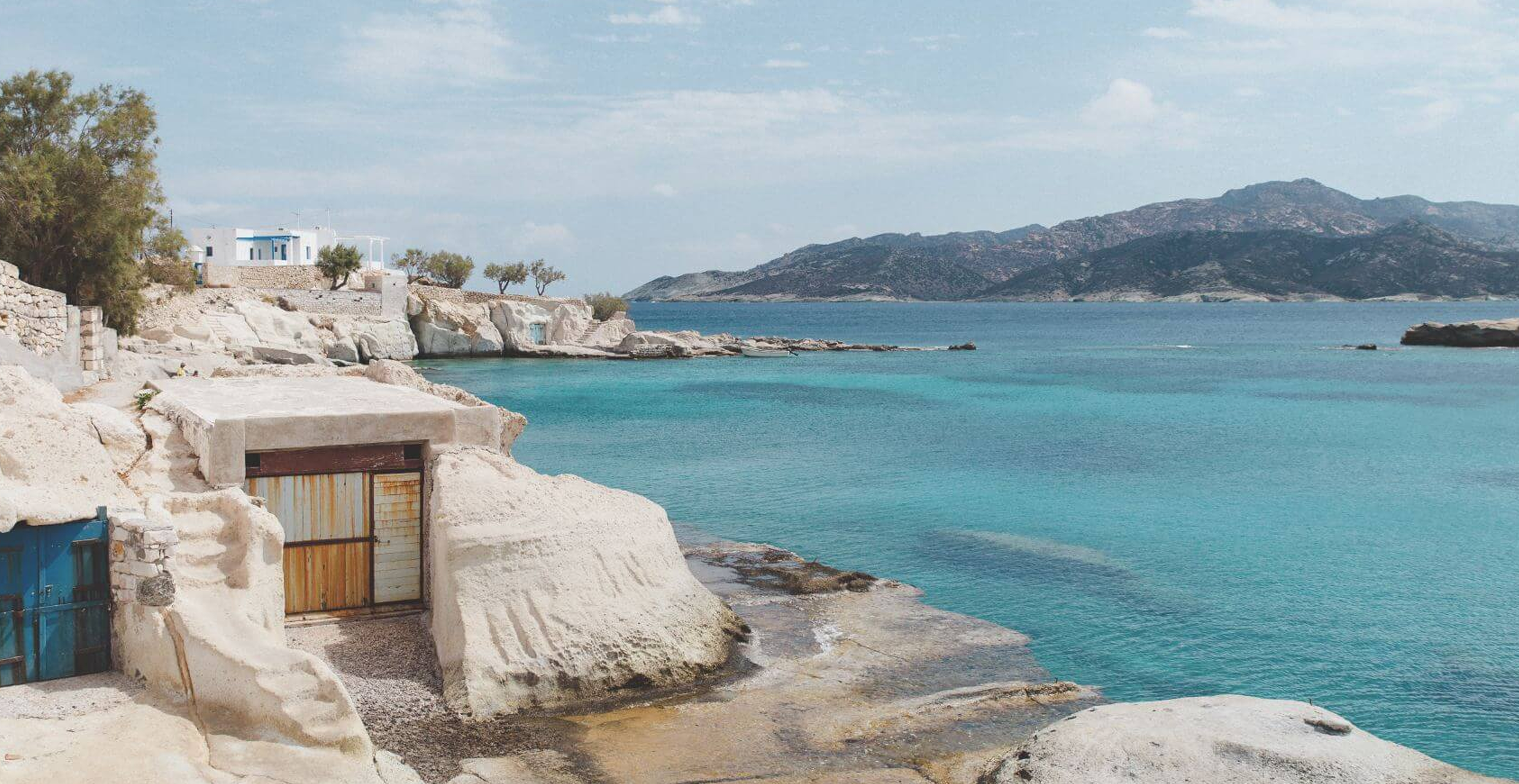
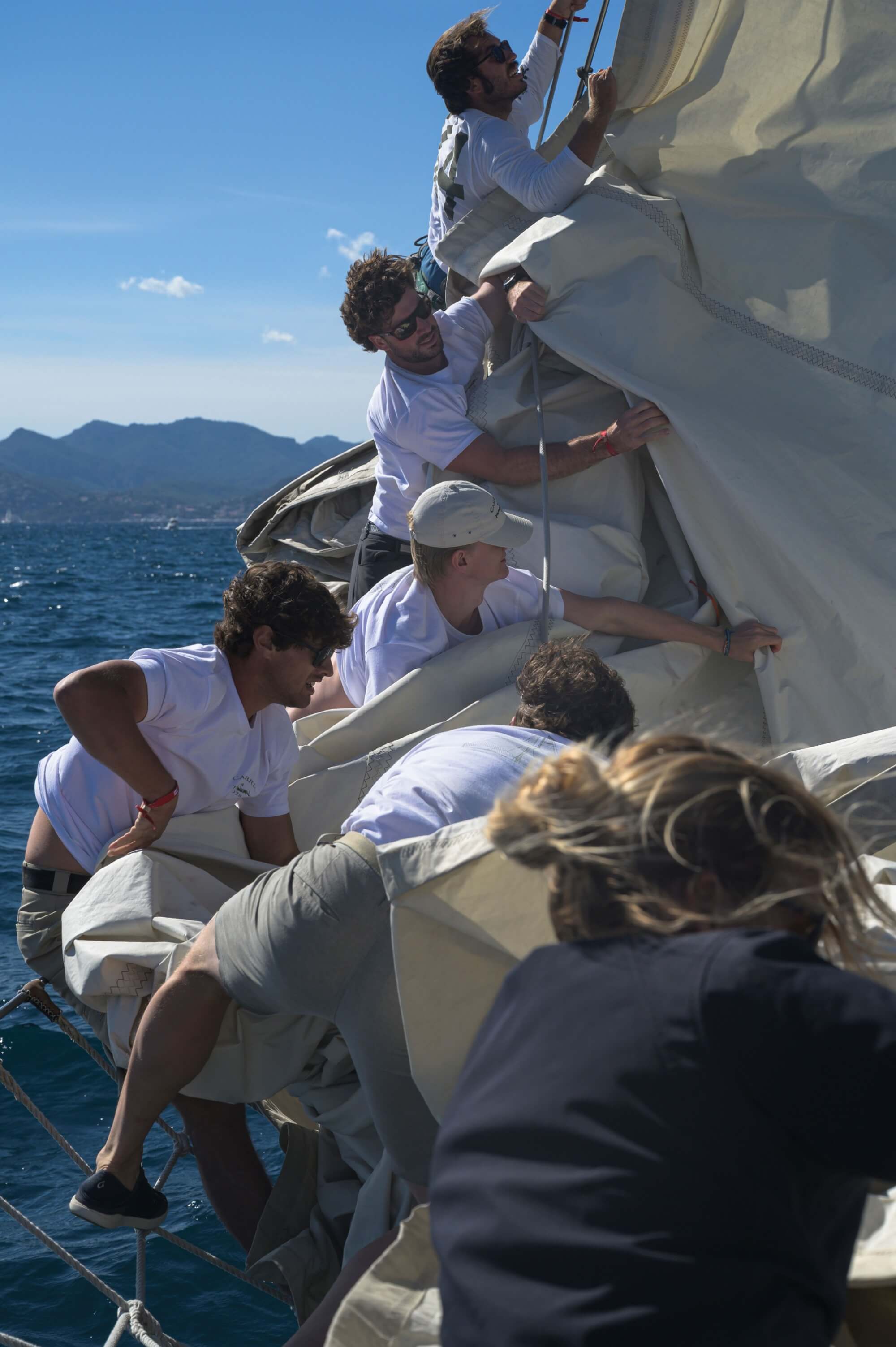
Aside from racing, Cambria is cruised extensively as, under the current ownership, she has been used as a base for family holidays. Barkham concedes that her substantial 4.2m draft and 48m mast make her a ‘terrible’ boat to cruise but, nevertheless, she has covered many miles while sticking mostly to the Med. Favourite spots include Turkey, Greece, Croatia, Sardinia and Corsica. “We are definitely a Med boat – we like the sunshine,” Barkham says. “The sails weigh a tonne and there’s no roller furling. It’s all manual. So for six crew, it’s a massive job. But there are power winches on board. For home comforts there’s freezers and fridges. We don’t carry a TV or anything like that but we carry gear to make it possible for families to go away from marinas, away from busy lives for up to 10 days as long as the weather’s conducive. We get to some fairly far-flung places and we pride ourselves on that.”
Of course, it’s not just about the sailing: owning a classic yacht is all about the maintenance. Cambria has undergone several major refits since 2004 with the most significant perhaps being the most recent in 2023-24, when her decks were totally renewed. The new deck has had a fundamental stiffening effect on the boat. “It ties the whole boat together,” explains Barkham. “So when you hit a wave, instead of stopping and shuddering, it transfers those loads down through the keel and the boat just pushes straight through which is a wonderful feeling; you’re
not losing all of that speed that you’ve just tried to gain.”
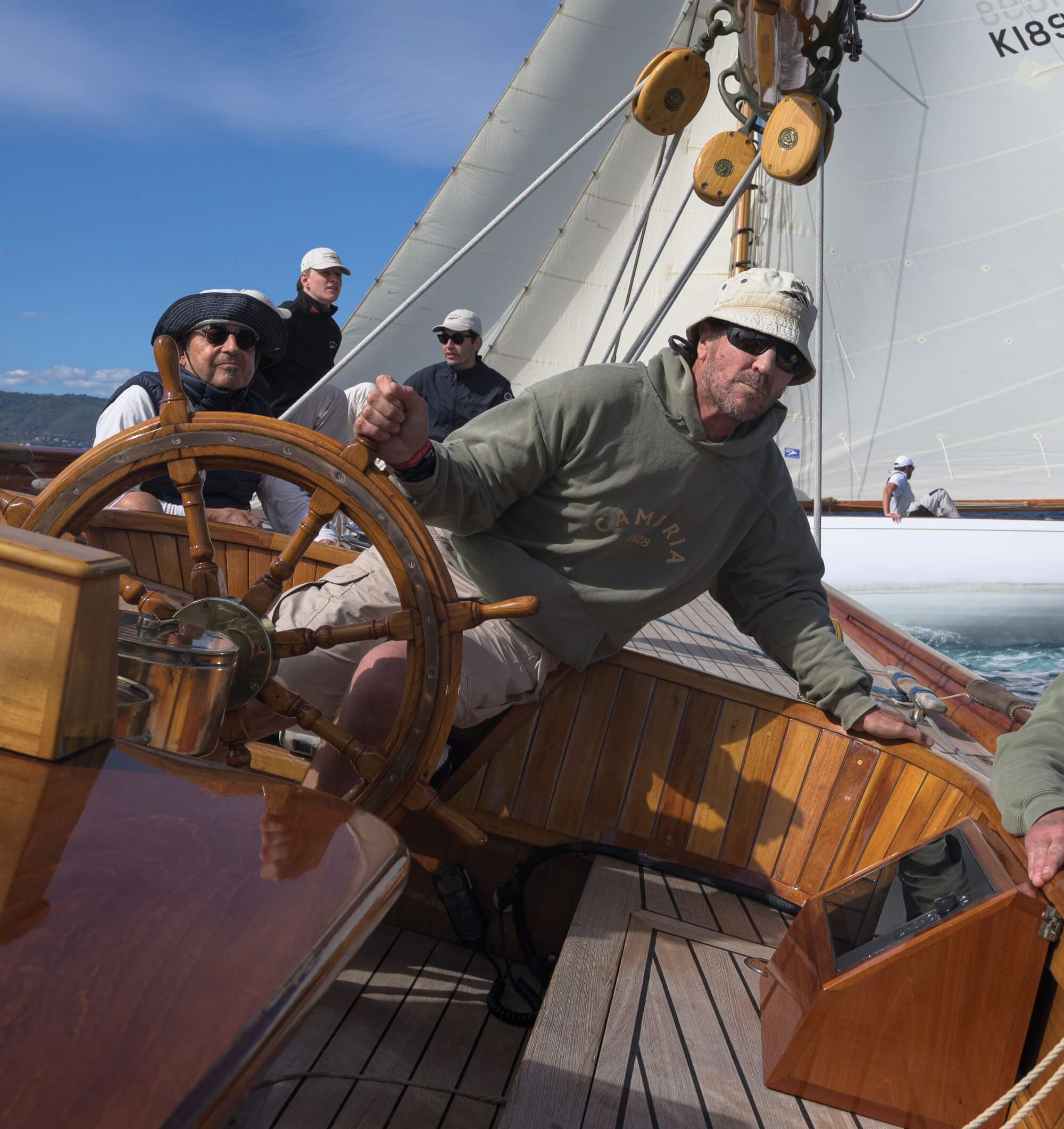
With this, the last major job to be completed, Cambria is ready for a new life and things have taken a rather unexpected turn: the owner has decided to make her available for charter. “We’re going to do racing charter,” Barkham reveals. “The guests will charter the boat for the regatta and stay in a hotel for the night. We’ll carry a maximum of 12 – the number 12 is important because we can carry eight in a very safe cockpit and in a group of 12, there are usually four or five that reckon they can sail. That means I’ve got space for eight of them to jump into the cockpit and be safe and the rest of them can get involved.”
The plan this summer is to stick to the classic Med racing circuit and Cambria is already booked in for the Puig Vela Classica in early July. From then on it will be Palma, Imperia, Cannes and St Tropez, once the paperwork has been sorted. “It’s exciting – a new chapter,” Barkham concludes. How long Cambria’s impressive story will run to is anyone’s guessing – right now Fife’s masterpiece will continue to illuminate the sailing world with her bewitching blend of power
and grace.