
MAST (Maritime Architecture Studio) is a name steeped in nautical meaning. In maritime terms, the mast is a point of balance and orientation, a connector between vessel, wind and sea. For MAST design studio, it signals a creative philosophy that places water not at the edge of architecture, but at its centre.
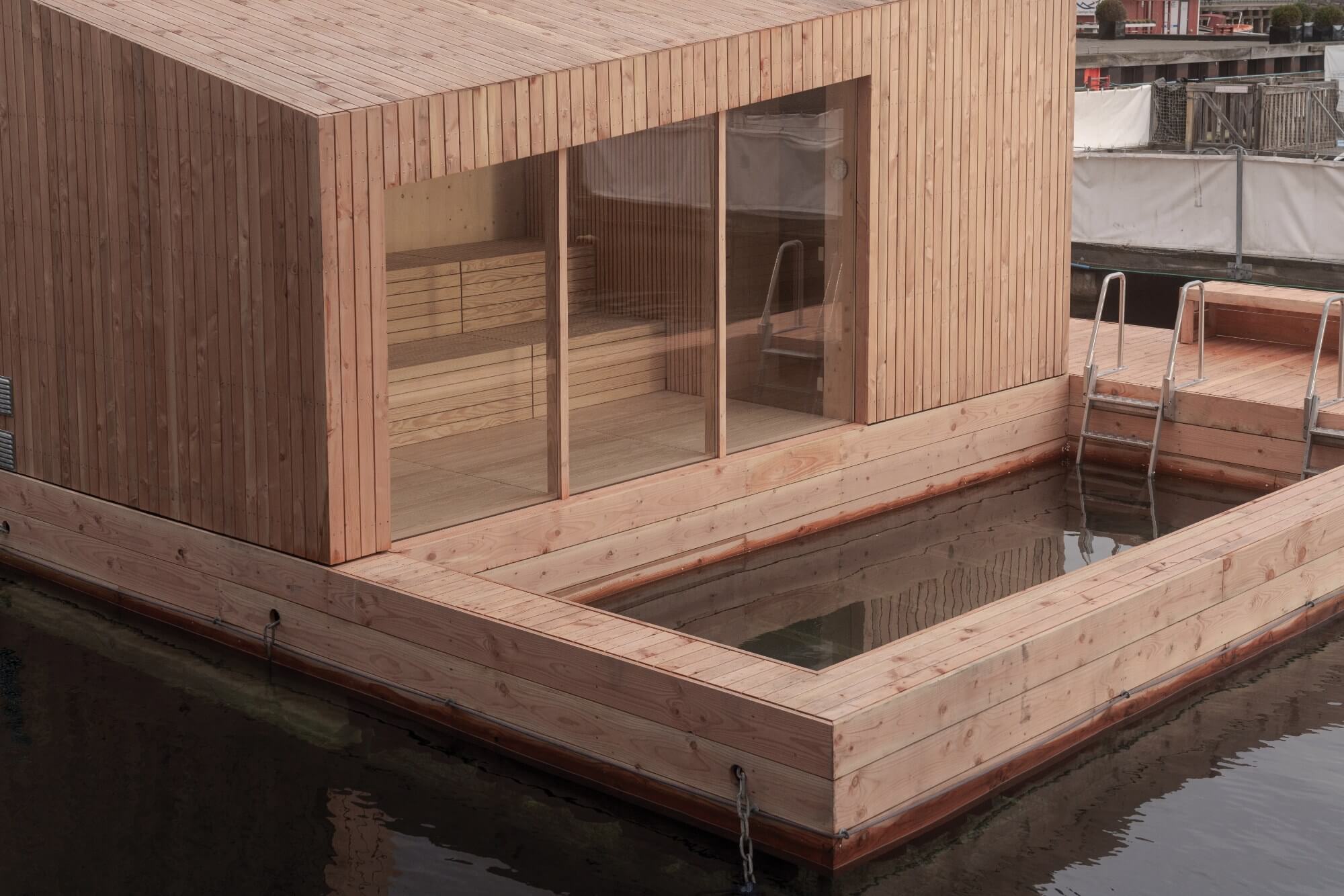
Founded in Copenhagen in 2021 by Australian architect Marshall Blecher and Danish maritime designer Magnus Maarbjerg, MAST operates at the intersection of architecture, shipbuilding and urban strategy. The studio is best known for its work on floating and water-adjacent structures: from harbour infrastructure and public bathing platforms to modular foundations capable of supporting entire neighbourhoods. Their work responds directly to the conditions of H20: movement, uncertainty and adaptability.
Blecher’s relationship with water is both personal and professional. He grew up by the coast in Australia before relocating to Denmark, where he lived on a houseboat and became immersed in Copenhagen’s water-based communities. At the same time, the city’s waterfront was transforming from an industrial harbour to a civic and recreational venue. “The harbour is Copenhagen’s largest public space, yet for a long time it was accessible to very few,” Blecher explains. Instead of treating the harbour as a leftover space, Blecher and Maarbjerg saw it as somewhere people could actually live, work and spend time. “We realised water could be treated with the same value as land,” Blecher says. They tested ideas in Copenhagen through public swimming platforms, floating structures and harbour infrastructure, before applying those lessons to other post-industrial waterfronts.
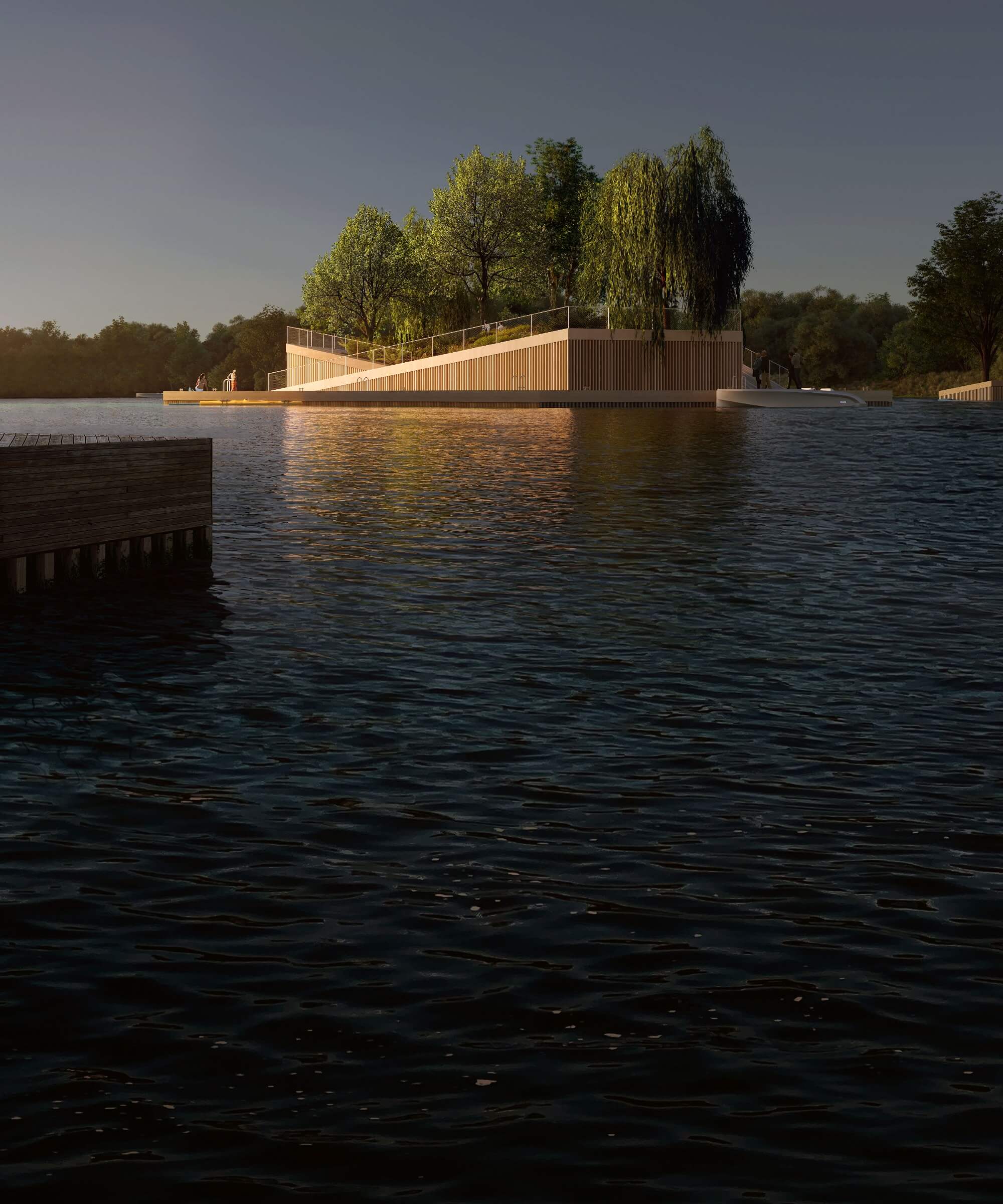
At the core of MAST’s practice is the idea of reconnecting cities to the sea. In practical terms, this means removing the physical, social and psychological barriers that have historically separated people from the water. Rather than seeing the waterfront as something to defend against, MAST approaches it as an active, shared space. “We start every project by asking a very simple question: how can people connect with the water again? That question informs everything we do, from large-scale planning strategies to small, tactile details such as ladders, edges and thresholds,” says Blecher. “It also means designing for movement rather than resisting it.” MAST designs spaces that accommodate tides, weather and seasonal shifts. Stability in their creations is neither realistic nor desirable.
Designing on water presents other unique challenges. Projects are inherently multidisciplinary, involving maritime authorities, environmental agencies, engineers, boatbuilders and planners. “Regulatory frameworks are often written for commercial vessels rather than floating buildings or public marine spaces, meaning much of the studio’s work involves navigating rules responsibly,” explains Blecher. “There is no fixed site. Orientation can change, surroundings can shift, neighbours can come and go. That uncertainty becomes part of the design, rather than a problem to eliminate.”
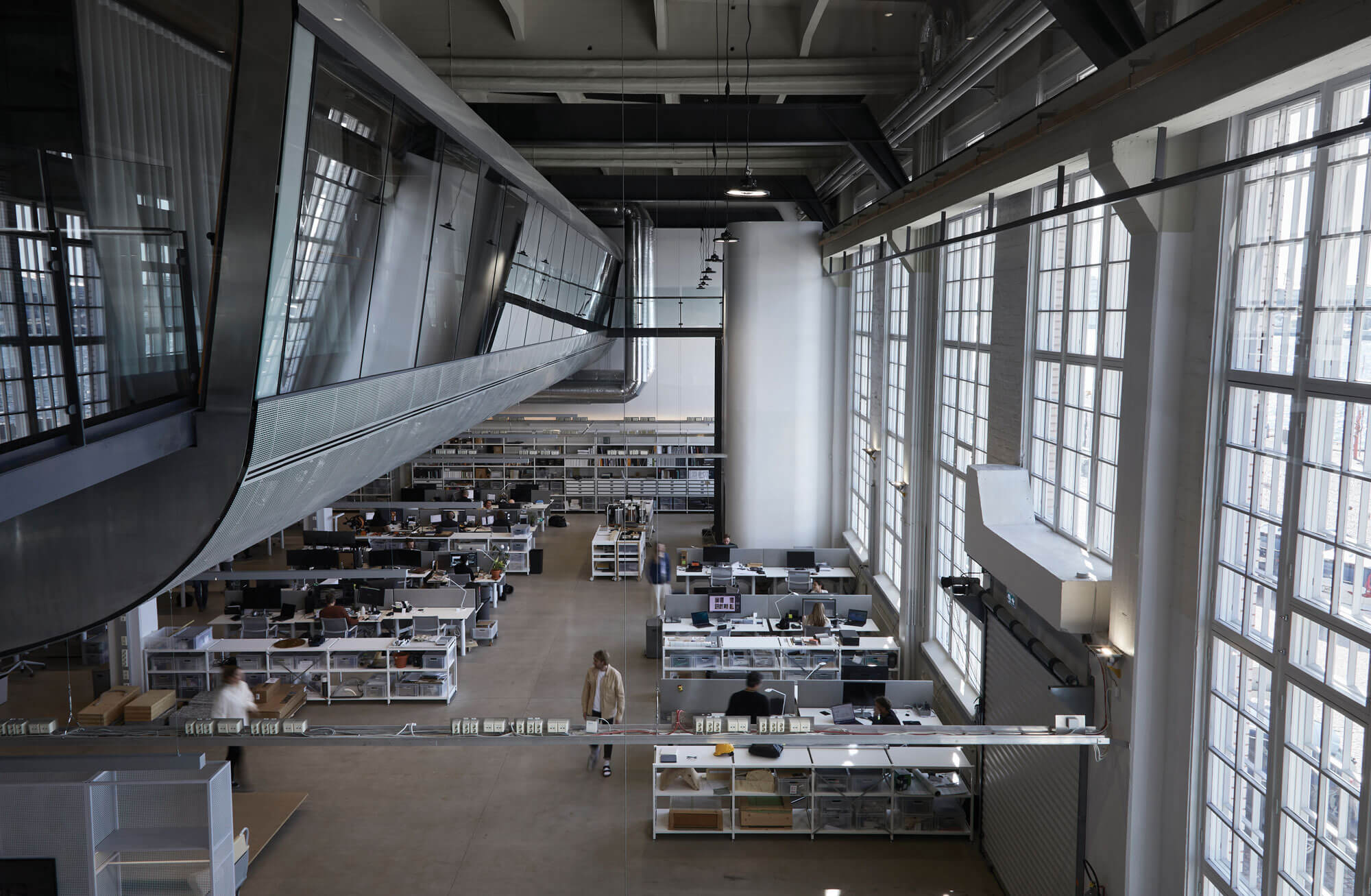
Traditional maritime knowledge is crucial to the studio’s approach. Sharing a workshop with skilled boatbuilders, MAST draws on techniques developed for yachts and ships, many of which have yet to make their way into conventional construction. Architectural thinking also feeds back into maritime craft, balancing both disciplines. This pragmatic approach is especially relevant in the context of climate change. Rising sea levels and increasingly unpredictable weather confronts architecture’s reliance on fixed predictions. “The biggest challenge is accepting uncertainty,” says Blecher. “Instead of designing for a single flood level or a defined lifespan, we develop systems that can adapt over time.”
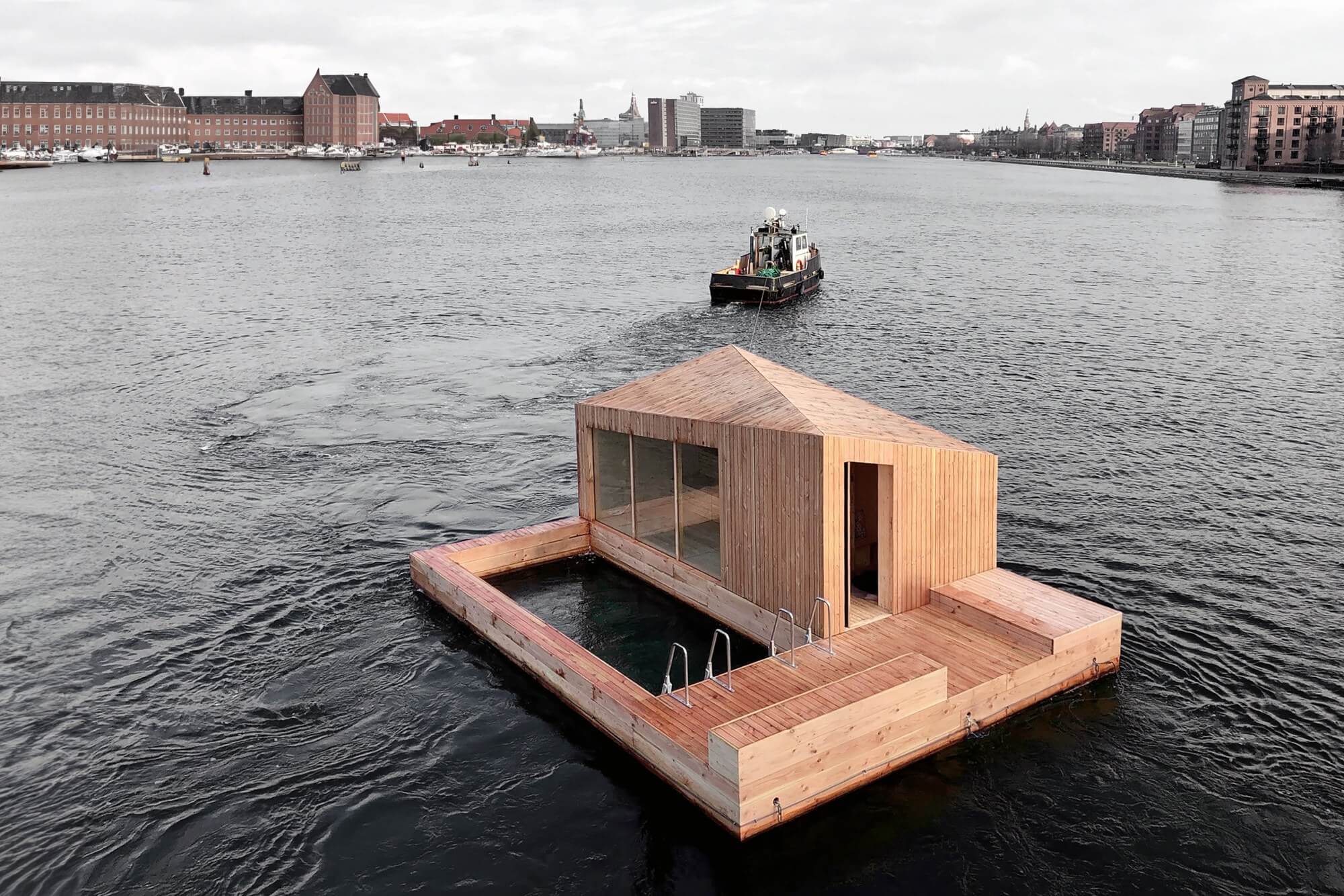
Technological innovation plays a key role in this adaptability. The studio has developed modular floating foundations using recycled foam glass, which is lighter, more flexible and ecologically responsive than conventional concrete pontoons. Structures are designed not just to float, but to function as habitats, encouraging marine life rather than excluding it.
Despite the technical demands, aesthetics remain central. MAST often takes cues from boat design, where form follows function. “However, the function of a floating building is different from a navigable vessel,” Blecher says. “We avoid nautical references unless they genuinely add value.” The result is architecture that feels straightforward, purposeful and easy to understand. Physical models and prototypes are central to the process, used to test visual aesthetics, as well as stability and hydrostatics.
“Material choice is equally deliberate,” says Blecher. “Timber, which is valued for its sustainability and ability to weather beautifully in marine environments, is used wherever possible.” Attention is also given to the interface between land and water, often one of the most technically complex aspects of a project. “Bespoke gangways and bridges are often developed to accommodate fluctuating water levels while maintaining accessibility and ease of use,” he explains. Looking ahead, MAST envisions waterfronts that are softer, more layered and more resilient. Instead of hard layers and defensive edges, future urban water spaces will incorporate gradients, floating landscapes, wetlands, amphibious buildings and public realms that can flood without failing. “Water will be part of everyday urban life, not something hidden behind barriers,” says Blecher.
The studio is increasingly exploring larger, mixed-use floating neighbourhoods, with projects underway in Denmark and the United States. Beyond specific geographies, Blecher hopes MAST’s work will help overcome one of the biggest obstacles to water-based communities: a lack of precedent. “We want to show that large-scale floating developments are possible, economical and desirable,” he says. “In doing so, we can unlock entirely new ways of building communities.”
Asked about influences, Blecher points to the Danish-born Jørn Utzon, designer of the Sydney Opera House. The connection is both professional and personal as Blecher owns a small sailing boat designed by Utzon’s father, Aage Utzon. It’s a fitting reference for a practice that bridges architecture and the sea.