
Experience the natural world’s masterpiece: 14 islands encircled by heavenly coral lagoons, dotted with volcanic peaks, set in the South Pacific. Dayyan Armstrong, Director and Founder of Sailing Collective charters, is here to be your guide
At first glance on a map, the South Pacific appears to be the largest stretch of unbroken ocean on the planet. Take a closer look and you’ll notice strings of improbable islands rising from depths where land seems unlikely. Upon further inspection, many of these isles are fringed by idyllic coral lagoons that allow boats to sit safely in their harbours while the vast sea sends gigantic waves crashing onto outer reefs.
This is French Polynesia, a cluster of some 118 dispersed islands and atolls spanning more than 1,200 miles. It is part of a larger constellation of islands stretching from Hawaii to New Zealand that together form Polynesia as a whole. You could spend a lifetime exploring this region and still find more to see. If time is limited, consider narrowing your yachting adventure to the Society Islands – from Tahiti and Mo’orea to Raiatea, Taha’a, Huahine, Bora Bora and Maupiti – located within the Leeward Islands. Read on for your extremely well-sailed guide.
Tahiti
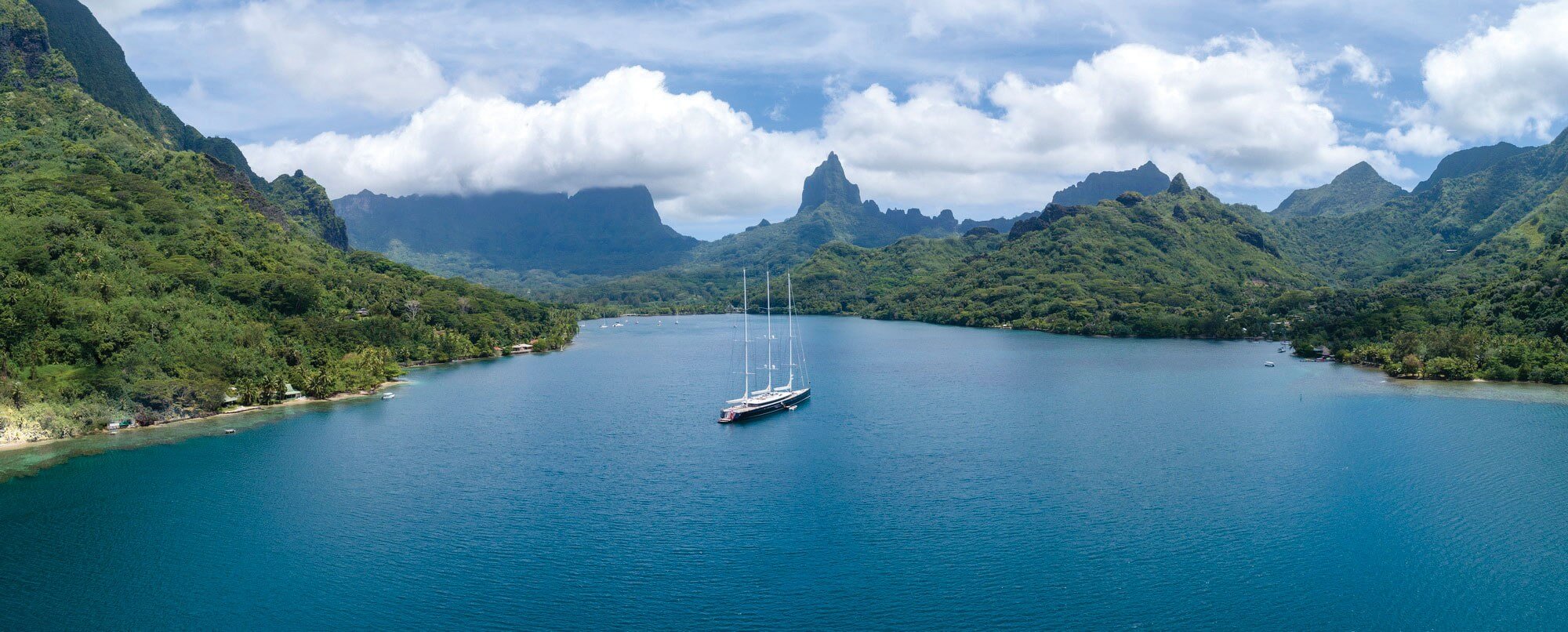
The legendary island of Tahiti is the largest in French Polynesia, acting as the capital and gateway to the rest of the territory. With an international airport and a major shipping port, supplies first arrive here before being distributed throughout the archipelago. The same holds true for voyagers sailing in French Polynesia. Papeete, the capital city, has the greatest concentration of harbours. A large marina lines the waterfront, filled with vessels ranging from Superyachts to world-cruising sailboats. Tahiti is often considered the primary departure point for yachts heading to the Tuamotu Archipelago or westward to Bora Bora and the Leeward Islands, but exploring its own isolated coves should not be overlooked.
Tahiti is approximately the size of Rhode Island, and many of its most remote and stunning destinations lie along the eastern, windward coast – best visited only during calm seas. Few sights in the Society Islands rival anchoring along this dramatic shoreline while gazing toward the towering, lush summit of Mount Orohena. Two massive ancient volcanoes are adjoined by a narrow connection near Taiarapu-est, where Baie Phaeton creates a natural bay – one of Tahiti’s most protected. Take a trip ashore here and you’ll find miles of soft, fine black-sand beaches made from volcanic stone.
Mo’orea
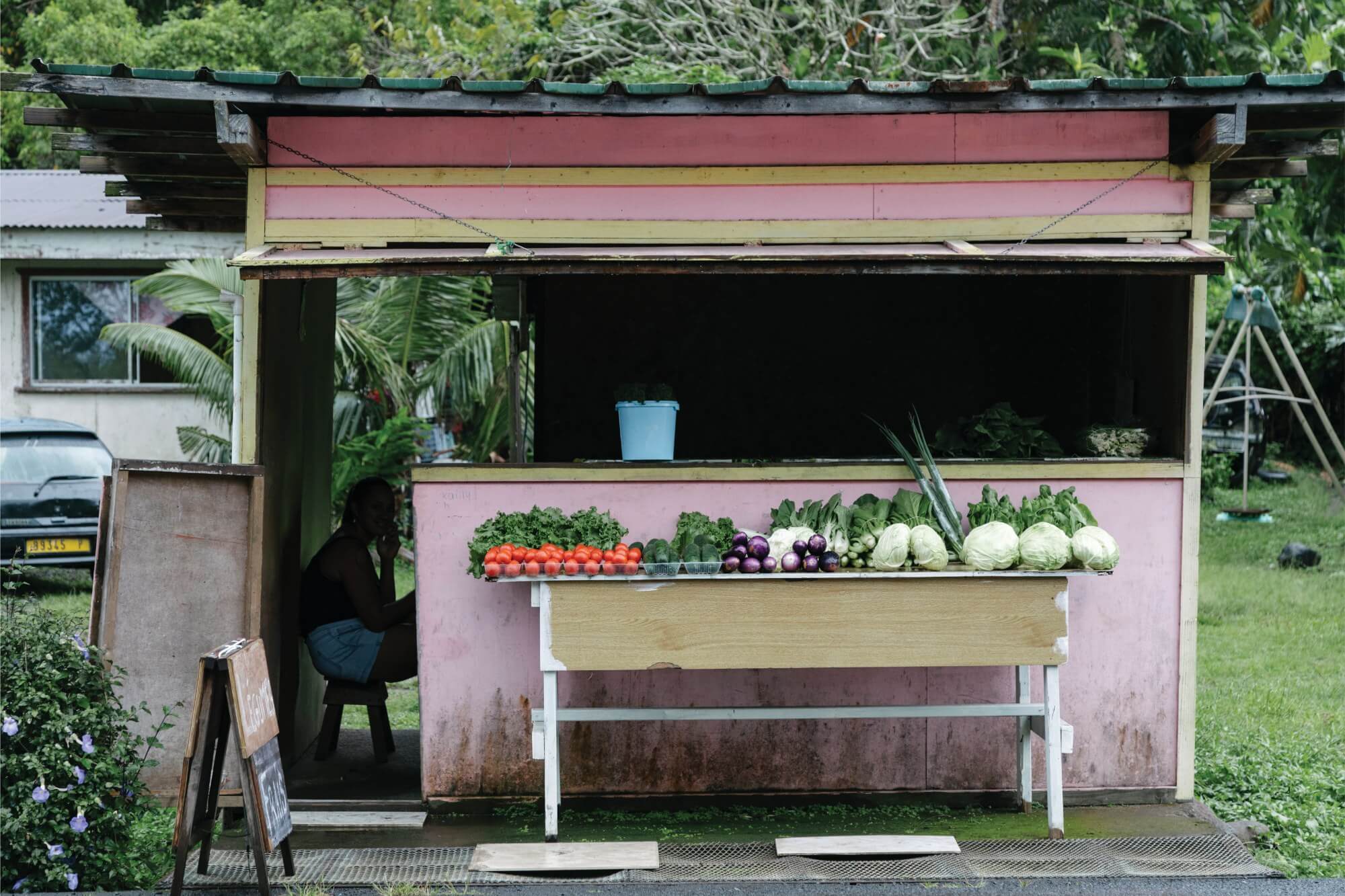
Mo’orea is small in comparison to Tahiti, sitting approximately 20 nautical miles from the nearest shores of its larger neighbour: the island can be circumnavigated by car in about 60 minutes. Like the others in the Society archipelago, the island is mountainous and covered in greenery in every direction. A barrier reef lagoon surrounds her, sharing the same general composition as nearby isles, yet Mo’orea is distinguished by having roughly a dozen navigable passes that provide safe access and inviting anchorages for yachts and charter vessels alike. Ōpūnohu Bay and Cook’s Bay along the north shore are the most popular of these. Surrounded by steep, flourishing mountains, both vividly embody the equatorial remoteness for which French Polynesia is celebrated. These locations often host expedition yachts – some mid trans-Pacific crossing, others resting after vast ocean passages.
On the island’s east coast lies Vai’are, the primary town and ferry landing, with regular services to and from Tahiti. Marina Vai’are, the largest marina on Mo’orea, is frequently occupied by cruising boats moored for extended periods. At the northwest corner are Motu Tiahura and Motu Fareone, two small islets encircled by vibrant reefs and renowned for exceptional snorkelling. Along the Tiahura Coral Garden, swimmers can observe Polynesian blacktip reef sharks gliding peacefully through emerald waters dotted with colourful coral heads. Ashore, a dinghy dock sits beside CoCo Beach Mo’orea, a relaxed restaurant and bar where visitors enjoy refreshments with their feet in the sand while overlooking the calm lagoon.
Mo’orea is roughly shaped like an inverted triangle, and the southern lagoon passes offer quieter, lesser-explored anchorages. Navigating toward Atiha or Ha’apiti along the southwest coast, you may find yourself surrounded by a brilliant green bay – sometimes entirely alone. Together, Mo’orea and Tahiti can easily fulfil a rewarding week-long itinerary without requiring long ocean passages. During extended voyages, the Leeward Islands are best added in settled weather.
Huahine
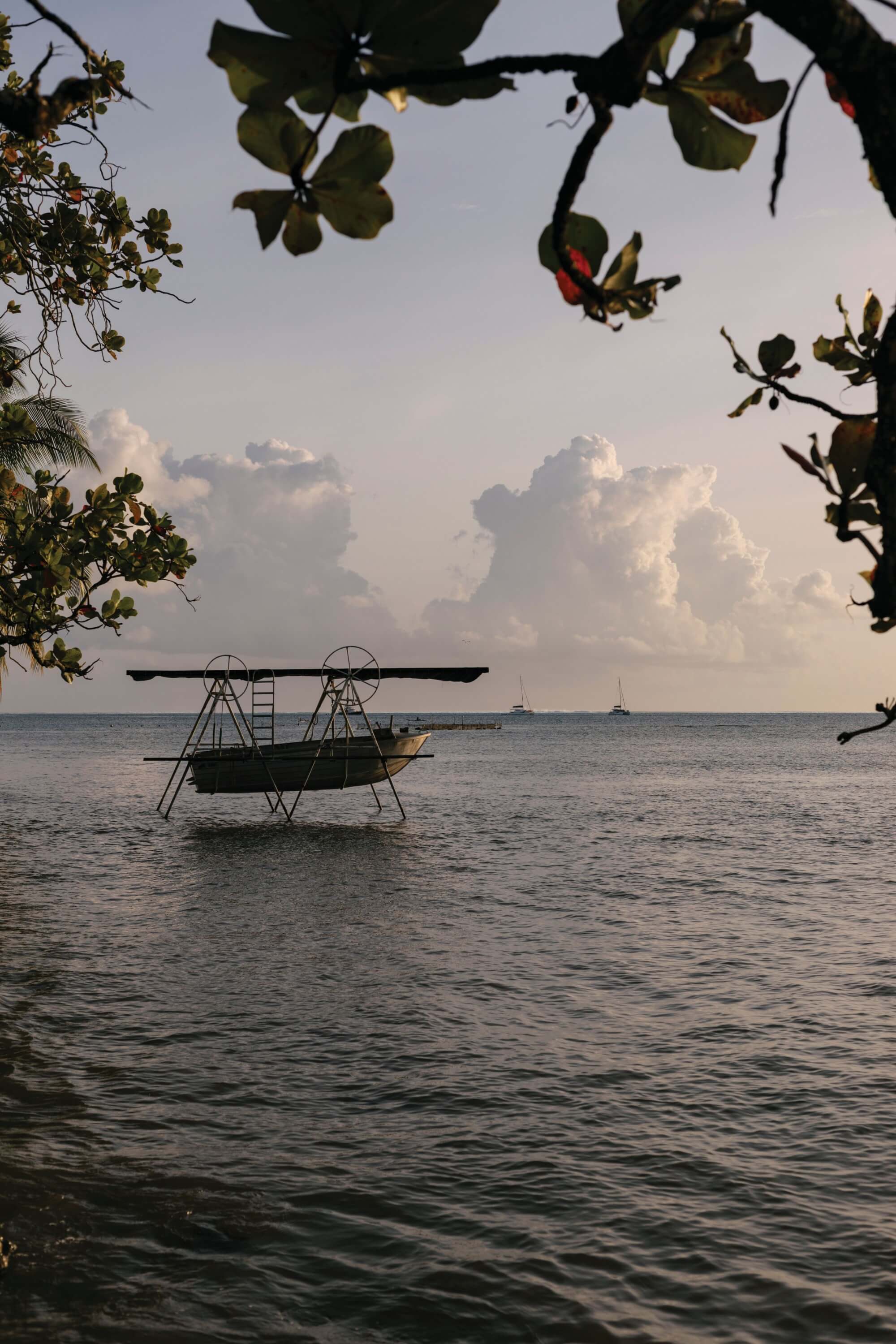
Approximately 90 nautical miles downwind from Mo’orea lies Huahine, the easternmost island of the Leeward Archipelago, situated about 25 nautical miles from Raiatea. Known for its rich canopy and vibrant colours, Huahine is tranquil – a pleasant contrast to the more developed Bora Bora to its west. There are three navigable passes, though two sit side by side and lead into Baie de Cook and the primary village of Fare on the western side. Avamoa and Fitii Pass, closest to Taha’a and Raiatea, are the most commonly used during charter itineraries, while Farerea Pass lies on the east coast.
Huahine’s quiet character is intentional. Fare serves as its hub, with grocery stores, farmers’ markets, and local handicrafts lining the main street. The Huahine Yacht Club provides a dinghy landing and functions primarily as a relaxed tiki-style bar and restaurant for cruisers. Sailing south from Fare reveals protected bays with reliable holding, ample anchoring depth and coral reefs teeming with marine life. Though sightings are rare, large manta rays occasionally frequent these waters. On Sundays, the restaurant Chez Tara hosts a traditional Polynesian barbecue, welcoming sailors to join for live music and a memorable feast – reservations recommended.
Raiatea
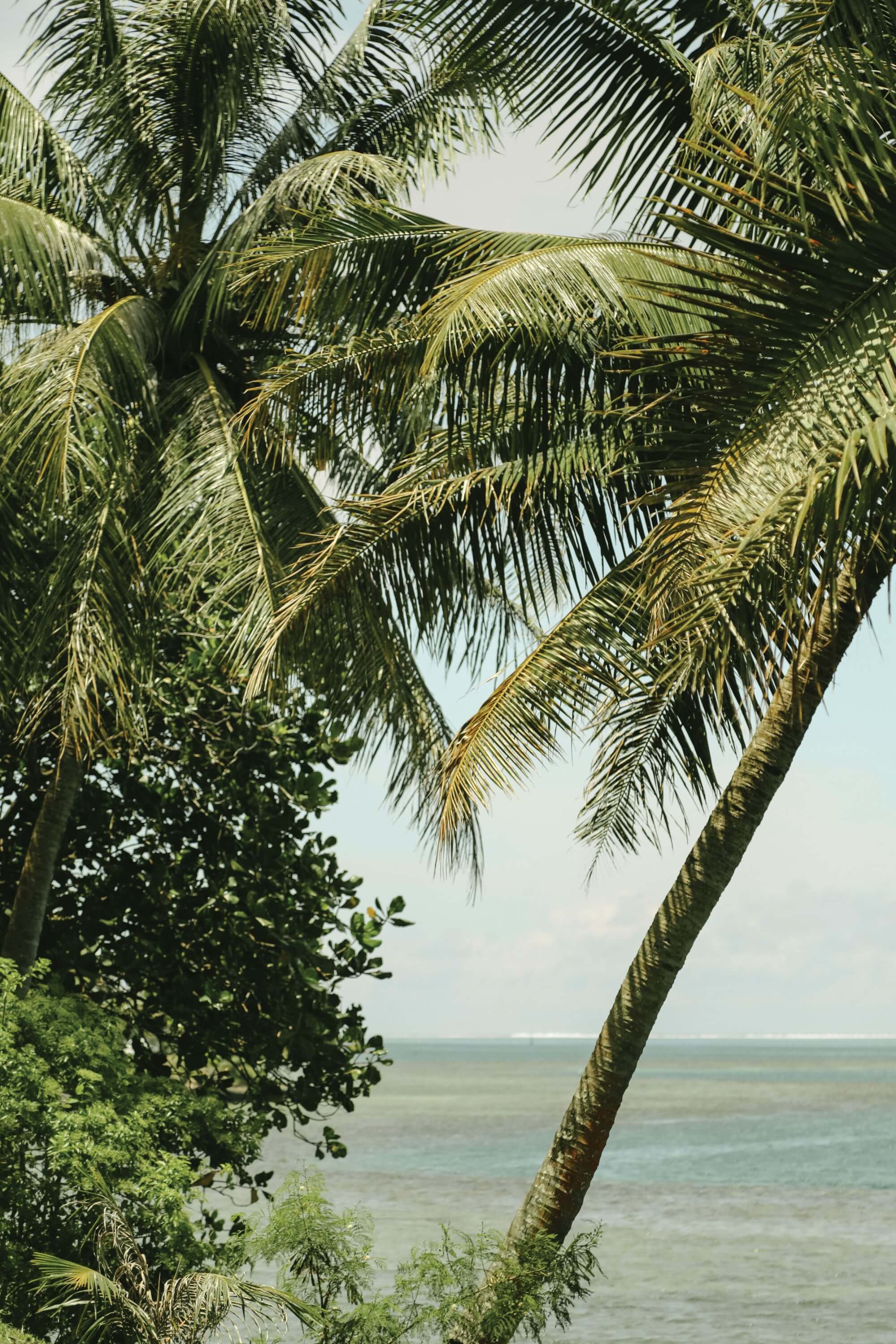
Raiatea is the premier yachting hub of the Leeward Islands, offering modern marina facilities, a marine travel lift and skilled technicians who assist cruisers of all kinds. Home to numerous charter operators with fleets of catamarans and monohulls, Raiatea is often the starting point for a Leeward Islands voyage. It is the largest and most diverse of the archipelago, featuring the only navigable river in French Polynesia and sprawling bays scattered throughout its lagoon. Tourism is relatively light, and notably there are no overwater bungalows or large resorts. Ra’aroa Bay on the east coast is the biggest bay and an ideal anchorage. Surrounded by foliage, it provides a sweet setting to explore by tender or dinghy along winding mangrove-lined waterways. Raiatea is also home to several floating pearl farms.
Taha’a
Sharing the same barrier reef as Raiatea, Taha’a is a quiet island lined with motus along its east, north and west coasts. Without an airport, anyone venturing to Taha’a via land must arrive in Raiatea and arrange a shuttle boat across the channel. For mariners, it’s lined with easy anchorages within the lagoon.
Apu Bay located on Taha’a’s southern coast is the second biggest on the island and one of the most popular anchorages. It’s deep in the centre and only usable for large yachts – smaller vessels can utilise the mooring field along the southwest point. The small boat yard with restaurant and bar that The Taha’a Yacht Club once maintained ashore is no more, but the dinghy dock is still usable as a convenient drop point to explore more.
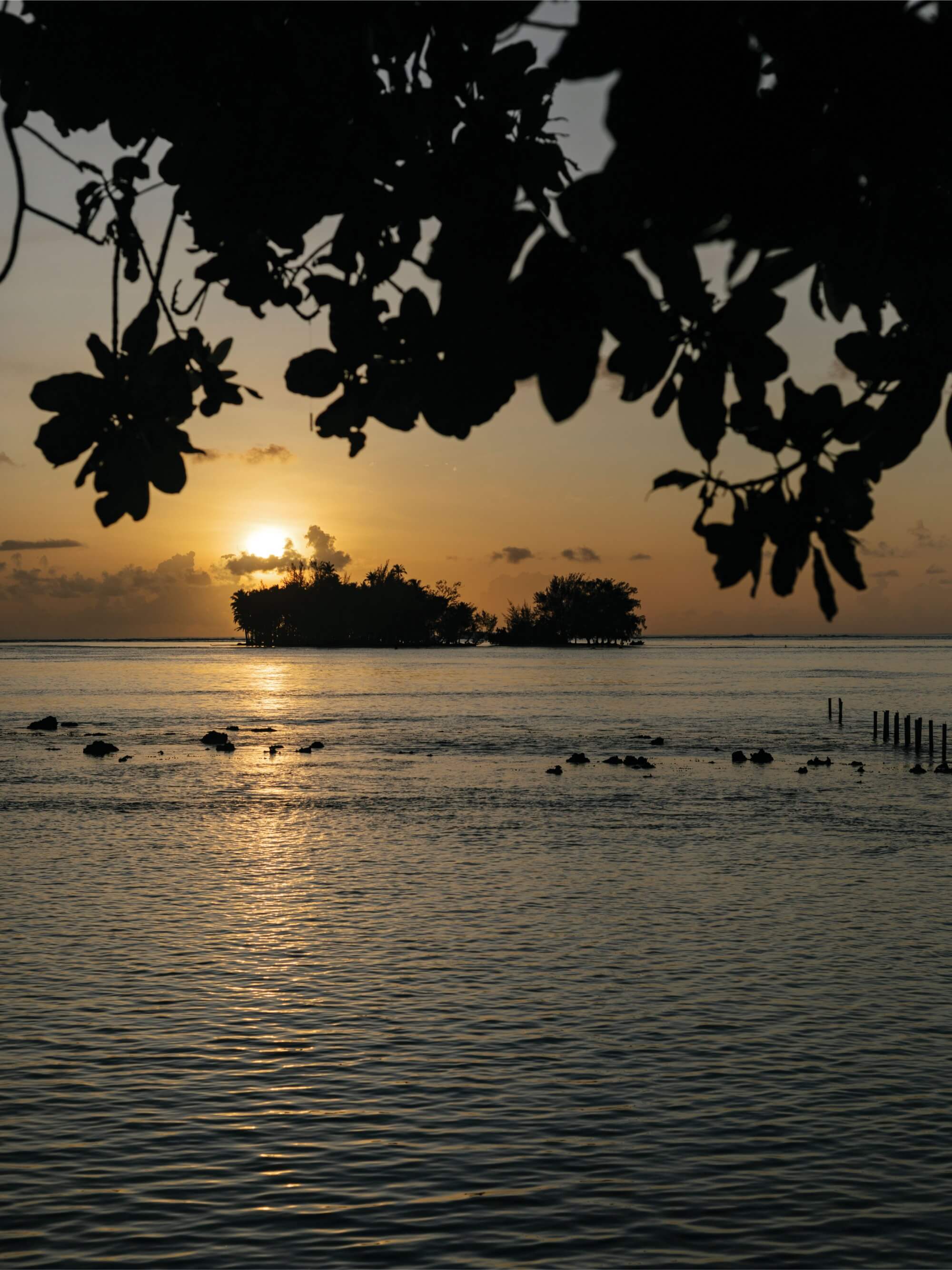
The coral garden near the pass between two small motus, adjacent to the Taha’a Resort & Spa, is a celebrated snorkelling destination and a must-visit for anyone visiting the lagoon. After anchoring nearby, you can follow a short trail to the mouth of a saltwater channel. Here, the passage is lined with brilliantly bright coral, and a gentle current allows snorkellers to drift effortlessly, surrounded by marine life. The resort also welcomes yachts for lunch or dinner with advance reservations. Southwards, a sizeable, shallow anchorage lies over pretty sands. Most nights, the water is like glass, with stunning views of the magnificent Taha’a Resort & Spa and the peak of Bora Bora in the western horizon.
Bora Bora
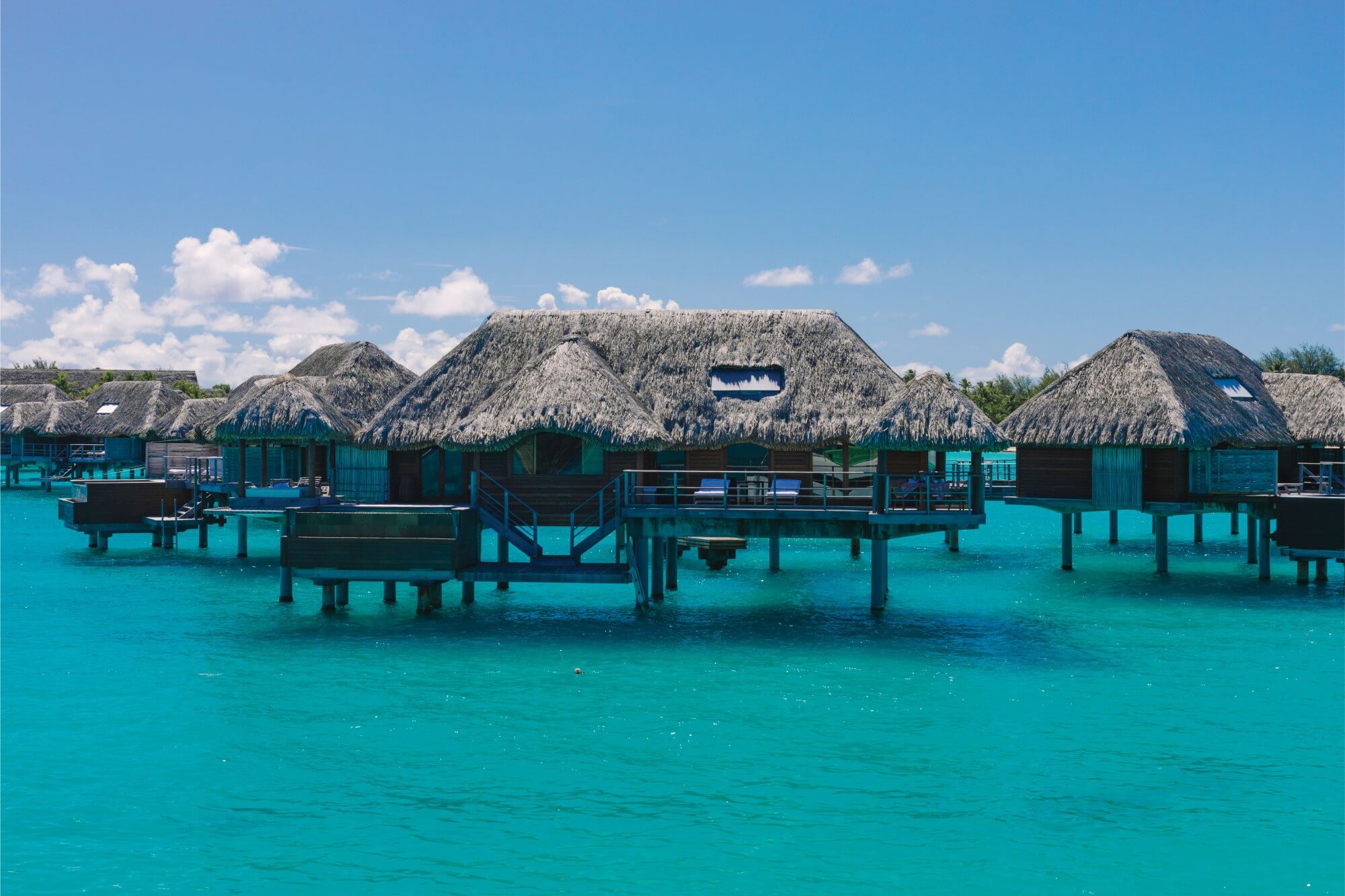
Exciting the lagoon that surrounds Taha’a and Raiatea west bound is Bora Bora – often referred to as the Pearl of the Pacific. She has long been idolised around the world and its overwater bungalows have become iconic and synonymous with the place: gazing across the lagoon toward the dramatic peaks of Mount Otemanu, whose steeple-like profile rises from dense vegetation.
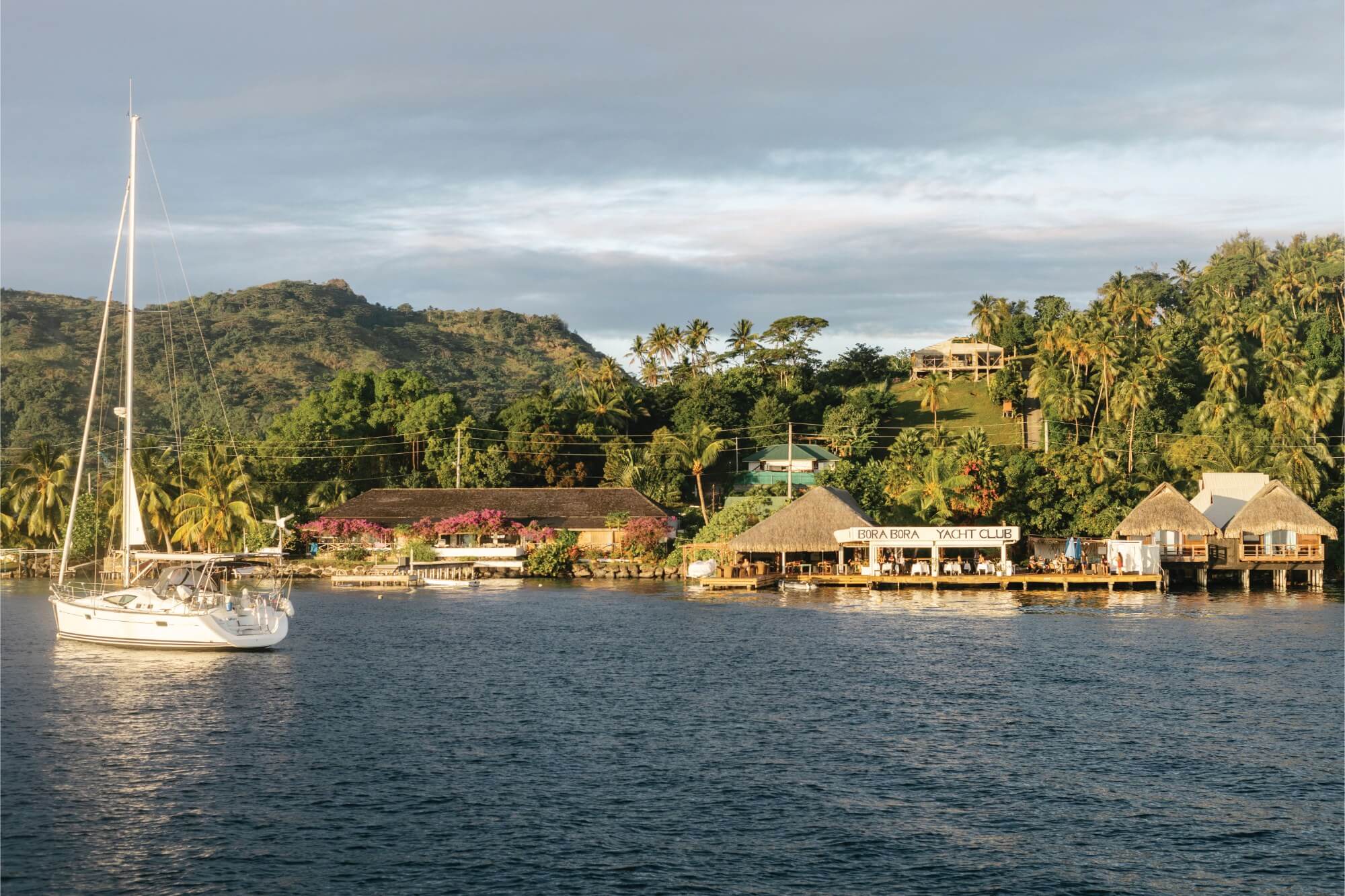
There are four primary anchorages: Faatahi, adjacent to the Bora Bora Yacht Club; Pofai Bay, near Bloody Mary’s; the western side of To’opua, commonly known as “Little Bora Bora”; and Piti Aau, a more remote anchorage offering some of the island’s most spectacular views.
The lagoon displays every imaginable shade of blue, shifting in depth from mere inches to hundreds of feet. The water is calm and ideal for wading in the shallows or snorkelling along well-preserved reefs. If fortunate, you may encounter a manta ray in deeper waters. These enormous filter feeders have little interest in humans but visit reefs so smaller fish can clean their skin. Observing one at a “cleaning station” is an unforgettable sight.
Bora Bora’s smart hotels also bring exceptional dining. Notable restaurants include Arii Moana at the Four Seasons, Iriatai at the Conrad and Le Corail at the InterContinental. Sailors can also enjoy more relaxed establishments such as Bloody Mary’s or the Bora Bora Yacht Club. At Bloody Mary’s, local musicians perform nightly while meats are grilled beside the bar. The signature drink is a Bloody Mary – predictable perhaps, but undeniably delicious.
The Society Islands are unlike any other yachting destination in the world. The natural formation of the volcanic peaks and the fringed reefs that surround them create an ideal ecosystem. Whether it’s a one-week charter or a multi-month expedition, they should not be missed.