
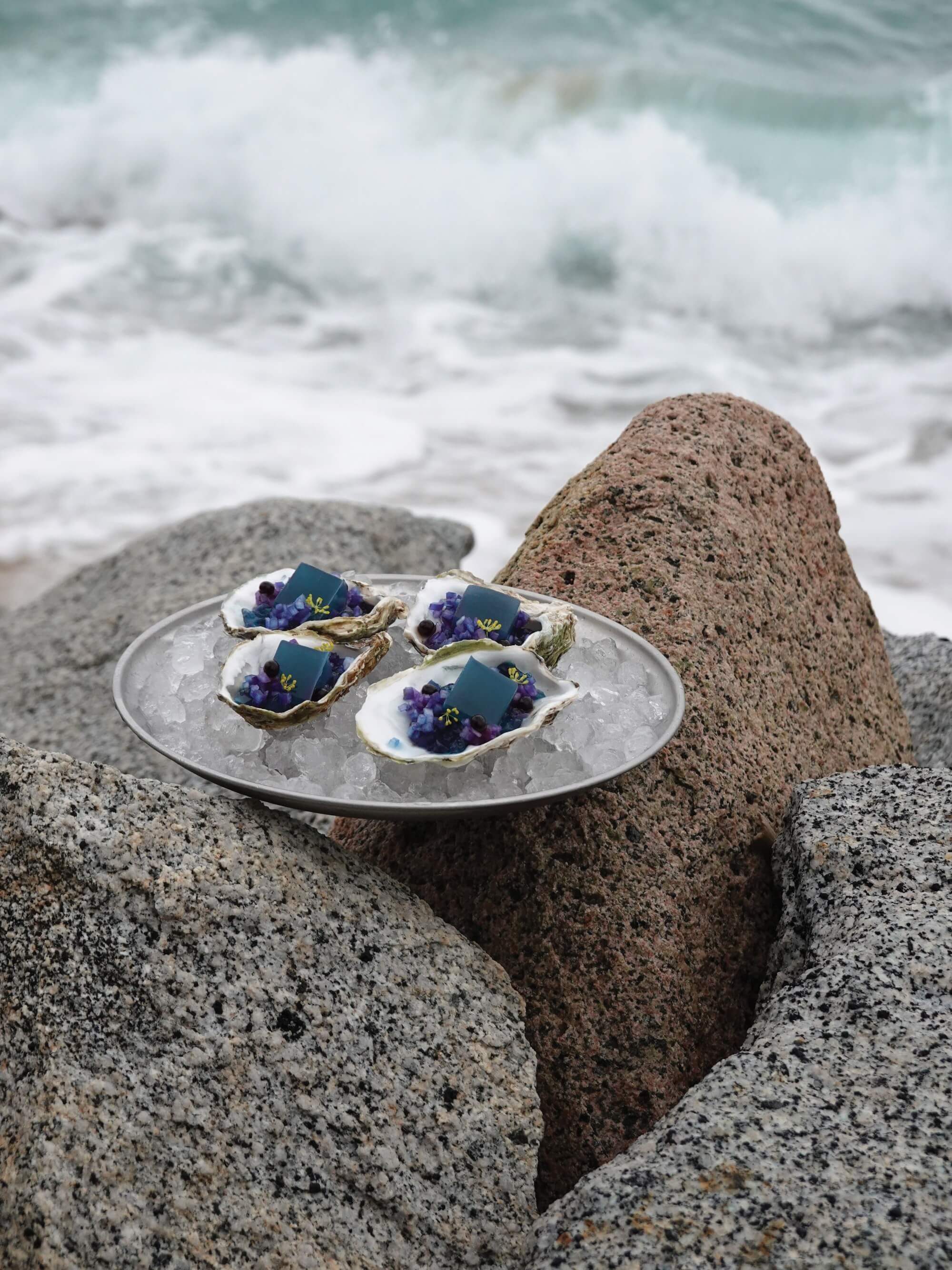
The texture of kelp. The sound of waves crashing against the rocks. The seawater flavour of an oyster. Yet no oyster in sight. These are the musings that float around the dinner table in an outrageously palatial villa outside Barcelona one warm evening. Martha, Lauritz and Lea are spit-balling ideas for a new dining concept. “What else can we eat from the sea apart from fish and seaweed?” Martha wonders. “How can we capture its flavours through a completely vegetarian menu?” The conversation is bubbling and flowing as thoughts are thrown about. “Of course there is algae, but there are so many different types we can use to create the tastes and textures of the sea without using animal products,” she continues. So begins the brief for a creative project commissioned by luxury tableware designers WMF, the photographs from which will be used across the brand’s social media.
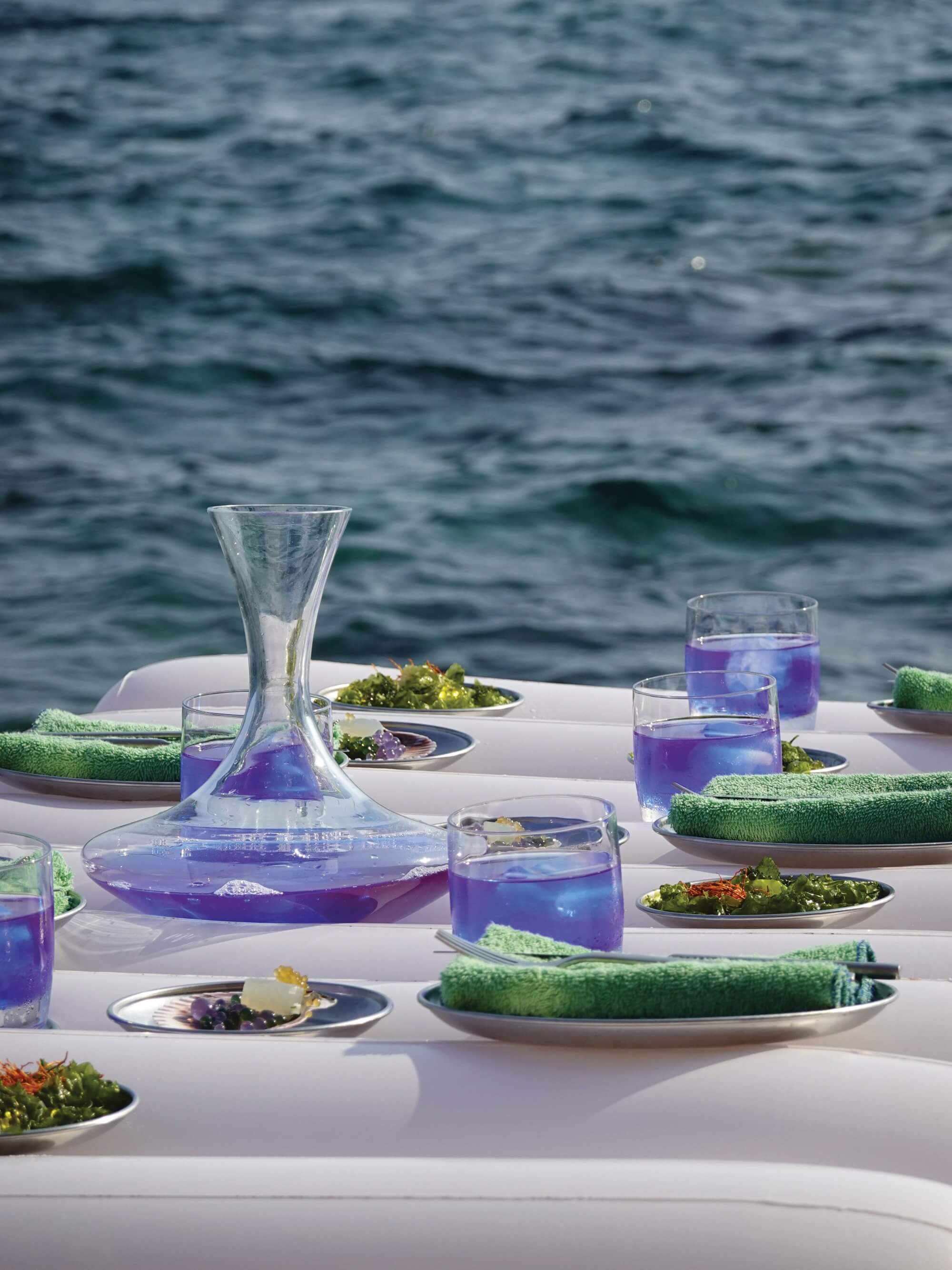
“Everything starts with how the oyster tastes like the sea, so it makes sense that we’ll get that flavour from seawater itself,” Lauritz posits. “Then perhaps we could use blue spirulina and agar agar to create oceanic jellies,” Martha Bohne, the chef among the group, muses. It’ll be served in an oyster shell – which they consider a by-product from the fishing industry – and photographed metres from the ocean spray. By the time the shoot happened last September, the Fofo trio were already dreaming of a wholly vegetarian Oceanic Menu.
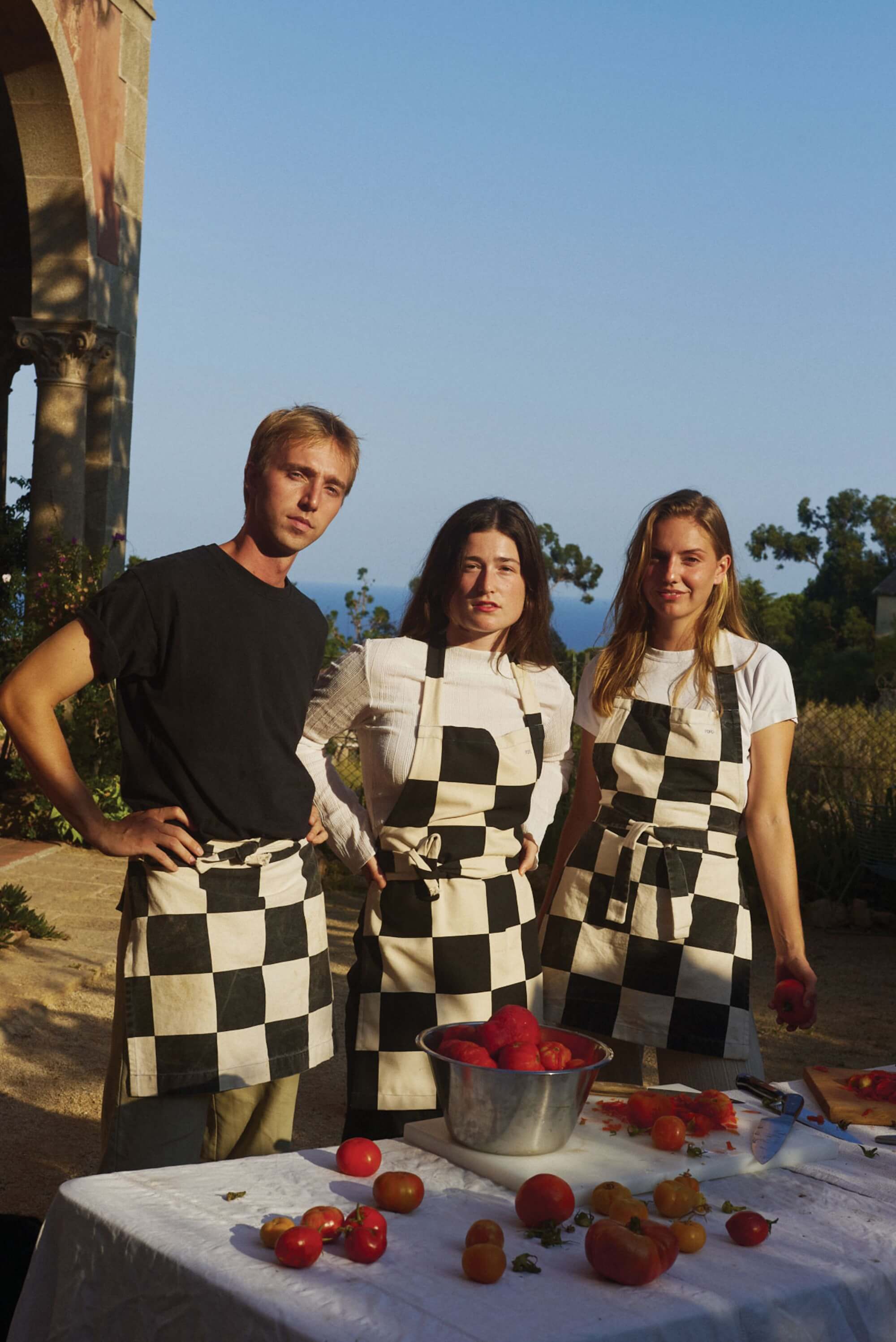
Food Forms, or Fofo for short, is a creative culinary practice that’s deliberately difficult to describe. Siblings Martha and Lauritz Bohne and their creative partner Lea Scherer started hosting supper clubs in their home a couple of years ago, inspired by the dramatically beautiful space and the produce grown nearby. Architects Lauritz and Lea approach their work through form and space. Martha, a former fashion designer, now leads the kitchen and defines the culinary vision.
“When we started to farm our own vegetables and cook them at home, it wasn’t very clear which path we’d take,” Lauritz says. But bringing people together around the dinner table felt like an authentic way of breaking into Barcelona’s diverse community and connecting with fellow creatives. “Long tables are where people connect,” Lauritz continues. It helps that their home is a stunning 1920s Modernista villa built by a disciple of Gaudí, on a hillside facing acres of vineyards and the coast beyond.
The events they now run are ‘open kitchens’ – designed to embrace connectivity to the local scene here. One special guest is featured each time: it could be a chef shining light on a specific cuisine that’s not represented in Barcelona’s restaurant scene, or an olive oil producer, a wine maker, a farmer – perhaps even a musician. “The important thing is to integrate provocative tastes,” says Lauritz. “It’s about testing, experimenting, being open about taste and open to strange things that might occur. It’s also about receiving the feedback of others and being versatile in what we do.”
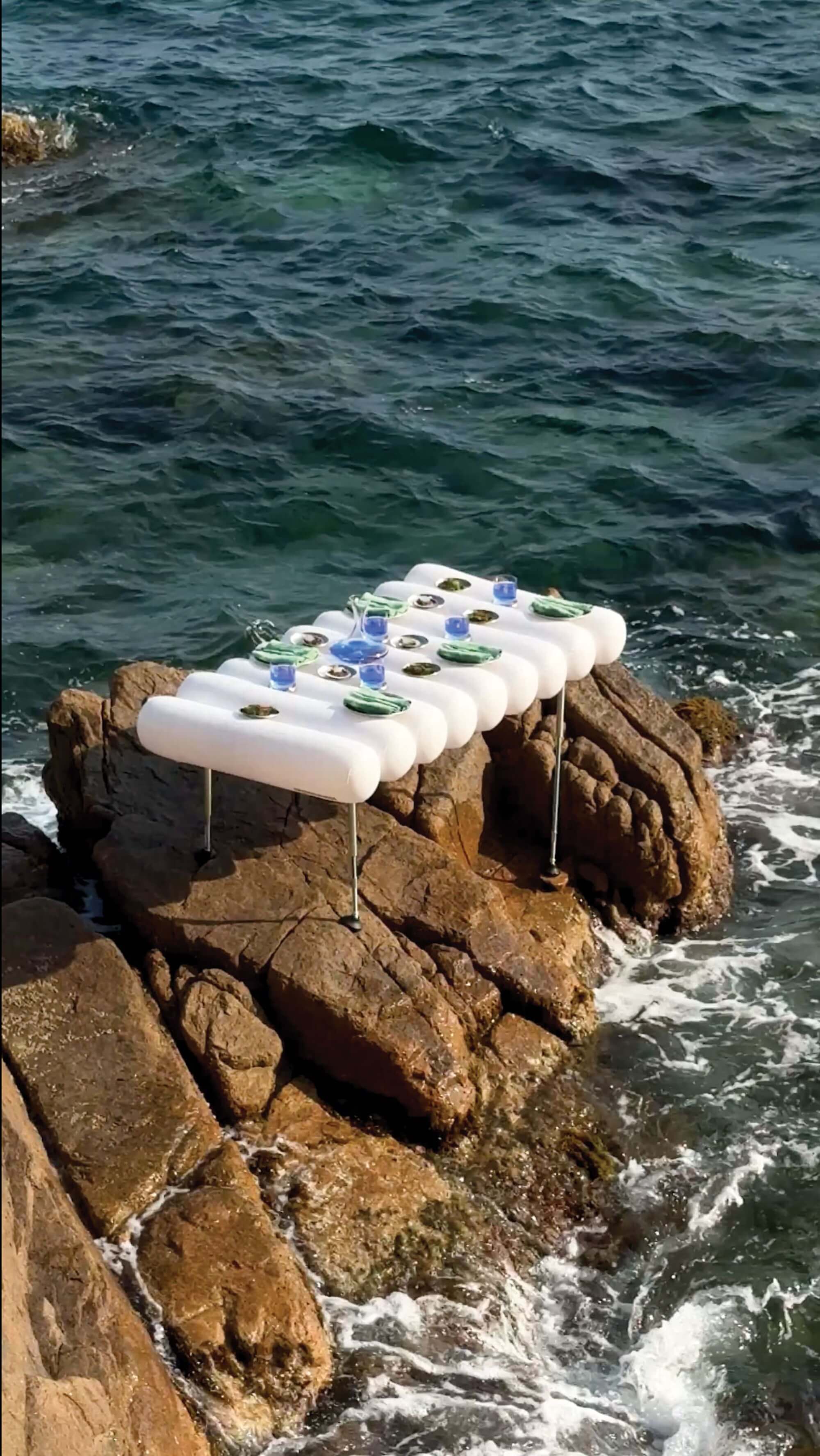
These open kitchen supper clubs also serve a business purpose. “The way we try to get to know new people, who might be a future client or a brand creator or an artist or PR, is to exchange and learn from each other,” explains Lea. Sometimes, these ideas lead to launching a collection, translating a gourmet connection. In particular, Lea and Lauritz are fascinated by the potential of the architecture of the tablescape set-up – its forms and shapes.
Other projects the trio have taken on include an opulent dinner for velvet shoe brand Flabelus, with 100 metres of draped fabric and a towering cluster of étagères staging food, flowers and candlelight. For Paris-based canned wine start-up Canetta, they hosted a subversive feast in a public playground in Barcelona, exploring the themes of play and speed. Served on a table-tennis table, the ball-shaped food touched on the convenience of canned drinks.
So, where do these young creatives hope to take these pioneering practices in the future? “We’re dreaming of taking the Oceanic Flavours onto one big floating platform that could travel from city to city. Perhaps you could even swim to it, with a perfectly styled towel waiting on arrival,” says Lea. “The next step could be an explorative research trip for cooking ingredients from the sea, onboard a Superyacht,” Lauritz chimes in with a cheeky grin.
THE OCEAN MENU:
Fofo recently crafted this creative concept for a client, seeking to capture the essence of the sea without using any animal products:
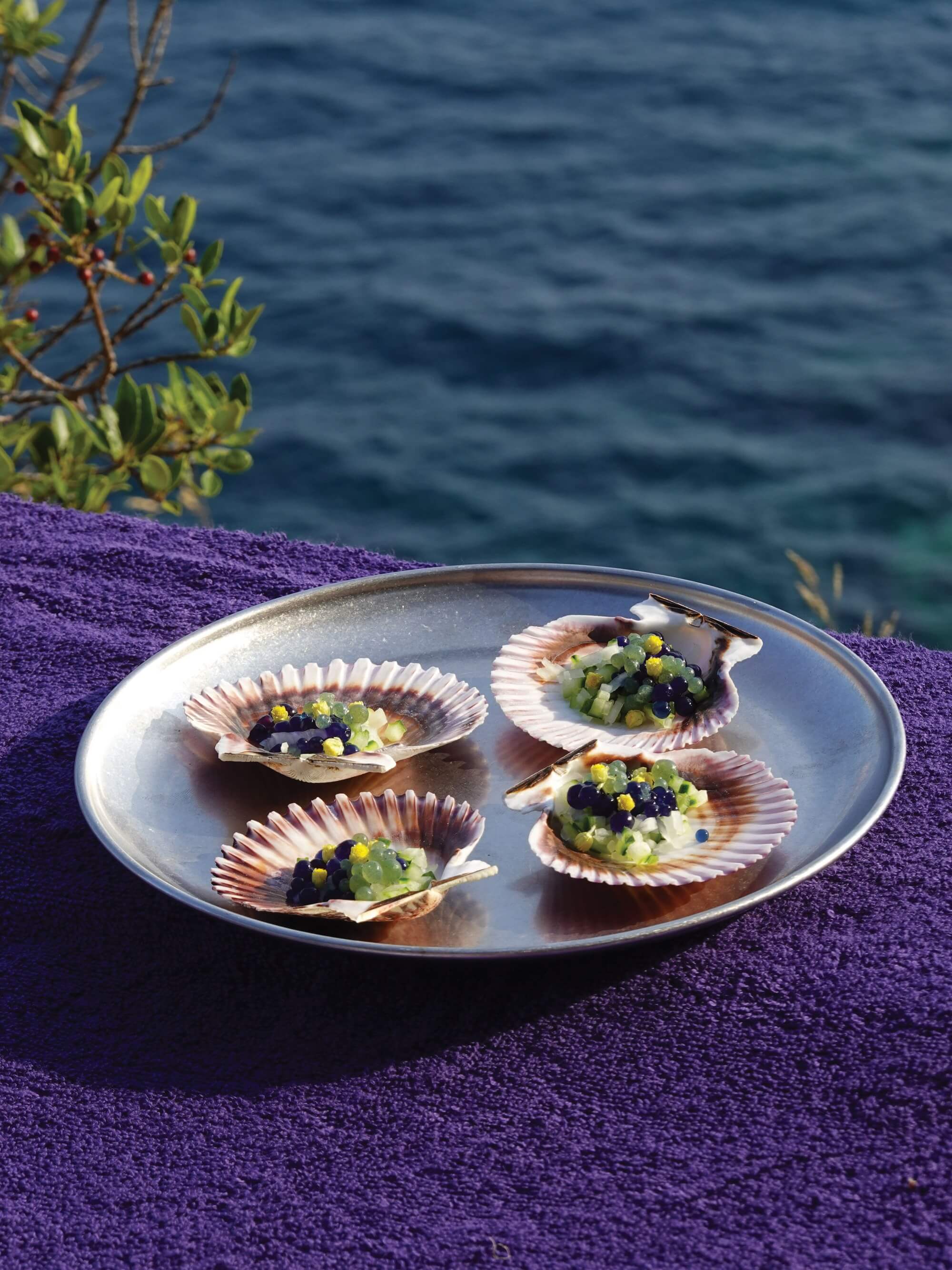
• Sea lettuce, cucumber granita, leek coral, sea grapes, olive oil pearls
• Lemon, salty seawater & plankton pearls, shallots, radish, blue vinaigrette
• Nori pasta, codium, frozen green tomato, tomato pearls
• Three different caramel cube jellies with sea salt
• Blue spirulina iced tea
The first dish reimagines oyster shells, exploring a vegetarian reinterpretation of the sensation of slurping an oyster. Drawing inspiration from the traditional Japanese confectionery-making process of Wagashi, Fofo crafts a delicate jelly that dissolves in the mouth, evoking the ephemeral quality of the ocean. “Central to this project is our experimentation with algae, harnessing its diverse flavours and textures,” explains Martha. “By integrating algae into our creations, it not only highlights its versatility but also fosters new narratives around futuristic food products, aiming to make these innovations more accessible in contemporary cuisine.”
Fofo will most likely further develop this menu over next summer – it can be experienced on request in an appropriate context