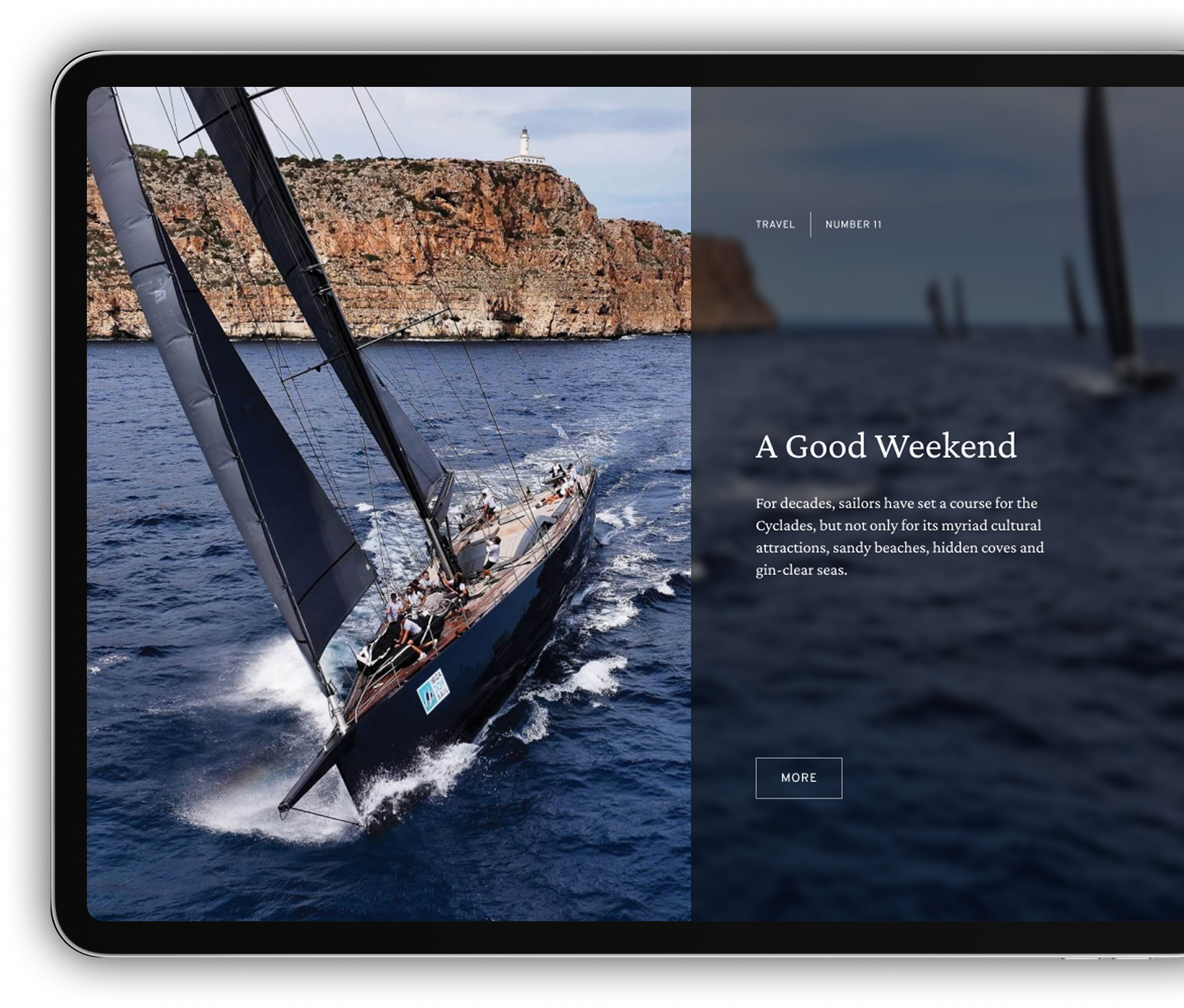

Consider for a moment the cycle of a Superyacht sail. Vast sheets of fabric engineered inch by inch, each designed with complex fibres to bend with the breeze, withstand loads and convert nature’s forces into motion: they are complete marvels of modern technology. Yet for all their sophistication, sails often live surprisingly short lives, and are retired after a few seasons’ performance.
Their afterlife is rarely discussed. With no industry-wide end-of-life responsibility in place, many are disposed of quietly, privately and invisibly. Difficult to recycle and costly to store, most are destined for landfill – their value, energy and technical prowess erased. It was this fate that caught the attention of Angela Abshier. Not originally from the sailing world, her first introduction came aboard a Farr 40 during an offshore race around California’s Catalina Island.
At the time, she was working in sustainable fashion, building a marketplace for deadstock materials, and had expected to find warehouses of unused sails. Instead, she came to understand how many were being discarded, so she made it her mission to learn everything about them. “I felt like it was my true purpose to solve this problem,” she explains. “I fell in love with sails for their beauty, paired with the extraordinary technology and advanced materials behind them.”
And so, Sail to Shelter was born, a non-profit initiative with a deceptively simple premise: to keep retired sails out of landfills and turn them into something meaningful. What sounds straightforward is anything but. Superyacht sails are enormous, heavy, layered, complex and deconstructing them requires specialist tools, space and expertise. “This is not an exercise in efficiency,” she admits. “But a question of sustainability.”
Working alongside various engineers and co-architects, Sail to Shelter has developed the best practices for repurposing sails into durable shades and shelters for humanitarian needs. In Maui, following the devastating 2023 wildfires, a full inventory of Superyacht sails from the 78-metre M5 was donated and used to make shade structures attached to temporary housing and animal shelters (4,000 square feet at Maui Humane Society). “Every single piece of that sail was used.” How one is repurposed is dictated by the material. “Each different composite has its pros and cons and best uses,” Abshier explains.
Alongside the sail, this opened the door to Sail to Shelter’s partnership with Doyle, a collaboration she believes is essential to scaling impact. “The more partners and collaborations the better,” she says – acknowledging that the problem is too large, too fragmented to be solved in isolation. Elsewhere, projects have supported resilience centres, dry storage facilities and large-gathering spaces, often in partnership with organisations such as World Central Kitchen. While some owners choose to keep sails for sentimental reasons, many are keen to move them on. Trust, Abshier notes, is key, which is why she puts deliberate emphasis on beauty as well as function. “An owner will never be ashamed of how their sail is repurposed,” she says.
The numbers and the relentless racing fleet churn behind the discarded-sail issue remain largely unseen. Superyacht sails can cost anywhere in the region from $100,000 to $1 million-plus, so across the fleet, there are billions of dollars worth of engineered composite materials that have no lifecycle beyond use. “Sailmakers focus on performance and safety, but who is going to pay to have them deconstructed?” Abshier questions. As with personal property, sail disposal remains very decentralised, with no mandated responsibility or regulatory pressure to drive change. This creates an uncomfortable contradiction. While wind-powered sailing is widely cited as a cleaner alternative to motor yachts, the most visible tools (the sails themselves) are often excluded from the sustainability conversation. “Look up,” Abshier says. “You’re being dragged across the ocean by the sail, and when the fun is over, we shouldn’t pretend it stops mattering.”
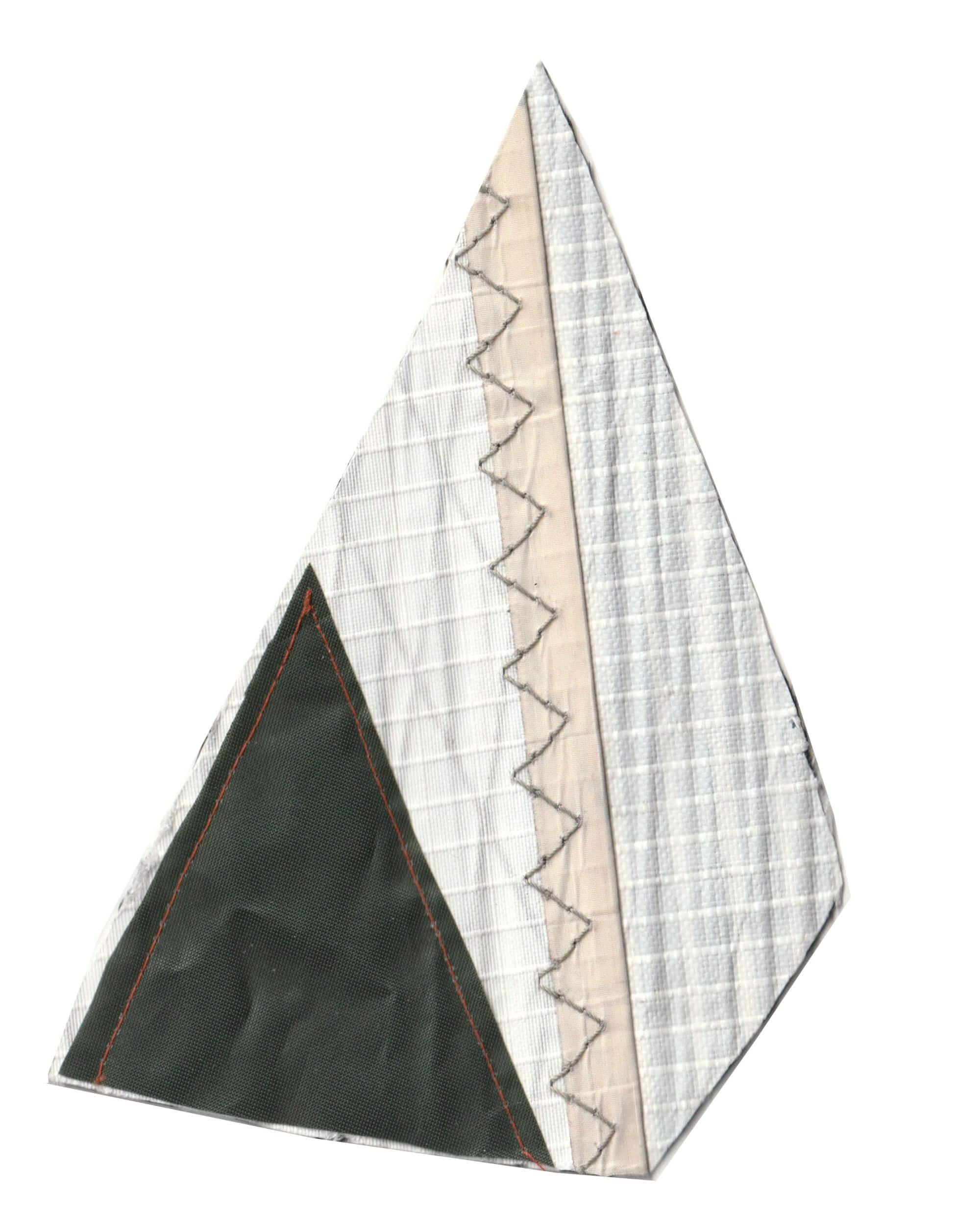
While the humanitarian projects are still ongoing, Sail to Shelter’s work has come full circle, back to Abshier’s textile roots. A small collection of bags, produced from deadstock and components sourced from an offshore rigging company, has been designed to keep the conversation visible. The intention is for the bags to live on board yachts, in upscale resorts, and in the world, telling the story of what sails can become. “They are designed to raise awareness,” she explains. “I want them out there, on board yachts, as luxury high-quality amenities that carry a story.”
Longer-term, Sail to Shelter’s ambition is systemic change. Abshier’s “giant vision” is to operate as a global deconstruction and reconstruction network, with drop-off hubs in major sailing centres and end-of-life planning and commitments at the point of sail purchase. True circularity, she acknowledges, may not be realistic for such complex materials, but meaningful second lives are. “I’m looking for leaders,” she says. “Owners who already demanded the best sail technology on the water, and are willing to lead on what happens after.” Harnessing wind, while central to sailing’s appeal, is only part of the story: what matters is what the industry chooses to do when sails come down for the last time.