
Few yachting destinations are quite as legendary as the Gulf of Naples and its islands, towns and seascapes. Naples itself is a vibrant city known for its alluring, aged edges, home to indulgent cuisine, and yes, the birthplace of pizza – with the ancient Roman city of Pompeii lying further out under the slopes of Vesuvius. The port at Naples is the jumping-off point to the Sorrentine Peninsula and the islands of the Campanian Archipelago. On the south side of Sorrento you’ll find yourself along the Gulf of Salerno – fringed by the soaring cliffs of the Amalfi Coast, where villages such Amalfi, Positano and Ravello tumble down to the shore. Headed west you can sail to the intoxicatingly wonderful Phlegraean Islands: Ischia, Procida, Vivara and Nisida. The magical island of Capri, which has gathered more than its fair share of fables over the centuries, sits centred off the Sorrentine Peninsula between the two gulfs, with an international reputation as a retreat for artists, writers and celebrities.
Life on the islands takes after the sea that surrounds them; Italians come here to fall into the groove of the oceanic rhythm. Families arrive during the summer months from the mainland to relax and offer their children the delights of the seashore that their grandparents experienced in much the same way before them. On a yachting adventure, you are even more tied to the rhythm of the waters. Get a quiet night at anchor in a wilderness cove when the weather allows; take refuge in the safe harbour of a seafaring town when it doesn’t.
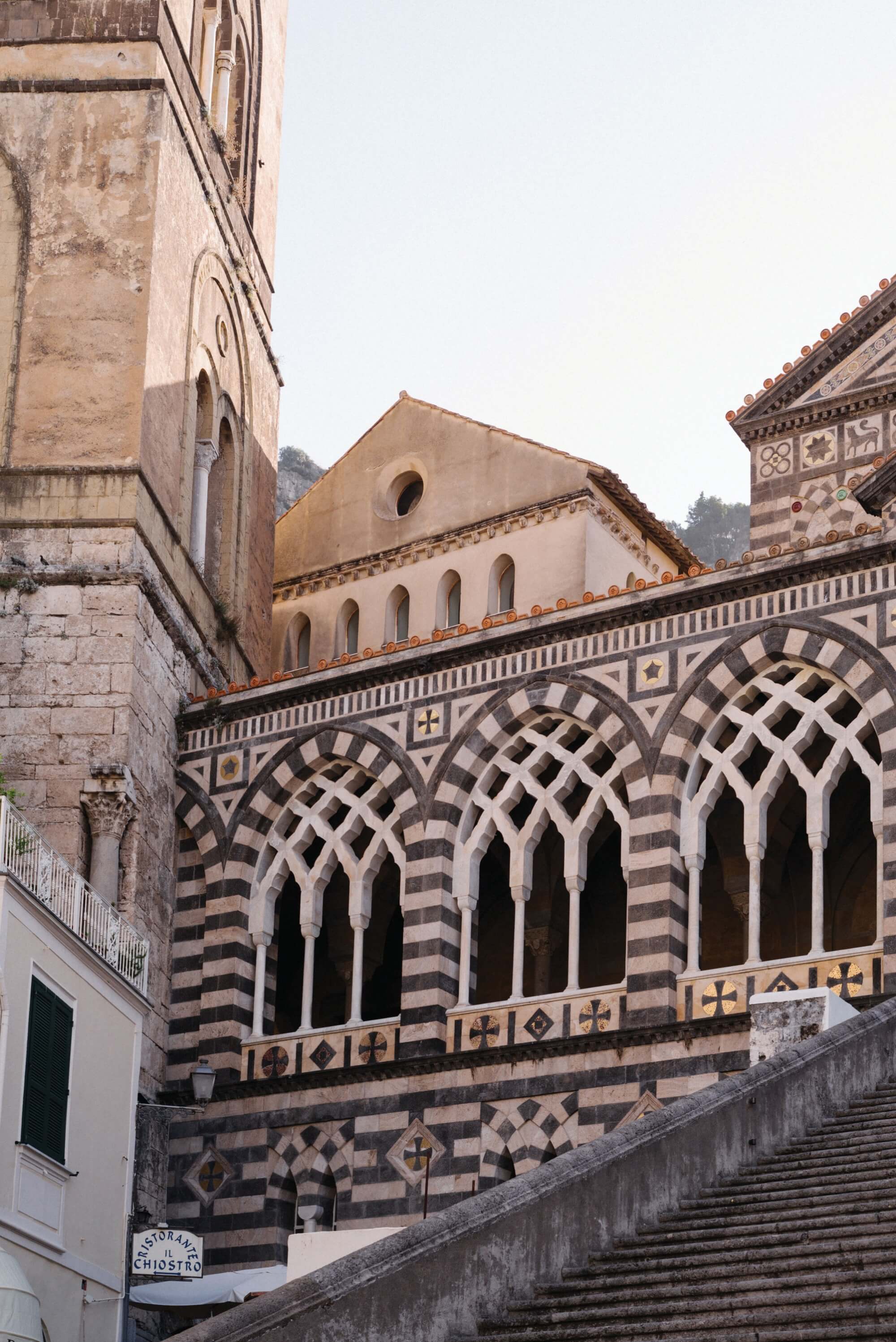
Amalfi and Amalfi Coast
Spanning roughly 30 nautical miles from Salerno to Punta Campanella Lighthouse at the far point of the Sorrentine Peninsula, the Amalfi Coast is one of Italy’s most beautiful landscapes, home to Amalfi itself, Positano, Ravello and a long list of other stunning seaside villages. The coastline is extraordinarily dramatic with steep limestone cliffs that plunge into the water. It became a major destination in the 18th and 19th century as part of the Grand Tour. Artists, writers and aristocrats alike hailing from across Europe and the United States would make their pilgrimage here. Figures such as Jacqueline Kennedy Onassis, Pablo Picasso, DH Lawrence and Sophia Loren later frequented the area, amplifying its reputation of elegance and allure.
With the rise of yachting culture in the 1920s, 1930s and then 1960s, the Amalfi Coast quickly became a key destination, especially with its close proximity to Capri and the ports of Naples. Slowly, nautical infrastructure along the shoreline expanded, paving the way for it to become one of the world’s premier yachting destinations, as it is today.
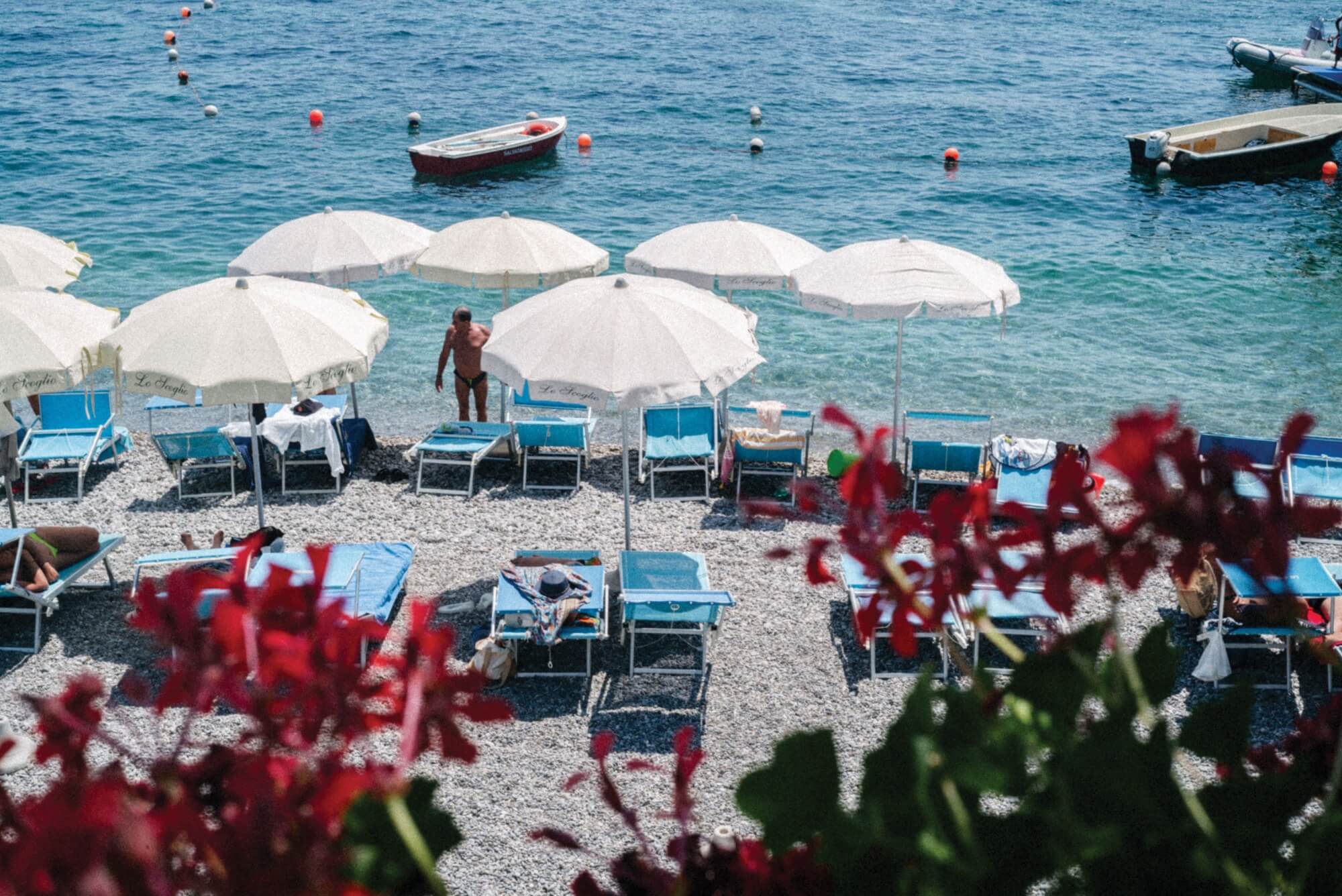
Tucked into a secluded cove along the western point of the Amalfi Coast, Ristorante Lo Scoglio has long been a favourite lunch anchorage for yachts cruising between Capri and Positano. The bay in front of the restaurant fills throughout the afternoon with sailboats and yachts, creating a quintessential Mediterranean scene in a setting that has remained unchanged for decades. Lo Scoglio’s tender collects guests directly from their yachts, shuttling them to the waterfront terrace where long lunches are taken, steps from the sea. Family-run and an important part of the coastline, the spot is celebrated for its simplicity with vegetables grown on the surrounding terraces, locally caught seafood, handmade pasta and wine served beneath shaded pergolas overlooking the water.
Capri
From the watchtowers of Ischia’s castle 15 nautical miles away, Capri appears through the heat of the summer haze. The island sits just off the coast of the Sorrentine Peninsula and is perhaps the most famous in the Mediterranean, a place where ancient myth, glamour and seafaring tradition have mixed together for centuries. Sheer limestone cliffs rise from the surf for hundreds of metres along most of Capri’s shoreline, creating a fortress-like silhouette that has captivated sailors since antiquity. Only a single marina on the north side and a small fair-weather landing on the south grant access ashore. Since its earliest days, Capri has carried an aura of prestige that continues to draw the world’s most interesting and high-profile visitors.
Roman emperors built their summer palaces to command sweeping vistas of Mount Vesuvius and the Bay of Naples. Aristocrats, royalty and industrial magnates made the island their seasonal refuge throughout the 19th and 20th centuries, while artists, writers and painters immortalised its beauty during long summers spent beneath its cliffs. By the dawn of the golden age of yachting, Capri had become an essential waypoint on the Mediterranean social circuit, where polished motor yachts and elegant sailing vessels gathered in the island’s coves and harbours each summer season, in particular at Baia di Marina Piccola along the south coast.
Capri’s western cliffs have such an intensity that the landscape looks like an impressionist painting. High above the water stands the Punta Carena Lighthouse, one of the Med’s most iconic maritime landmarks. In 2019, the last keeper departed his post, bringing to an end 152 years of continuous service. North of the lighthouse, along the island’s western shore, lies the Blue Grotto, a sea cave famed for the surreal blue light that fills its interior each afternoon as sunlight passes through submerged openings beneath the waterline. It’s too deep to anchor directly outside the grotto, and access is limited to local tour boats that ferry visitors inside for a short tour.
The town of Capri stretches through the saddle between the island’s two peaks along its mountainous spine. Below, the waterfront has long served as one of the Mediterranean’s great theatres of yachting culture. On summer evenings, both sides of the isle glitter with mega yachts at anchor in a floating display of wealth, design and international society, continuing a tradition that has defined Capri for generations. Marina Grande is frequently crowded and notoriously expensive, but for smaller boats in unsettled weather it is often the only practical refuge, as suitable anchorages are limited.
In settled conditions, yachts can anchor off Marina Piccola near Punta Carena Lighthouse on the southern coast. Just east of the anchorage rises the famed Faraglioni di Mezzo, whose monumental stone arch is large enough for small boats to pass through, one of the most well-known natural sea structures in Italy. Once anchored, dinghy ashore to dine at one of the quintessentially Italian restaurants scattered along the winding roads and stairways that zigzag steeply upward toward Capri town. As evening settles and the last sunlight fades, the sound of glasses clinking from yacht decks drifts across the water, and Capri reveals why it has remained one of the Mediterranean’s enduring symbols of elegance, escape and life at sea.
Ischia
A volcanic past has left Ischia with an imposing mountain peak and its famed natural thermal baths that flow along the ocean’s edge. Even when the island is busy in the summer months it is a quiet retreat compared to Naples; its lush greenery and brightly coloured flowers visible from afar. Groves of vineyards and olive trees grow on terraced farmland along the steep edges. Home to four safe marinas and some less well-protected anchorages, including many secluded coves only accessible by boat, the distinctive features of this island are magnificent.
Yachts can spend several days around Ischia, thanks to its balanced offerings of comfort and the chance to explore. Porto d’Ischia and Casamicciola provide full-service marinas with protected berths, while smaller anchorages around the island allow for quieter nights under the cliffs. Its volcanic geography also creates unusually warm swimming waters in certain coves, and several waterfront thermal spas welcome arriving sailors looking to recover after long passages. Even short day sails around Ischia reveal sharp changes in scenery, from rugged cliffs and hidden grottos to green vineyard-covered slopes and lively harbour towns.
Anchoring at the foot of a fortress is not an everyday activity, even for the most experienced sailors. The medieval castle, named Aragonese, sits high above the anchorage on the eastern coast of Ischia. The sea is deep clear blue and the rocks have small trees clinging to their sheer faces below the ancient fortifications. On the horizon is Mount Vesuvius and on the near shore is a charming village with walking streets along the water that connect via a long causeway to the castello gates. You can cruise past other travellers, braving the hot sun to explore, and tie off the dinghy to the seawall with your sailboat just a stone’s throw away.
Even though the anchorage is seductive enough to inspire a lazy afternoon on deck just taking it all in, the Aragonese Castle is worth a few hours off the boat. Originally built in 474BC by Hiero I of Syracuse, it has been a pinnacle of military infrastructure ever since. This formidable building served as a lookout for invading forces hoping to strike and take control of the island’s resources, but its perch, with steep drops on all sides, made it remarkably effective. Most of the castle is intact and open to the public until sunset and its abundance of beautiful spaces now serve multiple functions: housing art-restoration seminars, a café, more than one museum, a church and various other rotating uses. Grapevines grow on the terraces inside the castle walls and vintage wine made from their fruit can be ordered at the café.
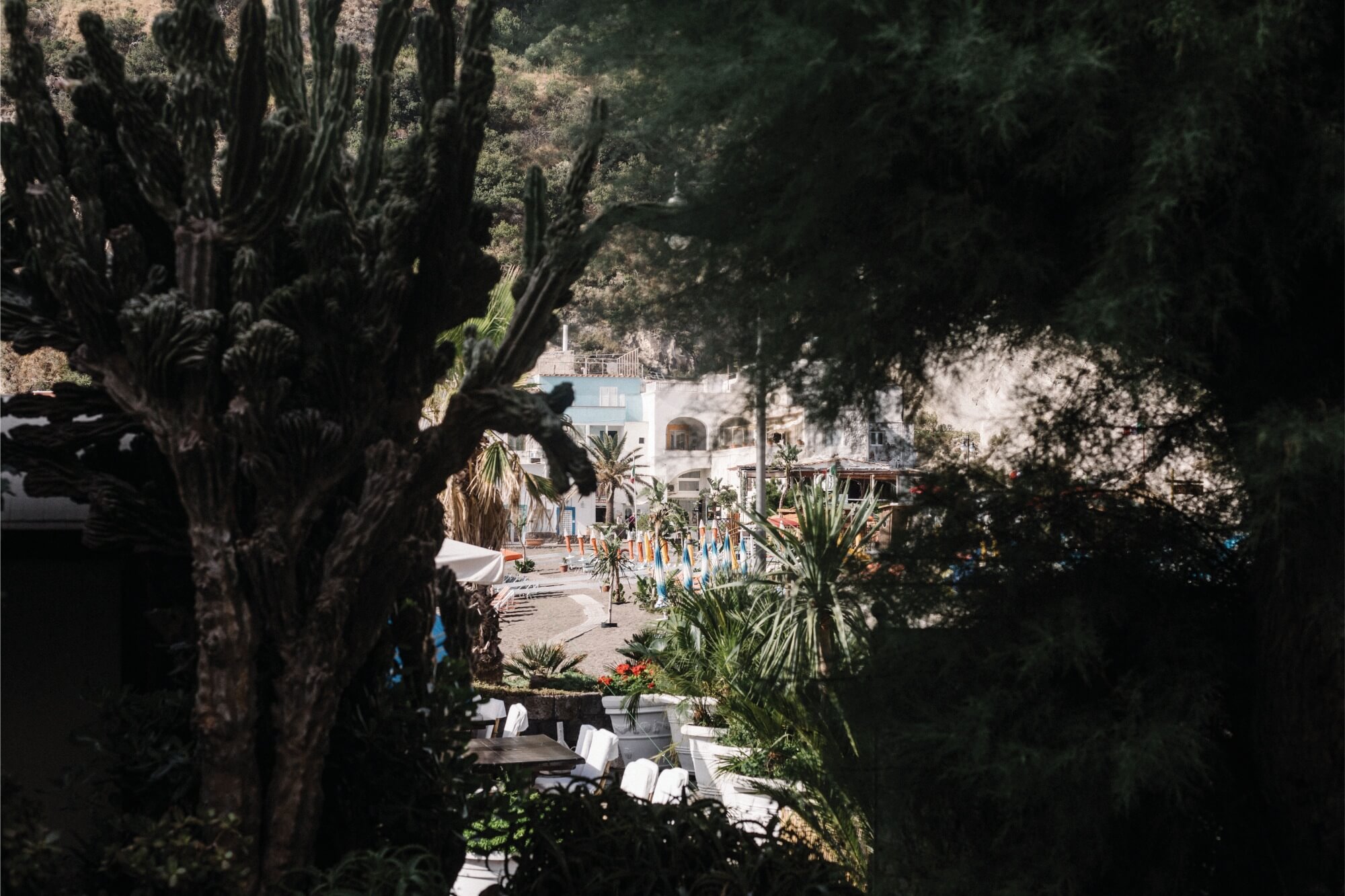
Perhaps the most popular yachting destination on Ischia is Sant’ Angelo, located along the south coast. The town itself is sophisticated while not being overtly flashy or noisy. The bay is large and one of the more safe and calm anchorages. Baia di Sorgeto, located west of Sant’ Angelo, is a rocky and steep cove, home to Ristorante La Sorgente, a small restaurant next to the thermal baths. Steaming hot freshwater flows into the bay, and when it hits the salty ocean, it creates a natural thermal bath in the rock-filled spaces along the beach. Local residents have created various pools by lining the stones, where you can lounge in shallows enjoying a drink or snack. In front of Baia di Sorgeto is deep water where you can anchor and swim to shore to enjoy this natural wonderland. The menu at Ristorante La Sorgente is simple yet delicious and it’s a top option for lunch.
Ponza
Ponza is a 50-nautical-mile voyage from Ischia and arguably one of the most celebrated locations in the Tyrrhenian Sea because of its wild beauty and idyllic island lifestyle. Compared to Isola Elba or the aforementioned Ischia, two other Italian spots in the Tyrrhenian Sea, it’s not large, but once you arrive, it’s easily possible to spend a week anchored along the cliff-lined coastline. Not every yacht that visits the bays of Capri makes the passage to Ponza, but those that do are rewarded with sights unmatched anywhere in the Mediterranean. It’s a rare and special place that has changed very little since the early days of yachting adventures.
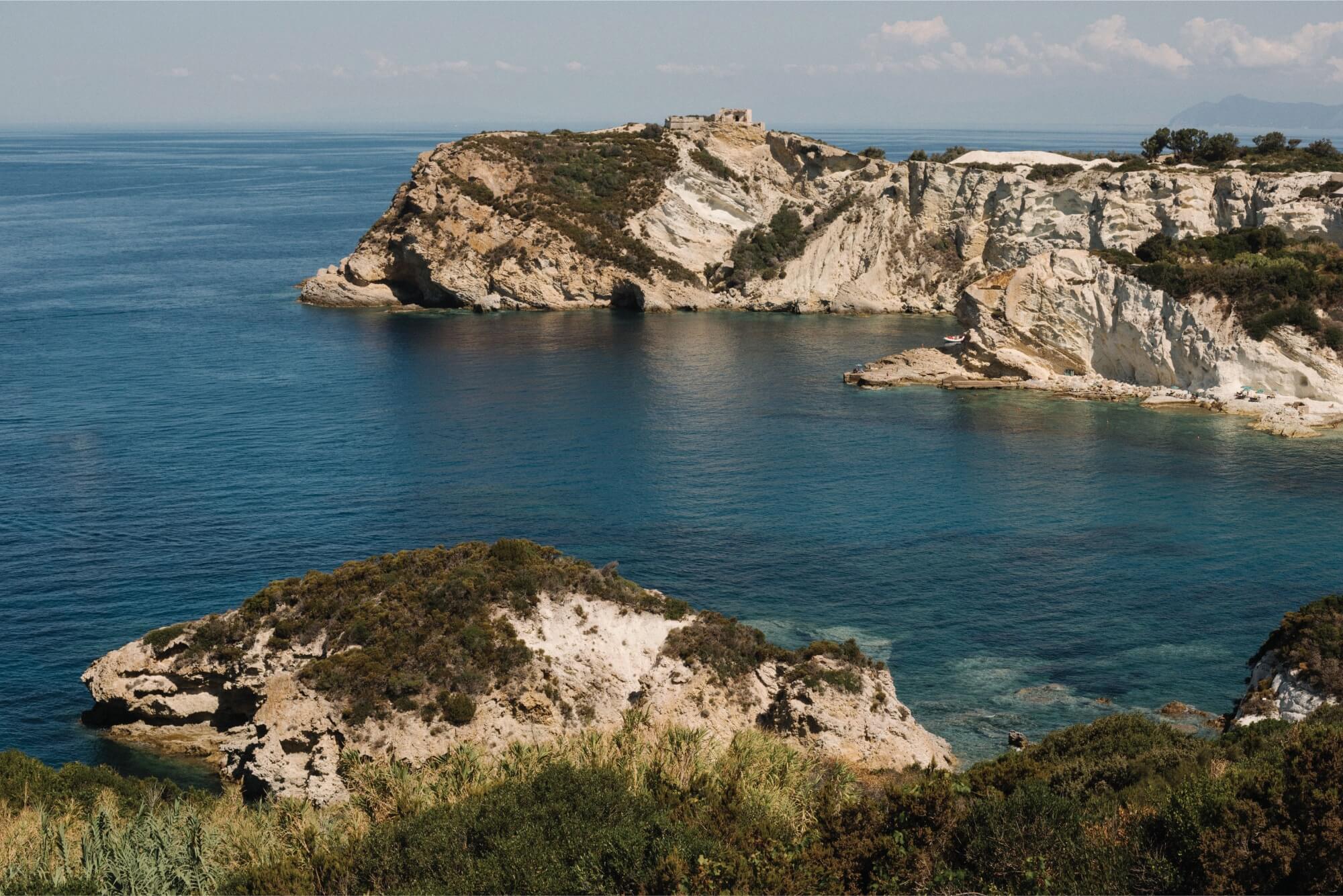
The eastern face is known for its steep limestone cliffs that drop dramatically into the emerald sea below. When approaching Ponza while sailing west from Ischia, the first thing you notice is the jagged cliffs, which then become increasingly illuminated as you draw closer. Anchorages are lined with chalk-coloured white and beige cliffs whose eroding edges splash into the sea, while luscious vegetation covers the layered landscape above. During the summer, boats of all sizes line the coast, from Superyachts to small sailboats. Swimming while looking up at the rocks above is a highlight of any visit; the air smells fresh and pure, and octopus and local fish can often be seen along the sandy seafloor.
The safe anchorages scattered around Ponza draw sailors seeking refuge from the multifarious winds that blow from all directions around the main harbour. These shelters, located on the eastern side, are referred to by locals as “porto”. The primary port is one of the most spectacular harbour entrances in the Mediterranean, and entering by boat is truly a one-of-a-kind experience. The colourful town is both charming and sophisticated, the kind of place that inspires sailors to dock and explore while pretending they’re locals, if only for an afternoon. Cascading houses are connected by winding walkways and narrow roads, while restaurants, gelaterias and fish markets line the streets.
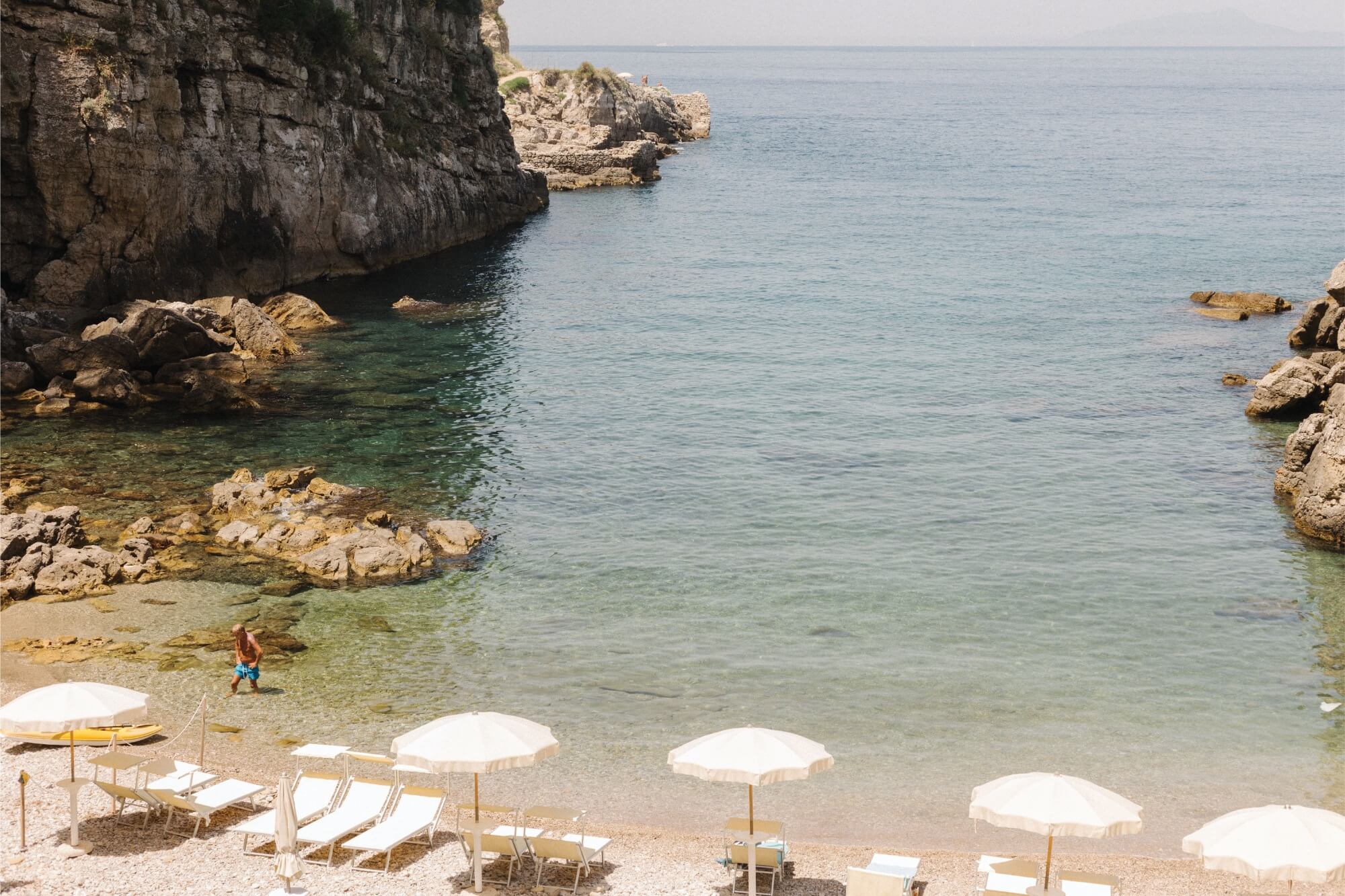
Looking outward, the view stretches towards the limestone cliffs of the eastern anchorage as they flow into the sea. Take a break from boat life and venture in for its celebrated tradition of aperitivo, the early evening ritual of enjoying a Negroni or Campari soda at a seaside café, while conversations unfold over Italian snacks. Numerous places to eat on the island offer traditional yet elegant menus, showcasing local produce and seafood from the surrounding, ever-lapping waters.