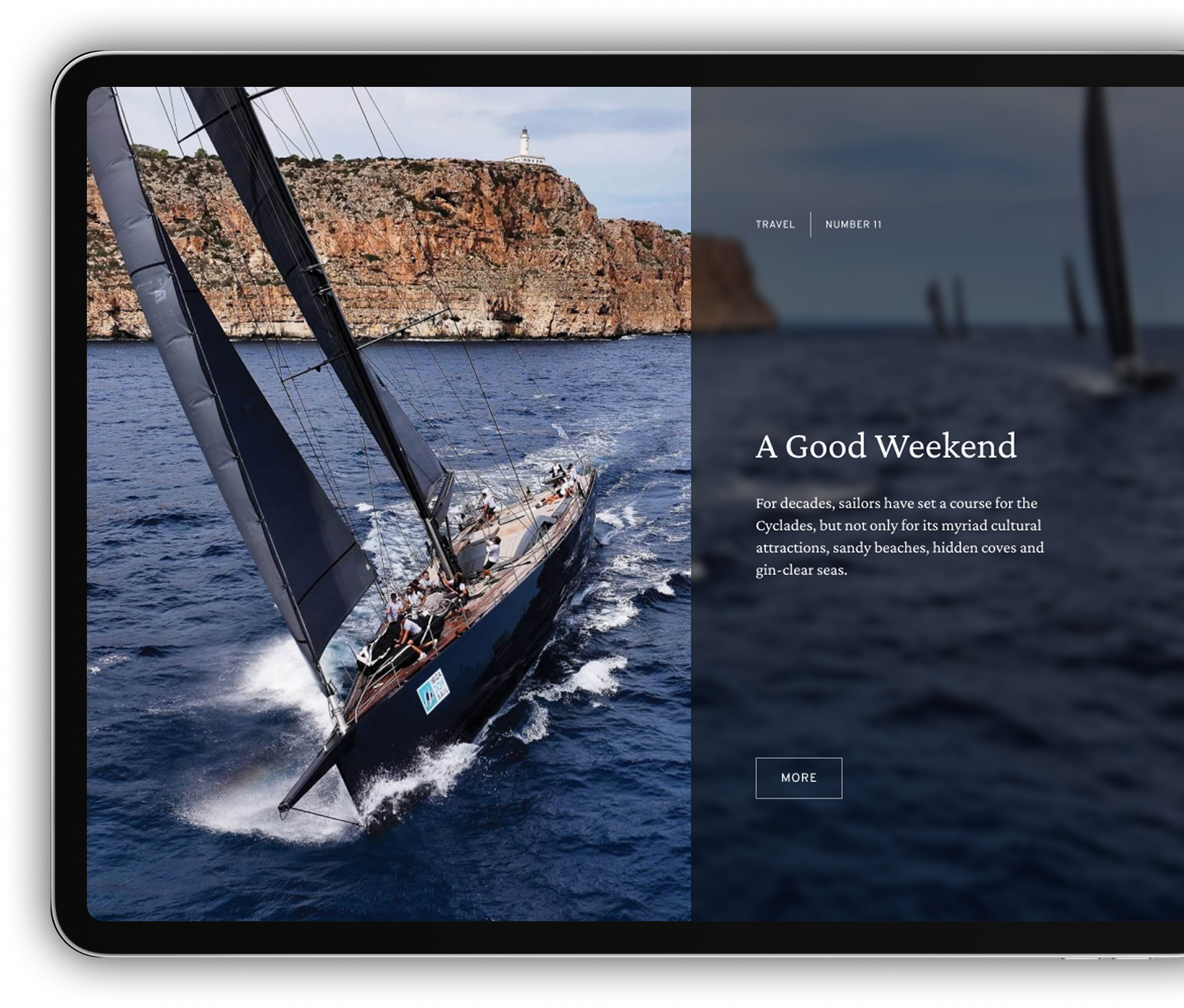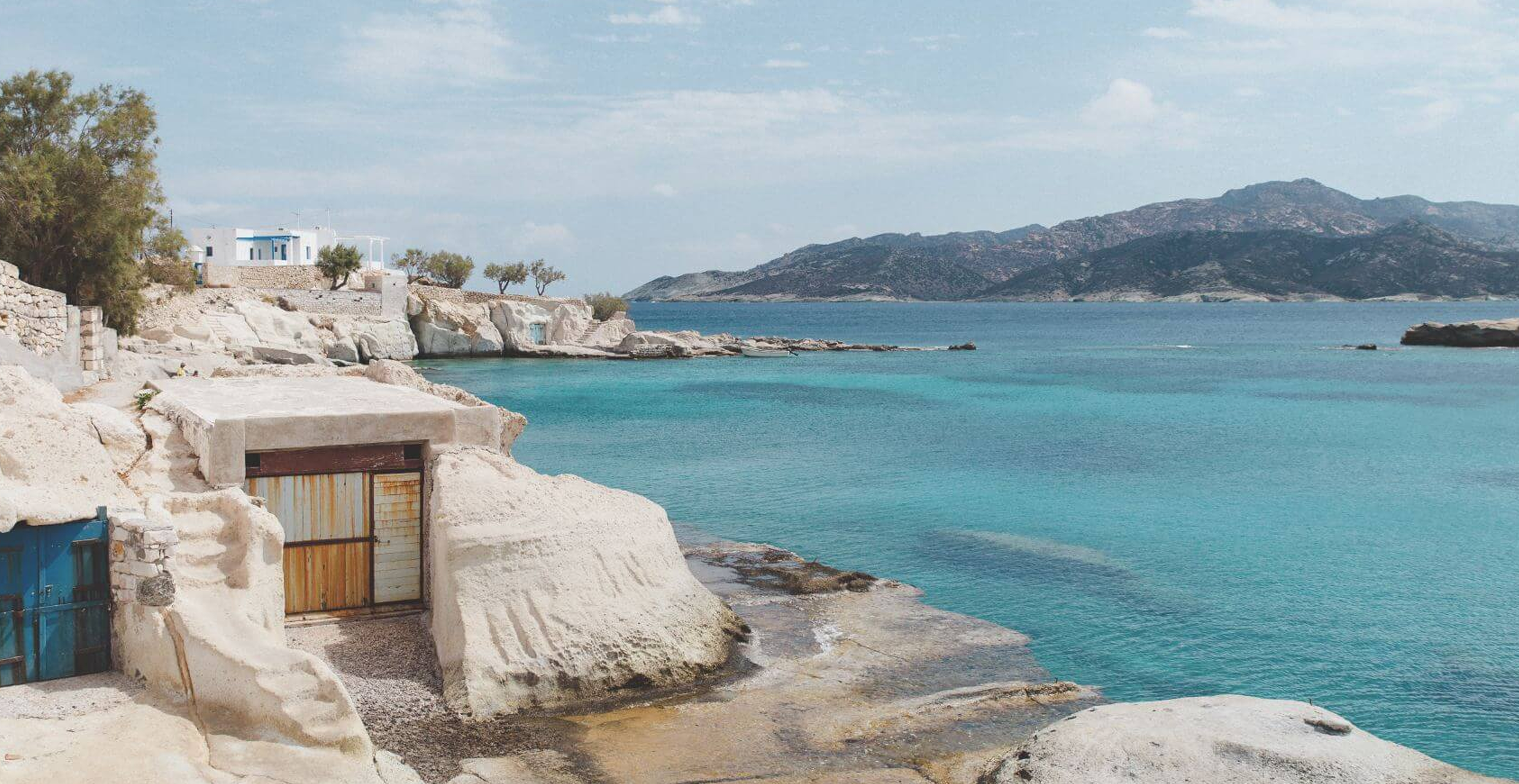

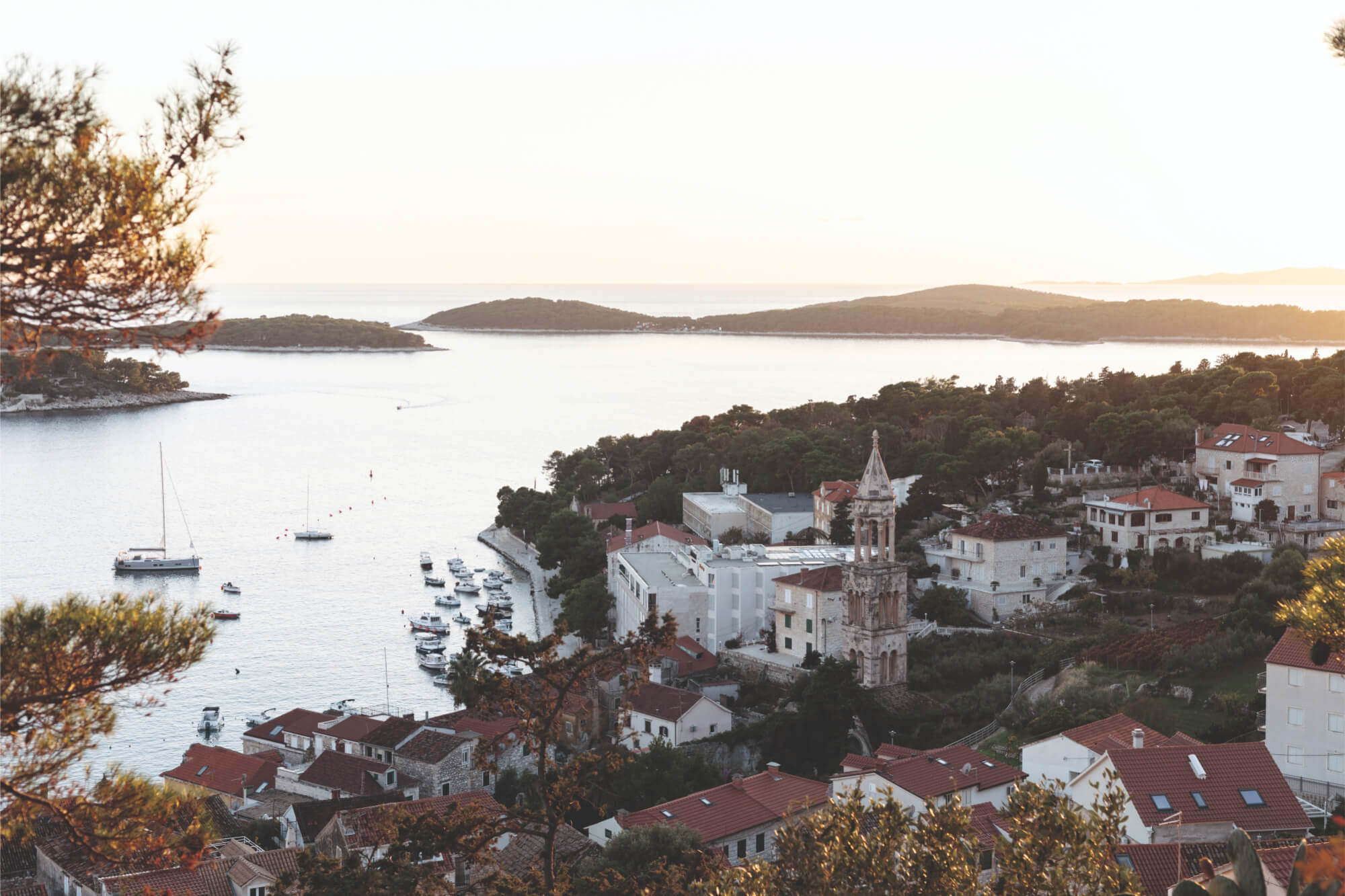
The Croatian waters from Trogir to Ploče via a multitude of idyllic islands offer some of the most celebrated charter itineraries in the world – and for good reason. Dayyan Armstrong shares the inside track.
On land, bright limestone cliffs line the shore of the central Dalmatian Coast, softened by rich greenery spilling down to the water’s edge. The sea here is among the clearest in the entire Mediterranean, thanks to the region’s exceptionally low turbidity. Along the shoreline, upscale marinas are dotted with excellent places to eat, while just a cove away you might find a rustic anchorage with a family-run konoba [tavern] surrounded by serene wilderness. With endless itinerary possibilities and a finely balanced blend of sophistication and simplicity, it’s no wonder so many sailors return year after year to explore these seas.

First a Word on Winds
Every mariner exploring Croatia should understand the native wind patterns of the Adriatic weather – whether you’re aboard an 8m monohull or a passenger on a yacht. Two primary winds dominate these waters, each with its own distinct characteristics: the Bora and the Jugo. Though very different in nature, both can occur at any time of year, even in summer, and each demands careful itinerary planning.
The Bora is a katabatic wind, which means it originates from higher elevations, is dense and dry and flows downhill toward the coast. In Croatia, this cold north to northeast wind accelerates as it descends the slopes of the Dinaric Alps, producing powerful gusts at sea level – often reaching 60 knots or more. Because it blows offshore, seas closer to land are typically flatter, but the sudden, violent gusts can be hazardous to vessels caught unprepared.
The Jugo originates in the southern Adriatic and the wider Mediterranean. This warm, moist wind blows from the southeast, bringing scattered rain, thunderstorms and a long-period swell generated by the extended fetch along the Adriatic coast. Unlike the Bora, the Jugo builds more gradually but can persist for days, making for challenging sea conditions.

Split
There are few places like Split. The city began to take its current form during the ancient Roman era, built as a palace that still beats at the heart of the city. Expanded in 305CE by the Emperor Diocletian as his retirement residence, the palace has been transformed over the centuries into a living, breathing neighbourhood. Today, it contains more than 200 buildings and houses around 3,000 residents within its formidable stone walls.
The Port of Split is one of the primary embarkation points for yacht charters in the region, along with nearby Marina Kaštela and the historic town of Trogir. Behind Split’s vibrant riva, a daily farmer’s market offers fresh local produce, cheese from the island of Pag, and a variety of locally cured meats, plus locally farmed produce.
Despite being one of the largest surviving Roman structures, the layout feels anything but grand and orderly. Walking the limestone streets is a maze of narrow passageways and crumbling marble, where every turn might reveal a sunlit courtyard, a hidden chapel or a vibey cocktail bar tucked behind centuries-old columns.
Trogir
Located about 25 kilometres from Split, Trogir is another popular starting point. This charming UNESCO World Heritage Site is built on a small island connected to the mainland by two short bridges. With its narrow stone alleys, waterfront promenade and medieval architecture, Trogir is a smaller, more intimate version of Split’s Old Town. The surrounding marinas host approximately 900 charter yachts, most of which are fully booked during the summer season.

Solta
The primary yachting destination on the island of Šolta is the town of Maslinica, home to Marina Martinis Marchi, a modern spot on a picturesque bay. It accommodates yachts up to 80 metres along the outer side of the breakwater, and up to 40 metres inside the basin. It’s attached to a stone manor, which houses a seasonal restaurant with an elegant courtyard overlooking both the marina and town. The stunning seawall accommodates sailing vessels of all sizes, with mooring lines for stern-to docking.
The small village of Maslinica offers a handful of local restaurants and shops. Just opposite the town lies the bay of Šešula, where two waterfront restaurants provide moorings for sailboats to dock stern-to, lined along the sheltered length of the bay. Additional anchorages include Lero, Uvala Tatinja and Gornja Krustica.

Hvar Town and St Klement
After Dubrovnik, Hvar Town is perhaps the most well-known destination in Croatia. The Roman Emperor Diocletian, who retired in Split, used Hvar Town as his summer residence while ruling the Roman Empire around 300AD. The town is a striking blend of Venetian, Gothic and Renaissance architecture, all artfully crafted from the region’s characteristic limestone.
The riva is a grand waterfront promenade that stretches the length of the town and serves as the main marina for private, charter and Superyachts. Hvar Harbor can accommodate vessels up to 80 metres and is one of the key yachting hubs during peak season. While the harbour’s beauty is undeniable, its open southern exposure makes it less suitable for smaller boats during inclement weather. It offers little protection from the Jugo wind, and large seas in the Adriatic can lead to a restless, rocky night. Larger yachts are generally unaffected, but smaller craft should keep a close eye on the forecast.
ACI Marina Palmižana lies on the northeast side of the small island of St Klement, just across from Hvar Town. With 180 berths for yachts up to 40 metres, it is the most popular anchorage for mariners visiting Hvar. Private ferry boats shuttle between the marina and Hvar Town throughout the day and long into the night.
The island itself is uninhabited, and the marina is surrounded by unblemished nature and a gin-clear bay. Within walking distance is Uvala Vinogradišće, a well-protected cove with laid moorings and several beach clubs and great places to eat. Continuing along the southern coast of St Klement, you’ll find a series of stunning, undeveloped little bays, ideal for anchoring and tying stern-to ashore.

Vis Town and Komiza
The most western island along the Dalmatian Coast is Vis, historically significant during WWII as an Allied military base and centre for crucial operations, and distinctive for its rustic, remote features. There are two primary harbours: Vis Town located on the northeast and Komiza to the west. The south coast is lined with many secluded coves, home to konobas and wineries, suitable on calm days. Vis Town is the island’s primary centre, encircled by a large, protected harbour with a narrow entrance, that keeps out rough seas. Large yachts can anchor inside the bay, and there are two marinas for transient mariners.
Approximately 12nm on the far side of the island from Vis Town lies Komiža, a pretty fishing village with a less protected harbour than its eastern neighbour. Yet for many sailors, Komiža is everything you could ask for in a small Croatian island town: authentic, scenic and steeped in maritime history. Dramatic cliffs rise behind the town; churches grace the waterfront. The bay has approximately 30 maintained mooring buoys and the breakwater quay can accommodate 20 to 30 yachts moored bow- or stern-to.
Komiža remains a working fishing town, far less touristy than Vis Town. A small fleet of traditional wooden fishing boats still operates here, especially in summer, when fishermen venture out in groups using age-old methods passed down through generations.
The harbour is exposed to westerly winds, especially the Ponente, which can make the anchorage unsafe. The Jugo, while partially blocked by the breakwater, can also create rough and uncomfortable conditions. It’s best to consult weather forecasts carefully before spending the night.